Have you ever stopped playing your favorite game – not because it wasn’t fun, but because it demanded too much time to progress?
Many players experience this. Progress slows down, sessions become longer, and keeping up starts to feel like work. In a world where attention is fragmented and playtime comes in short bursts, games that demand constant effort often lose their audience.
This is where idle games thrive.
Idle and incremental games are designed around a simple but powerful idea: progress doesn’t stop when the player does. Whether it’s generating resources, unlocking upgrades, or advancing systems in the background, these games reward players even when they’re away. This design aligns closely with player behavior – industry data shows that top-performing idle games achieve Day-1 retention rates of 20–30%, driven largely by their low-friction, habit-forming progression loops.
Titles like Idle Miner Tycoon, AdVenture Capitalist, and Egg, Inc. have turned this approach into highly profitable, long-lasting products.
But idle games don’t succeed just because they’re convenient. Behind the hands-off gameplay lies a carefully constructed system of progression loops, automation mechanics, economy balance, and monetization strategies that keep players engaged for months.
In this article, we’ll explore idle game development in depth: how incremental games are designed, why they excel at retention, and how they generate sustainable monetization without exhausting players.
- What Is an Idle Game?
- Why Are Idle Games So Popular?
- Core Mechanics of Idle Games
- Top Idle Games and What They Get Right
- Idle Heroes
- Why These Games Matter
- Monetization Strategies in Idle Games
- 5. The Balance That Makes Monetization Sustainable
- Idle Game Economy Design
- Common Mistakes in Idle Game Development
- “I’m Watching Ads More Than I’m Playing”
- Technology and Backend Requirements for Idle Games
- How Long Does It Take to Develop an Idle Game?
- How Much Does it Cost to Develop an Idle Game
- Why Capermint Is the Right Partner for Idle Game Development
- Conclusion
What Is an Idle Game?
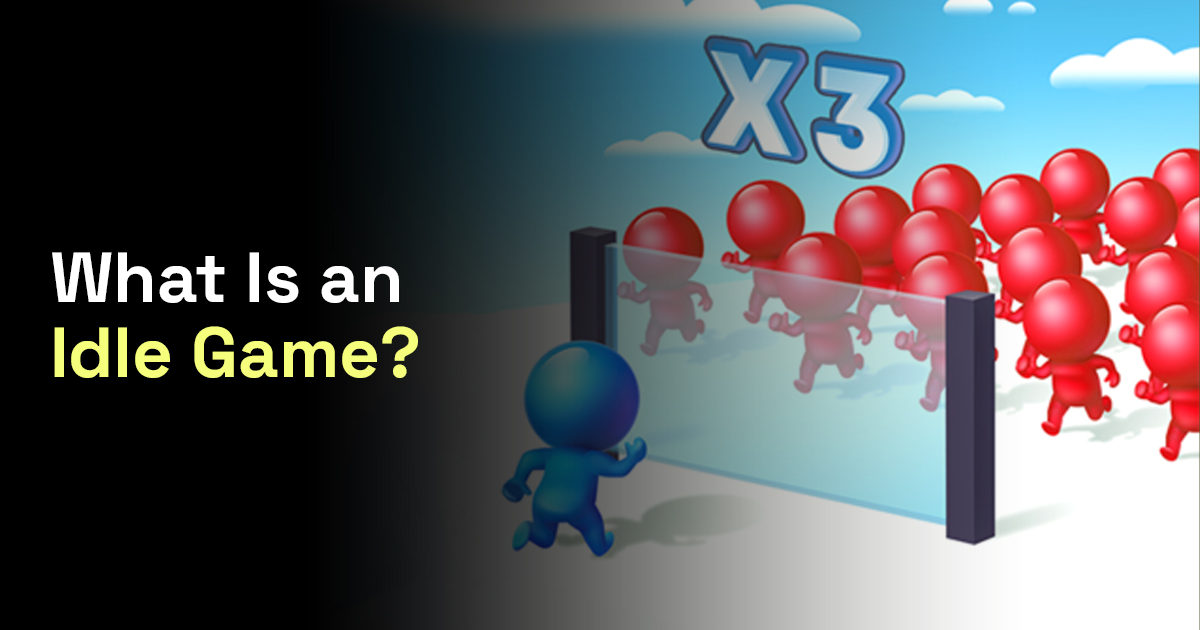
An idle game, also known as an incremental game, is a type of game where progress continues with minimal or no active input from the player. Instead of requiring constant interaction, idle games focus on automated systems that generate resources, unlock upgrades, and advance progression over time.
The core idea is simple: the game keeps moving forward even when the player is not actively playing.
Unlike traditional games that demand long sessions to make progress, idle games are designed for short check-ins. Players log in, collect accumulated rewards, make a few strategic upgrades, and then let the game run in the background again.
How Idle Games Work
Idle games are built around a loop that typically includes:
- Generating resources automatically
- Spending those resources on upgrades
- Unlocking automation to speed up progress
- Returning later to collect improved rewards
Over time, this loop becomes more complex, introducing new systems, layers, and progression paths to maintain long-term engagement.
Idle Games vs Traditional Casual Games
While casual games focus on active play and skill-based interaction, idle games prioritize time-based progression and optimization. The challenge isn’t reflexes or strategy in the moment, it’s deciding how to invest resources for maximum long-term growth.
This design makes idle games especially appealing to players who enjoy steady progress without the pressure of continuous gameplay.
Examples of Popular Idle Games
Some well-known idle and incremental games include:
- Idle Miner Tycoon
- AdVenture Capitalist
- Egg, Inc.
- Cookie Clicker
These games demonstrate how simple mechanics, when layered correctly, can support deep progression and long-term retention.
Why Are Idle Games So Popular?
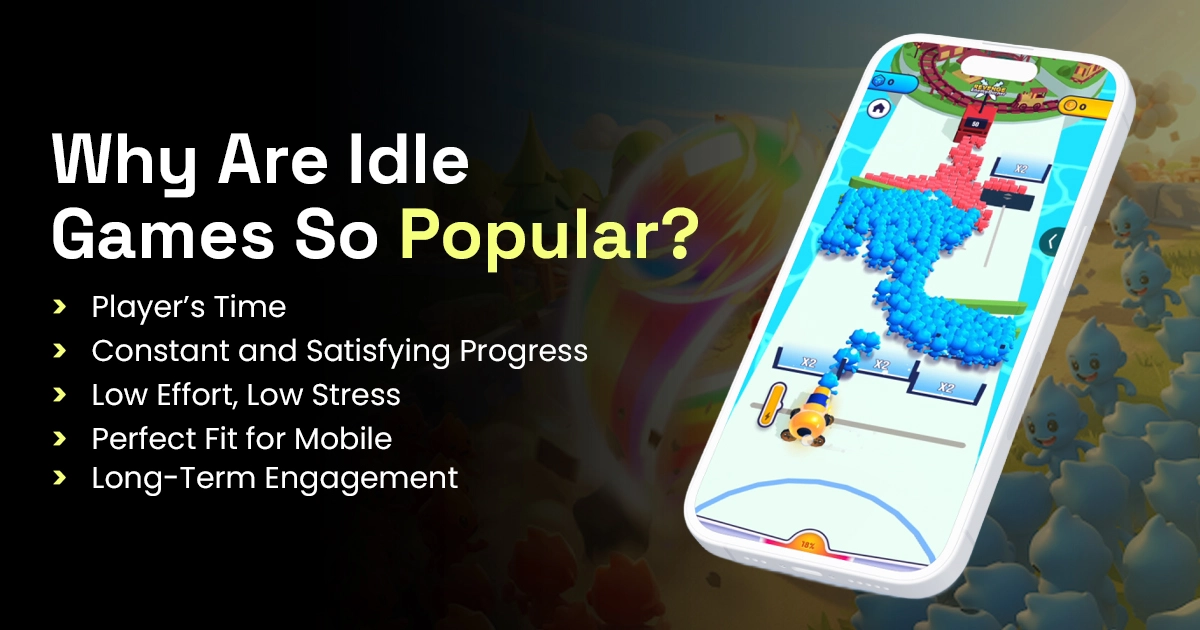
Idle games have grown into one of the most successful mobile game genres not because they are complex, but because they align perfectly with how people actually play games today. Their popularity is driven by a mix of convenience, psychology, and smart system design.
They Respect the Player’s Time
Modern players don’t always have long, uninterrupted gaming sessions. Idle games allow progress to continue even when the player is offline, making short check-ins feel rewarding rather than limiting. Players never feel “left behind” for stepping away.
Progress Feels Constant and Satisfying
Idle games are built around continuous growth. Numbers increase, systems unlock, and efficiency improves at a steady pace. This constant sense of progression triggers a strong feeling of achievement, even with minimal effort.
Low Effort, Low Stress Gameplay
Unlike competitive or skill-heavy games, idle games don’t punish players for mistakes or missed sessions. There’s no pressure to perform, which makes the genre accessible to a wide range of players and easy to return to after breaks.
Perfect Fit for Mobile Behavior
Idle games match mobile usage patterns exceptionally well. Players can open the game for a few seconds, make upgrades, and close it, knowing progress will continue. This flexibility is a major reason idle games retain players over long periods.
Built for Long-Term Engagement
Through layered progression systems such as automation, prestige mechanics, and unlockable content, idle games provide long-term goals without overwhelming players early on. This balance keeps players invested for weeks or even months.
Core Mechanics of Idle Games

At their core, idle games are driven by a small set of mechanics that work together to create long-term progression. While themes and visuals may vary, successful idle games rely on these foundational systems to keep players engaged and coming back.
Idle Progression and Automation
Idle progression is the defining mechanic of the genre. Resources are generated automatically over time, allowing players to progress without constant interaction.
Automation deepens this system by letting players:
- Unlock auto-generators
- Hire managers or units that optimize production
- Reduce the need for manual input
The goal is to shift the player’s role from doing tasks to optimizing systems, which keeps gameplay engaging without becoming repetitive.
Resource Generation and Scaling
Idle games revolve around one or more resources—such as currency, energy, or materials, that grow continuously. As the game progresses, these resources scale exponentially.
Key considerations include:
- Gradual increase in production rates
- Unlocking new resource sources over time
- Ensuring early progress feels fast and rewarding
Proper scaling ensures players always feel like they’re moving forward, even as systems become more complex.
Prestige, Reset, and Meta Progression
One of the most powerful idle game mechanics is the prestige system. Players reset part of their progress in exchange for permanent bonuses that make future runs faster and more efficient.
This mechanic:
- Prevents progression from stagnating
- Encourages long-term play
- Adds strategic depth to resets
Well-designed prestige systems turn restarting into a reward rather than a setback.
Offline Earnings and Time-Based Rewards
Offline progression allows idle games to continue generating value even when the app is closed. When players return, they collect accumulated rewards based on time spent away.
This mechanic:
- Reinforces the “always progressing” feeling
- Encourages regular check-ins
- Fits perfectly with mobile play habits
Balancing offline earnings is critical, too generous and the game loses challenge, too restrictive and players feel punished for being away.
Upgrade Systems and Optimization Choices
Upgrades are the decision-making layer of idle games. Players choose where to invest resources to maximize efficiency and growth.
Common upgrade types include:
- Production multipliers
- Speed boosts
- Automation improvements
Meaningful upgrade choices give players a sense of control and strategy, even in a largely passive game.
Top Idle Games and What They Get Right

Idle games may look simple on the surface, but the most successful titles are built on carefully balanced systems that drive long-term retention and monetization. Below are some of the most popular idle games, and the key design lessons developers can learn from them.
Idle Miner Tycoon
What it gets right:
Idle Miner Tycoon focuses heavily on automation and layered progression. Players unlock managers, optimize production chains, and expand into new mines, creating a strong sense of forward momentum.
Design takeaway:
Layered automation combined with prestige mechanics keeps progression meaningful over long periods without overwhelming the player.
AdVenture Capitalist
What it gets right:
This game popularized the classic idle loop – generate resources, automate income, reset progress, and grow faster each time.
Design takeaway:
Clear, repeatable progression loops make idle gameplay intuitive and addictive, even with minimal interaction.
Egg, Inc.
What it gets right:
Egg, Inc. blends idle mechanics with polished visuals and strategic upgrades. Its meta-progression systems encourage long-term planning rather than constant tapping.
Design takeaway:
Strong presentation and a well-balanced economy significantly enhance player retention in idle games.
Cookie Clicker
What it gets right:
As one of the earliest idle games, Cookie Clicker demonstrates how a simple core loop can scale into a surprisingly deep experience through gradual system layering.
Design takeaway:
A strong core mechanic can support long-term engagement when complexity is introduced gradually.
Idle Heroes
What it gets right:
Idle Heroes combines idle progression with RPG and gacha mechanics, adding collection and team-building elements to the idle formula.
Design takeaway:
Hybrid systems can expand monetization opportunities while still preserving the accessibility of idle gameplay.
Why These Games Matter
Despite differences in theme and complexity, these idle games succeed for similar reasons:
- They deliver constant, visible progression
- They respect player time through automation and offline earnings
- They integrate monetization without disrupting the core experience
For developers, these titles serve as strong references for building idle games that retain players, scale efficiently, and remain profitable over time.
Monetization Strategies in Idle Games
Idle games monetize successfully because they align revenue generation with how players already behave – checking in frequently, optimizing systems, and valuing progress over speed. Instead of forcing payments, idle games offer choices.
Below is a clear breakdown of the monetization strategies that work best in idle games, and why.
1. In-App Purchases (IAPs): Pay for Faster Progress
What players pay for:
Convenience and acceleration, not access.
Common IAPs in idle games:
- Permanent production multipliers
- Temporary speed boosts
- Premium currency to skip waiting times
Why this works:
Idle game players already focus on efficiency. In-App Purchases simply let them optimize faster without blocking free progression.
2. Rewarded Ads: Monetization Without Friction
What players do:
Choose to watch ads in exchange for in-game benefits.
Typical rewarded ad placements:
- Doubling offline earnings
- Instant resource boosts
- Temporary production multipliers
Why this works:
Rewarded ads feel fair and optional. Players control when they engage, which keeps retention high while generating consistent revenue.
3. Hybrid Monetization: Cover Every Player Type
What this combines:
- In-app purchases for spenders
- Rewarded ads for non-spenders
Why this works:
Hybrid monetization ensures that every player contributes value—either through spending or engagement, without aggressive paywalls.
Most top-performing idle games rely on this model for long-term revenue stability.
4. Contextual and Time-Limited Offers
What these are:
Offers triggered by player progress, milestones, or events.
Examples:
- Discounted boosters after a prestige reset
- Limited-time bundles during special events
Why this works:
These offers appear when motivation is highest, making them feel relevant instead of intrusive.
5. The Balance That Makes Monetization Sustainable
Successful idle games follow a simple rule:
- Free players should always feel progress
- Paying players should gain speed, not unfair power
- Monetization should support retention, not replace it
When this balance is right, monetization strengthens the game instead of damaging it.
Idle Game Economy Design
In idle games, the economy is not a supporting system, it is the core gameplay. Every tap, upgrade, reset, and monetization decision flows through the economy. If it’s poorly designed, progression breaks. If it’s done right, retention and revenue scale naturally.
Below are the four pillars of effective idle game economy design.
1. Managing Resource Inflation
The challenge:
Idle games rely on exponential growth, which can quickly spiral into meaningless numbers.
Design principle:
Growth should feel fast, but never uncontrolled.
How strong idle economies handle this:
- Gradual scaling instead of sudden spikes
- Resource sinks to absorb excess currency
- Soft caps that slow growth without stopping it
Outcome:
Players feel powerful without breaking the game’s balance.
2. Preventing Progression Collapse
The challenge:
Players quit when upgrades stop feeling impactful or progress suddenly slows.
Design principle:
Momentum must reset before stagnation sets in.
How strong idle economies handle this:
- Smooth difficulty curves between stages
- Timely introduction of new mechanics
- Prestige and meta-progression to refresh growth
Outcome:
Progression feels endless, not exhausting.
3. Designing Sustainable Long-Term Economies
The challenge:
Over-optimized monetization can damage retention, while under-monetization limits revenue.
Design principle:
Monetization should accelerate progress, not replace it.
How strong idle economies handle this:
- Free players always see meaningful progress
- Paid boosts focus on speed and efficiency
- Long-term goals remain achievable without spending
Outcome:
The game stays profitable without alienating players.
4. Scaling Costs and Rewards
The challenge:
Poor scaling makes upgrades feel either pointless or overpowered.
Design principle:
Every upgrade should feel impactful, even as numbers grow.
How strong idle economies handle this:
- Predictable cost scaling
- Layered reward systems instead of flat gains
- Clear milestones that signal progress
Outcome:
Progression stays satisfying across early, mid, and late game.
The Key Insight
In idle games, economy design determines whether the game survives past the novelty phase. Strong economies balance growth, challenge, and monetization in a way that keeps players engaged for months, not days.
This is where idle games are truly won or lost.
Common Mistakes in Idle Game Development
Many idle games don’t fail at launch – they fail quietly weeks later. Player numbers drop, monetization flattens, and engagement stalls. When this happens, the cause is rarely obvious, but it almost always traces back to a few core development mistakes.
Here’s how those mistakes usually show up.
“Progress Feels Stuck, Even Though I’m Playing Regularly”
This is one of the earliest warning signs.
When progression slows down too abruptly, or speeds up so fast that upgrades lose meaning, players feel disconnected from the game’s growth. The sense of momentum disappears, and without momentum, idle games lose their core appeal.
Idle games need carefully tuned pacing:
- Fast early progress to build habit
- Controlled mid-game growth to maintain interest
- Long-term goals that unfold gradually
When pacing is off, players don’t quit immediately, they drift away.
“I’m Watching Ads More Than I’m Playing”
Ads can support idle games, but when they dominate the experience, players feel exploited rather than rewarded.
This usually happens when:
- Ads are required to make reasonable progress
- Core systems are balanced around ad usage
- Players feel punished for skipping ads
Successful idle games treat ads as optional accelerators, not mandatory steps.
“The Game Felt Fun for a Few Days, Then Got Repetitive”
This is the classic mid-game problem.
Early gameplay hooks players in, but without new systems or mechanics introduced over time, interactions become mechanical. Players log in, collect rewards, and log out, until they stop logging in altogether.
Strong idle games avoid this by:
- Layering new mechanics gradually
- Unlocking meta-progression systems
- Giving players new optimization challenges
The mid-game is where retention is earned or lost.
“Offline Progress Feels Wrong”
Offline progression is one of the biggest draws of idle games, but it’s also one of the easiest systems to misbalance.
When offline rewards are too high:
- Active play feels unnecessary
When they’re too low:
- Players feel punished for leaving
The best idle games make returning feel rewarding and meaningful, encouraging players to make decisions when they come back.
“Everything Worked Early On, Then Broke Later”
This is the most dangerous failure mode.
Unchecked inflation, broken upgrade paths, or poorly scaled costs often don’t appear until weeks into gameplay. By the time they do, retention and monetization have already taken a hit.
Idle games must be tested as long-term systems, not just early experiences.
The Pattern Behind These Failures
Most idle game mistakes come from focusing too heavily on the early game and not enough on how systems evolve over time. Idle games live or die by how well their progression, economy, and engagement scale.
Avoiding these pitfalls is what separates short-lived idle games from products that last for years.
Technology and Backend Requirements for Idle Games
Although idle games appear simple to players, they rely on a robust technology stack to ensure accurate progression, security, scalability, and long-term balance. Choosing the right technologies is critical, especially because idle games are designed to run continuously and evolve over time.
Below is a breakdown of the key technical components and the technologies commonly used to build them.
Game Engine and Client-Side Technologies
The client application is responsible for rendering visuals, handling interactions, and delivering instant feedback.
Commonly used technologies include:
- Unity (most widely used for idle and incremental games)
- C# for gameplay logic and systems
- Spine / Unity Animation System for lightweight animations
Unity is particularly well-suited for idle games because it supports rapid iteration, cross-platform deployment, and real-time system updates.
Offline Progression and Time Calculation
Offline progression is one of the most sensitive systems in idle games. It requires accurate time-based calculations while preventing abuse.
Typical approaches include:
- Client-side time tracking for immediate feedback
- Server-side validation to prevent clock manipulation
- Timestamp-based calculations using backend services
This hybrid approach ensures offline rewards feel generous but remain fair.
Backend and Server Technologies
Backend systems handle progression validation, purchases, analytics, and live balancing.
Common backend technologies for idle games include:
- Node.js or Java-based services for scalable APIs
- REST or WebSocket APIs for client-server communication
- Redis for fast, in-memory data handling
- MongoDB or PostgreSQL for persistent player data
This setup supports both real-time interactions and long-term data storage efficiently.
Client vs Server Logic Distribution
A well-designed idle game splits responsibilities intelligently:
- Client-side: UI updates, animations, local calculations
- Server-side: Economy validation, rewards, purchases, progression checks
This separation improves performance while maintaining security and integrity.
Anti-Cheat and Security Measures
Idle games are vulnerable to exploits due to time-based mechanics.
Common security practices include:
- Server-side validation of rewards
- Anomaly detection for abnormal progression
- Encrypted communication between client and server
These measures protect both the game economy and monetization systems.
Analytics and Live Operations Tools
Idle games rely heavily on analytics to fine-tune progression and monetization.
Common tools and integrations include:
- Firebase Analytics or Google Analytics for Games
- Custom dashboards for economy and progression tracking
- Remote config systems for live balancing
Analytics enable developers to identify drop-off points, adjust pacing, and optimize retention post-launch.
Scalability and Infrastructure
Idle games are built for long lifecycles, so infrastructure must scale smoothly.
Typical infrastructure choices include:
- Cloud platforms like AWS or GCP
- Auto-scaling backend services
- CDN usage for asset delivery
Scalable infrastructure ensures stability as player numbers grow.
How Long Does It Take to Develop an Idle Game?
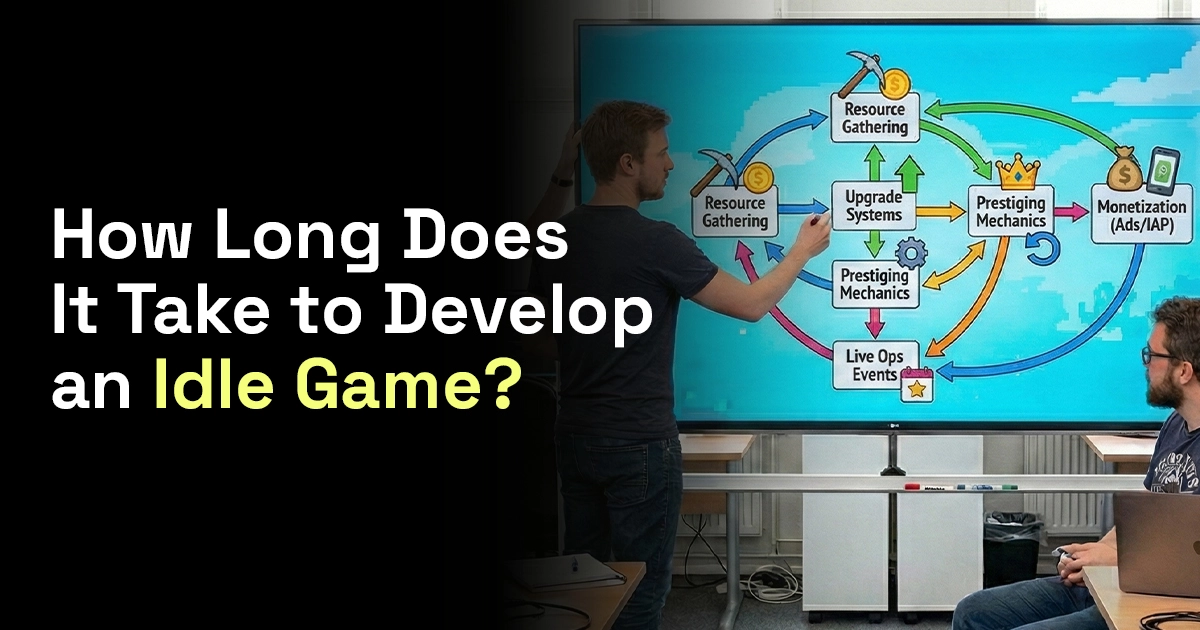
The development timeline for an idle game depends on the depth of progression systems, economy complexity, monetization setup, and post-launch plans. While idle games may appear simple on the surface, building a scalable and profitable idle game requires careful iteration and long-term planning.
Below is a realistic breakdown of how long it can take to develop different versions of an idle game.
1. Basic Version (MVP Idle Game)
Timeframe: 2 to 3 months
Description:
A basic idle game focused on validating the core gameplay loop. This version includes essential idle mechanics such as resource generation, basic automation, simple upgrades, and offline progression.
2. Mid-Level Version (Production-Ready Idle Game)
Timeframe: 4 to 6 months
Description:
A more polished idle game with deeper progression systems, prestige mechanics, and a balanced economy. This version includes core monetization features such as in-app purchases and rewarded ads, along with analytics integration.
3. Advanced Version (Scalable Idle Game With Live Ops)
Timeframe: 6 to 12+ months
Description:
A fully developed idle game designed for long-term growth and scalability. This version includes advanced meta-progression systems, live events, segmented monetization strategies, and continuous content updates.
How Much Does it Cost to Develop an Idle Game

The cost of developing an idle game depends on its scope, depth of systems, technology stack, and long-term goals. While idle games may look simple, their cost is largely driven by progression design, economy balancing, monetization systems, and backend requirements.
Below is a realistic breakdown of idle game development costs based on complexity.
1. Basic Idle Game (MVP)
Estimated Cost: $15,000 – $30,000
What’s included:
- Core idle gameplay loop
- Basic resource generation and automation
- Simple upgrade systems
- Offline progression
- Basic UI and visuals
2. Mid-Level Idle Game (Production-Ready)
Estimated Cost: $35,000 – $70,000
What’s included:
- Multiple progression layers and prestige systems
- Balanced idle game economy
- In-app purchases and rewarded ads
- Analytics integration
- Backend support for validation and data tracking
- Improved UI/UX and visual polish
3. Advanced Idle Game (Scalable With Live Ops)
Estimated Cost: $80,000 – $150,000+
What’s included:
- Complex long-term economy and meta-progression
- Live events, limited-time offers, and updates
- Advanced monetization strategies
- Robust backend and anti-cheat systems
- Live-ops tooling and scalability support
- Cross-platform optimization
Why Capermint Is the Right Partner for Idle Game Development
Building a successful idle game is less about a single mechanic and more about how multiple systems – progression, economy, monetization, and technology – work together over time. This requires a development partner who understands idle games not just as products, but as long-running systems.
This is where Capermint stands out.
Deep Expertise in Game Design and Monetization
Idle games rely on carefully tuned progression loops and monetization that accelerates progress without breaking balance. Capermint’s experience in game development enables a system-first approach, designing mechanics, economies, and monetization models that support long-term retention rather than short-term spikes.
This ensures idle games remain engaging for both free and paying players.
Proven Experience With Scalable Game Systems
Idle games grow over time. As player numbers increase, backend systems, analytics, and live updates become critical. Capermint builds idle games with scalability in mind from day one, ensuring that progression, data tracking, and monetization systems continue to perform as the game evolves.
This reduces technical debt and future rework.
Strong Focus on Live Ops and Analytics
Idle games are never truly finished at launch. Continuous optimization is what drives long-term success. Capermint integrates analytics and live-ops tools early, enabling real-time insights into player behavior, economy balance, and monetization performance.
This data-driven approach allows idle games to improve consistently after launch.
End-to-End Idle Game Development
From concept and design to development, testing, launch, and post-launch support, Capermint offers complete idle game development services. This end-to-end capability ensures consistency across gameplay systems, technology, and live operations.
The result is an idle game built for longevity, not just release.
The Bottom Line
Idle games succeed when design, technology, and monetization are aligned over the long term. Capermint’s experience in building scalable, data-driven games makes it a reliable partner for developers and publishers looking to create idle games that retain players and monetize sustainably.
Conclusion
Idle games have proven that success in mobile gaming doesn’t come from demanding more time from players, but from respecting it. By allowing progress to continue in the background, incremental games fit naturally into modern play habits while delivering strong retention and reliable monetization.
However, idle games don’t succeed on simplicity alone. Long-term performance depends on well-designed progression systems, a balanced economy, thoughtful monetization, and a technical foundation that can scale over time. When these elements work together, idle games become durable products capable of engaging players for months or even years.
For studios and publishers exploring this genre, idle games represent a compelling opportunity, but only when approached as long-term systems rather than short-term releases. With the right design strategy, technology stack, and development partner, idle games can evolve into highly profitable and sustainable gaming experiences.