
Custom VR Training Systems and Simulator Development
Capermint builds custom VR training systems and simulators for equipment operation, safety drills and medical procedures on Meta Quest, Pico and PC VR, with SCORM or xAPI reporting to your LMS. Employers in the US, Canada and worldwide typically get a single-scenario pilot in 4–6 weeks for $10K–$40K; final quotes follow a scoping call.




Customers worldwide (Capermint-reported)
Specialists in 3D art, engineering, design and QA (Capermint-reported)
Clutch rating from 13 reviews
Founded in Ahmedabad, India; we schedule calls in US and Canadian business hours
Industry-Specific VR Training Solutions
We develop tailored VR training simulators that address the unique challenges of each industry with precision and innovation.

Healthcare & Medical Training
Immersive simulations for surgical procedures, emergency response, patient diagnosis, and medical equipment operation.
- Virtual surgery practice with haptic feedback
- Emergency room scenario simulations
- Patient interaction and bedside manner training
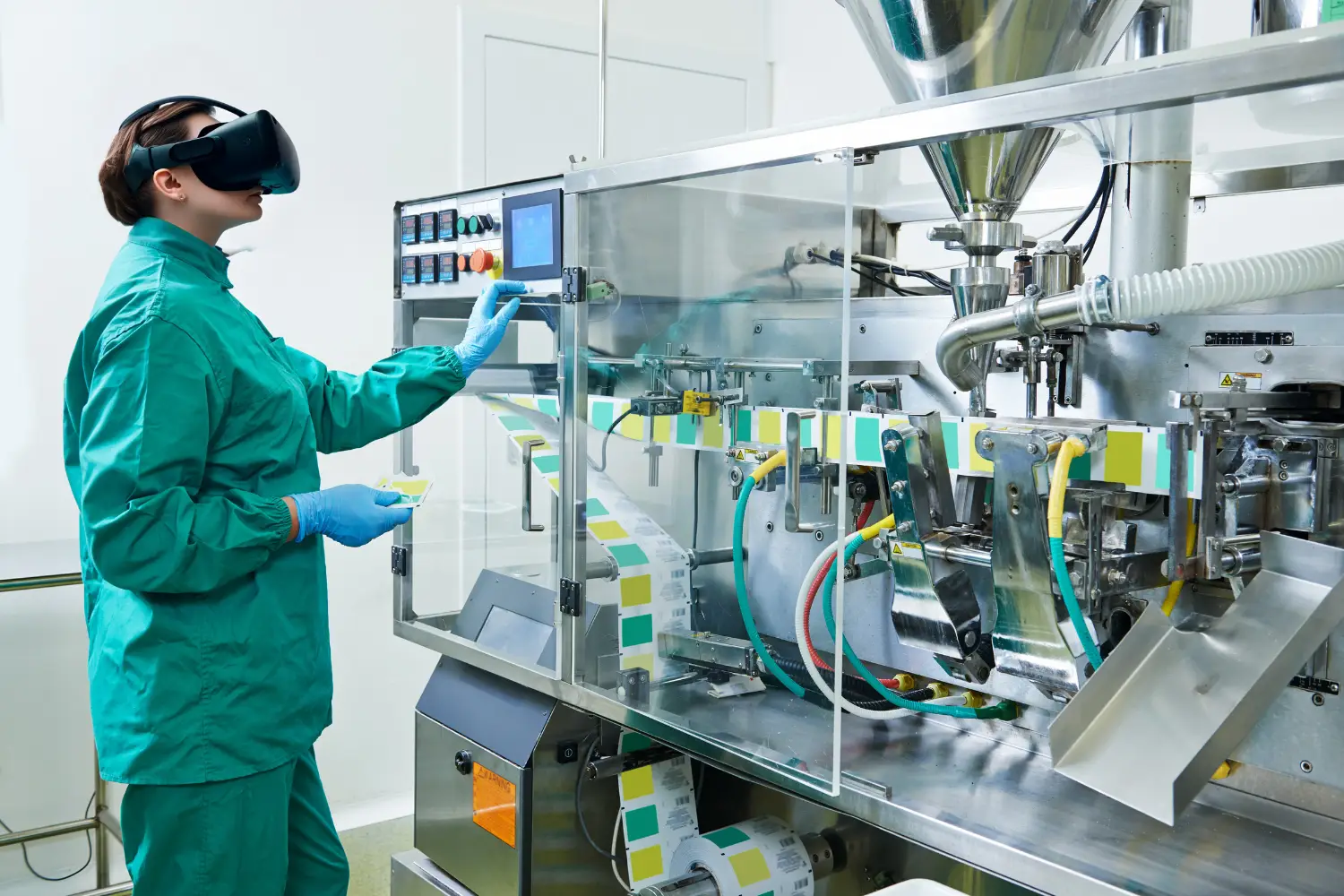
Pharmaceutical Training
Virtual labs for drug discovery, manufacturing processes, compliance training, and sales force education.
- GMP compliance and clean room procedures
- Molecular interaction visualization
- Drug mechanism of action simulations

Industrial & Manufacturing
Virtual factory environments for equipment operation, safety protocols, maintenance procedures, and assembly line training.
- Heavy machinery operation simulations
- Hazard identification and safety training
- Quality control and inspection procedures

Aviation & Aerospace
Flight simulations, maintenance training, and emergency procedure drills in risk-free virtual environments.
- Cockpit familiarization and instrument training
- Engine maintenance and troubleshooting
- Emergency evacuation procedures

Energy & Utilities
Virtual power plants, oil rig simulations, and renewable energy installations for operational training.
- High-voltage electrical safety training
- Offshore drilling platform operations
- Wind turbine maintenance simulations

Defense & Military
Combat simulations, equipment training, and strategic planning in secure virtual environments.
- Weapons systems familiarization
- Tactical combat scenario training
- Vehicle operation and maintenance
Our VR Training Development Process
A structured approach to creating effective, measurable VR training solutions tailored to your specific needs.
Needs Analysis
We conduct in-depth interviews and workflow analysis to identify key training objectives and performance metrics.
Curriculum Design
Our instructional designers create scenario-based learning modules aligned with your training goals.
Prototyping
We develop interactive prototypes for user testing and feedback before full-scale development.
Development
Our team builds the VR environment with realistic physics, interactions, and assessment systems.
Deployment
We deliver the complete solution with LMS integration, analytics dashboards, and admin controls.
Advanced Technical Capabilities
Features we can build into your VR training simulator, chosen to match the skills you need to train and the data you need to report.
Haptic Feedback Integration
Realistic touch sensations through advanced haptic gloves and controllers for procedural training applications.
Eye Tracking Analytics
Monitor trainee attention and focus to identify knowledge gaps and improve training effectiveness.
AI-Powered Coaching
Virtual instructors provide real-time feedback and adaptive learning paths based on performance.
Multiplayer Training
Collaborative VR environments where teams can train together from different locations in real-time.
Biometric Monitoring
Track physiological responses like heart rate and galvanic skin response to measure stress and engagement.
LMS Integration
Seamless connectivity with major learning management systems for centralized tracking and reporting.
VR Training Success Stories
Examples of VR training projects by industry and the features each one used.
Surgical Procedure Training for a Hospital Network
Developed a VR surgical simulator for laparoscopic procedures with haptic feedback, step-by-step procedure analytics and performance scoring.
Equipment Maintenance Training for Global Automaker
Created immersive VR training for assembly line maintenance technicians, using 3D equipment models, simulated faults and step-by-step procedural guidance.
GMP Compliance Training for a Pharmaceutical Manufacturer
Implemented VR clean room training for new-employee GMP onboarding, with branching scenarios and contamination simulation.
Safety Training for Offshore Drilling Operations
Developed hazardous scenario training for offshore crews covering hazard identification, emergency procedures and stress inoculation drills.
Calculate Your VR Training ROI
Discover how much you could save by implementing VR training in your organization.
Frequently Asked Questions
VR training offers several key advantages over traditional training methods:
- Immersive Learning: VR creates a sense of presence that leads to higher engagement and better knowledge retention.
- Safe Practice Environment: Trainees can make mistakes and learn from them without real-world consequences, especially valuable for high-risk scenarios.
- Standardized Training: Every trainee receives the exact same experience, eliminating variability in instructor quality.
- Performance Analytics: Detailed metrics on trainee performance allow for objective assessment and personalized coaching.
- Cost Efficiency: After initial development, VR training eliminates recurring costs like travel, equipment, and instructor fees.
Because every attempt is scored, a pilot lets you compare VR-trained and traditionally trained groups on your own KPIs before a wider rollout.
Development timelines vary based on complexity, but typical projects follow this schedule:
| Project Scope | Timeline |
|---|---|
| Basic procedural training (single task) | 4-6 weeks |
| Moderate complexity (multiple scenarios) | 8-12 weeks |
| Advanced simulation (haptics, multiplayer) | 3-6 months |
| Enterprise-scale deployment (multiple modules) | 6-12 months |
Our agile development process delivers working prototypes in as little as 2 weeks, allowing for iterative feedback and refinement throughout the project.
We design our VR training solutions to be compatible with a range of hardware options depending on your budget and requirements:
Entry-Level Options ($300-$500 per headset):
- Meta Quest 2 (standalone, wireless)
- PICO 4 (standalone, wireless)
- HP Reverb G2 (PC-connected)
Professional-Grade Options ($1,000-$3,000 per setup):
- Varjo XR-4 (ultra-high resolution, PC-connected)
- HTC Vive Pro 2 (PC-connected with base stations)
- Meta Quest Pro (standalone with eye/face tracking)
Specialized Hardware:
- Haptic gloves (e.g., SenseGlove, $2,500-$5,000)
- Motion platforms (e.g., CXC Simulations, $10,000+)
- Full-body tracking suits (e.g., Xsens, $5,000+)
We provide detailed hardware recommendations based on your specific training objectives and can manage procurement and setup as part of our service.
We implement a comprehensive assessment framework that tracks multiple dimensions of training effectiveness:
1. Performance Metrics
- Task completion time
- Error rates and types
- Procedure adherence scores
- Sequence correctness
2. Behavioral Analytics
- Eye tracking (attention focus)
- Hand movement efficiency
- Hesitation patterns
- Stress indicators (when using biometric sensors)
3. Knowledge Retention
- Pre/post-test scores
- Longitudinal retention tests
- Scenario branching decision accuracy
4. Business Impact
- Reduction in real-world errors/incidents
- Improvement in operational KPIs
- Training cost savings
- Employee confidence surveys
Our analytics dashboard provides administrators with actionable insights to continuously improve training effectiveness.
Yes. We integrate VR training solutions with Learning Management Systems (LMS) using standard protocols:
Supported LMS Platforms:
- Cornerstone OnDemand
- SAP SuccessFactors
- Workday Learning
- Moodle
- Blackboard
- Docebo
- TalentLMS
- Custom/proprietary systems
Integration Methods:
- SCORM 1.2/2004: For basic completion tracking and quiz scores
- xAPI (Tin Can): For detailed activity tracking and rich performance data
- LTI: For seamless launch from within the LMS interface
- Custom API Integration: For bi-directional data flow with proprietary systems
Our integration specialists work with your IT team to ensure smooth deployment and data flow between systems.
VR training solutions have minimal ongoing costs compared to traditional training methods. Typical post-development expenses include:
1. Content Updates (Optional)
- Minor updates: $500-$2,000 per change
- Major revisions: $3,000-$10,000
- Annual maintenance contracts: 15-20% of initial development cost
2. Hosting Fees
- Cloud hosting (scalable): $50-$300/month depending on users
- On-premise server: One-time hardware cost + IT maintenance
3. Hardware Replacement
- Headset lifespan: 2-3 years with regular use
- Controller replacement: As needed ($100-$200 per controller)
4. License Fees (If Applicable)
- Per-user licensing: $5-$20/user/month
- Enterprise unlimited: $10,000-$50,000/year
We work on a fixed-scope project basis, as a dedicated team (billed monthly) or through co-development / staff augmentation; a final quote follows a scoping call.
Ready to Transform Your Training Program?
Schedule a consultation with our VR training experts to discuss your specific requirements and develop a customized solution.