
CUE SPORTS / PRODUCT ENGINEERING / WORLDWIDE
8 Ball Pool Game Development Company
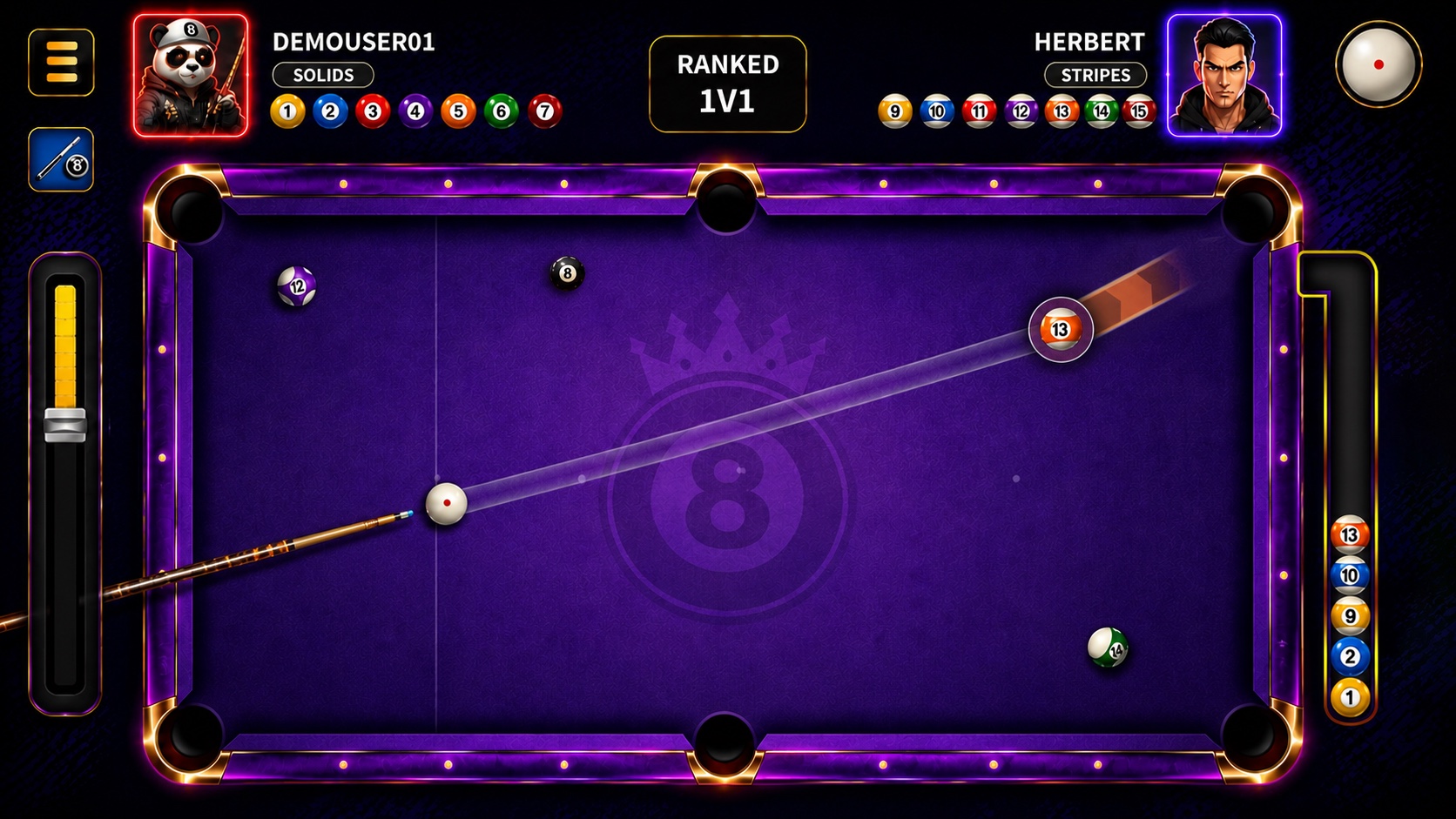
Build the shot people trust—and the product your team can run. Capermint delivers custom and turnkey 8 ball pool games for mobile, web and PC, connecting playable physics, resilient multiplayer, backend operations and release evidence in one path.
- Accepted shot physics
- Authoritative online play
- Operable release handoff
DIRECT ANSWER / 50 WORDS
What does an 8 Ball Pool Game Development Company build?
An 8 ball pool game development company plans and builds custom or turnkey cue-sports products, including shot physics, rules, mobile UI, real-time multiplayer, backend services, admin tools, QA and launch. Capermint supports original iOS, Android, web and PC development, co-development, project takeover and post-launch LiveOps for global publishers and brands.
PRODUCT ANATOMY / ONE CONNECTED SYSTEM
A pool game is more than a table on a screen.
The visible shot sits on top of four product obligations. Treating them together makes scope clearer, acceptance more objective and the live build easier to operate.
The table must feel trustworthy.
Input, aim guidance, cue force, spin, collisions, rails and pockets form one accepted shot model—not disconnected effects tuned at the end.
Playable shot lab + parameter sheet
The match must survive the network.
A match authority resolves turns and results while reconnect, idempotent commands and state recovery protect the session from ordinary mobile-network failure.
Network test harness + reconnect evidence
The product must be operable.
Live configuration, player support, moderation, content, telemetry and event controls belong in the production scope—not in a vague post-launch backlog.
Role-based admin + operational runbook
The release must be observable.
Performance budgets, crash reporting, gameplay events and release gates make the live build measurable enough to maintain and improve responsibly.
Acceptance matrix + release package
SERVICE SYSTEM / FROM SHOT TO OPERATIONS
Custom & Turnkey 8 Ball Pool Game Development Services
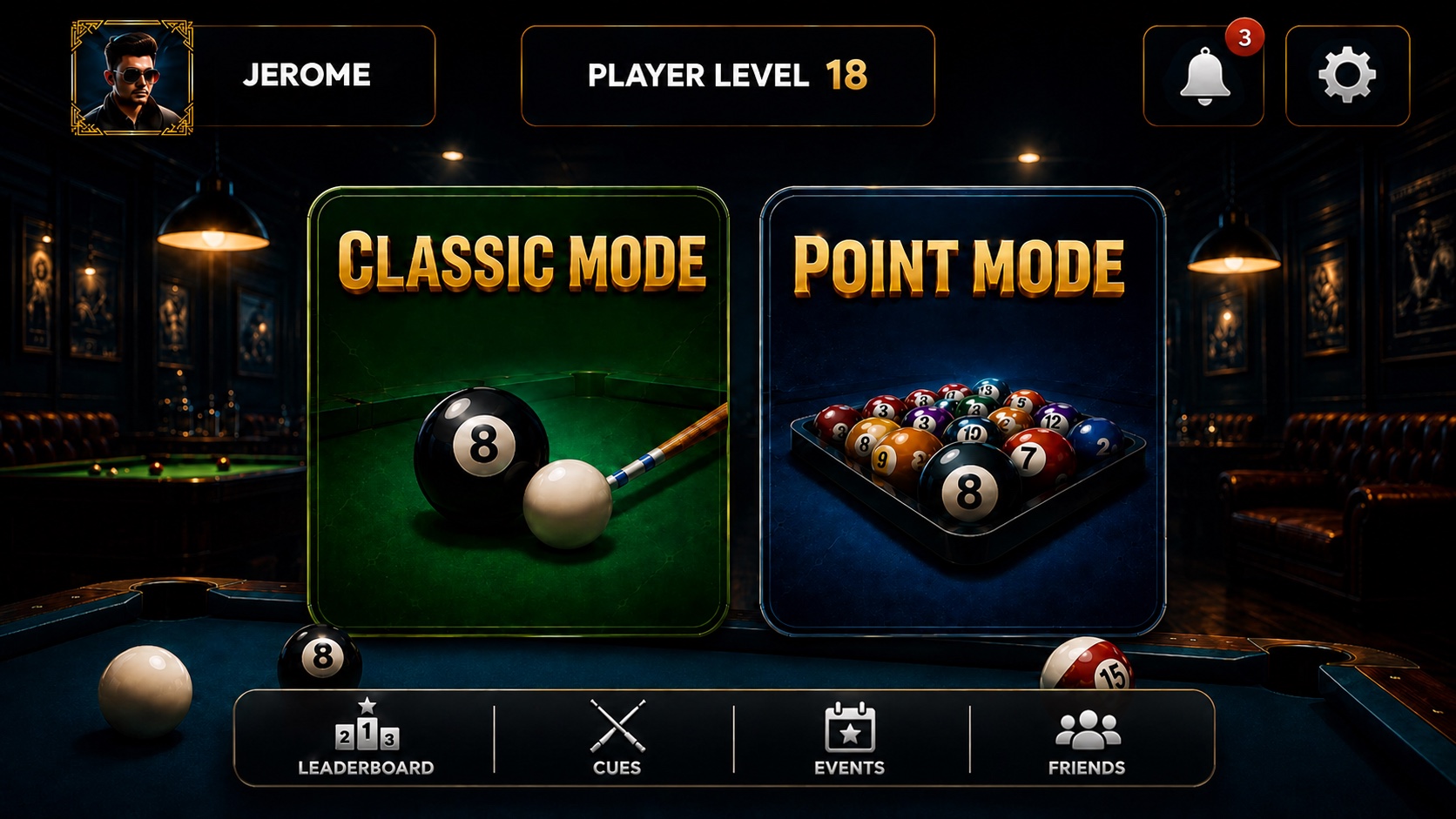
Choose a fully custom product, a turnkey end-to-end build or a narrower co-development boundary. When an appropriate reusable foundation exists and rights are clear, a white-label-ready path can also be assessed. Every workstream connects to a deliverable, review and acceptance gate.
CORE PLAY
Cue, table and shot systems
Controls, aim assistance, power, spin, collision response, rail behavior, pockets, camera and readable feedback tuned as one interaction model.ONLINE PLAY
Real-time multiplayer
Matchmaking, rooms, authoritative turn resolution, reconnect, rematch, presence and safe result processing designed around the chosen match format.OPERATIONS
Backend and admin
Identity, progression, inventory, configuration, moderation, support tools, events and telemetry connected to role-based operational controls.PRODUCT LAYER
Art, UX and progression
Original visual direction, onboarding, lobbies, collections, missions, social surfaces and non-cash economies built for clarity and maintainability.QUALITY
QA and release engineering
Physics acceptance, rule-path coverage, network simulation, device testing, performance budgets and release-readiness evidence.CONTINUITY
Takeover and LiveOps
Audit an inherited project, stabilize critical risks, document ownership, then operate a measured content and maintenance cadence.PLAYABLE ACCEPTANCE / THE SHOT LAB
Prove the shot before scaling the world.
A short, instrumented fixed-step prototype converts subjective words like ‘realistic’ and ‘smooth’ into observable behaviors the product team can approve.
PLAYABLE SHOT / ACCEPTANCE MODEL
- Input vector
- 42.0°
- Normalized force
- 0.68
- Side spin
- −0.12
- Replay seed
- LOCKED
Input calibration
Aiming direction, drag behavior and power mapping remain predictable across target screens.
Input replay + device pass
Rolling model
Deceleration and stop distance stay within approved tolerances for representative shot strengths.
Golden-shot comparison
Cushion response
Incident angle, speed loss and rail behavior follow the signed-off model.
Rail-bank test set
Spin transfer
Top, back and side spin affect post-contact motion in a learnable, repeatable way.
Spin matrix + replays
Pocket acceptance
Jaw, shelf and drop behavior avoid visibly contradictory outcomes at boundary cases.
Pocket-edge scenarios
Replay integrity
The agreed simulation strategy reproduces authoritative outcomes within the declared tolerance.
Seeded replay evidence
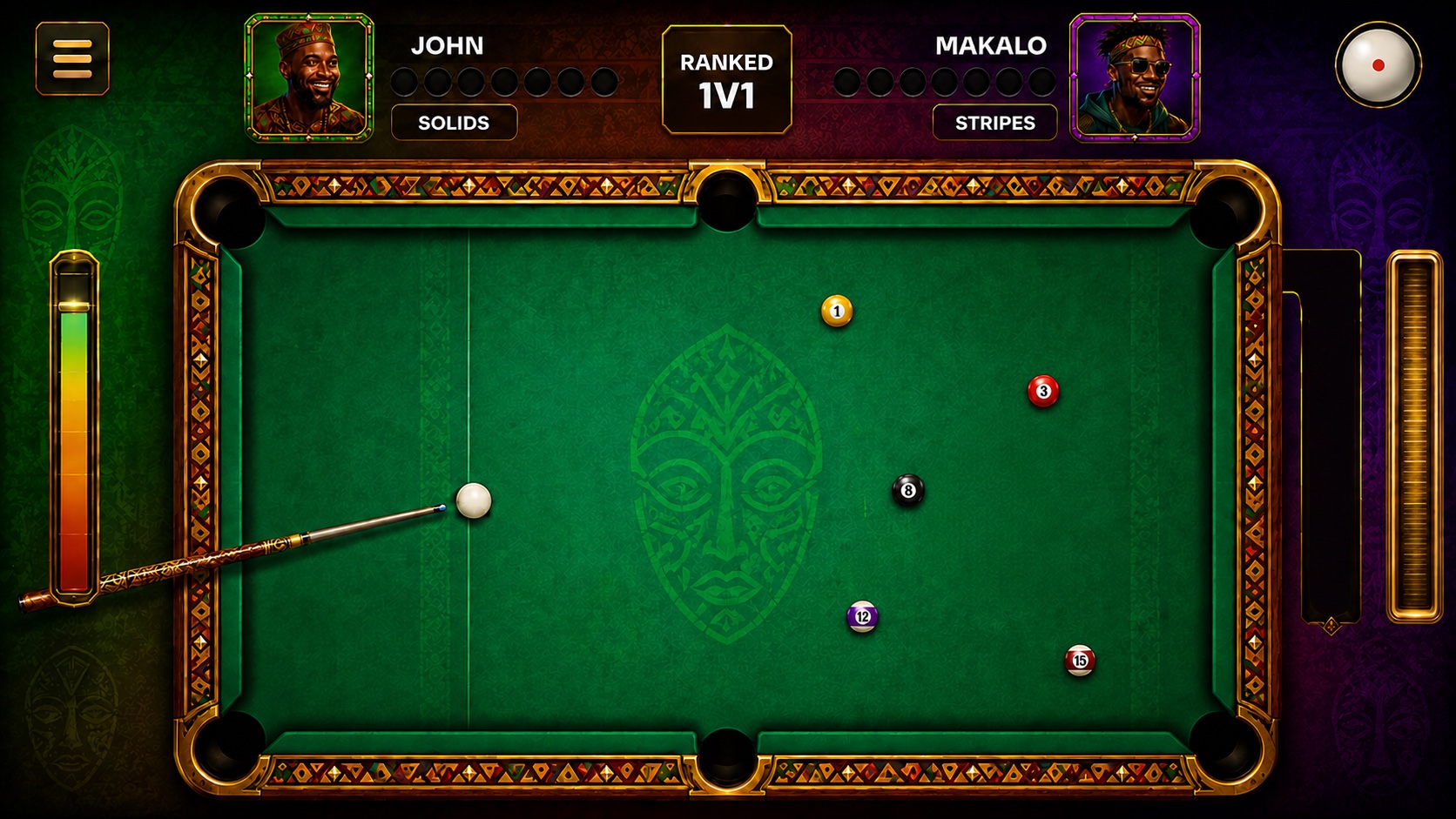
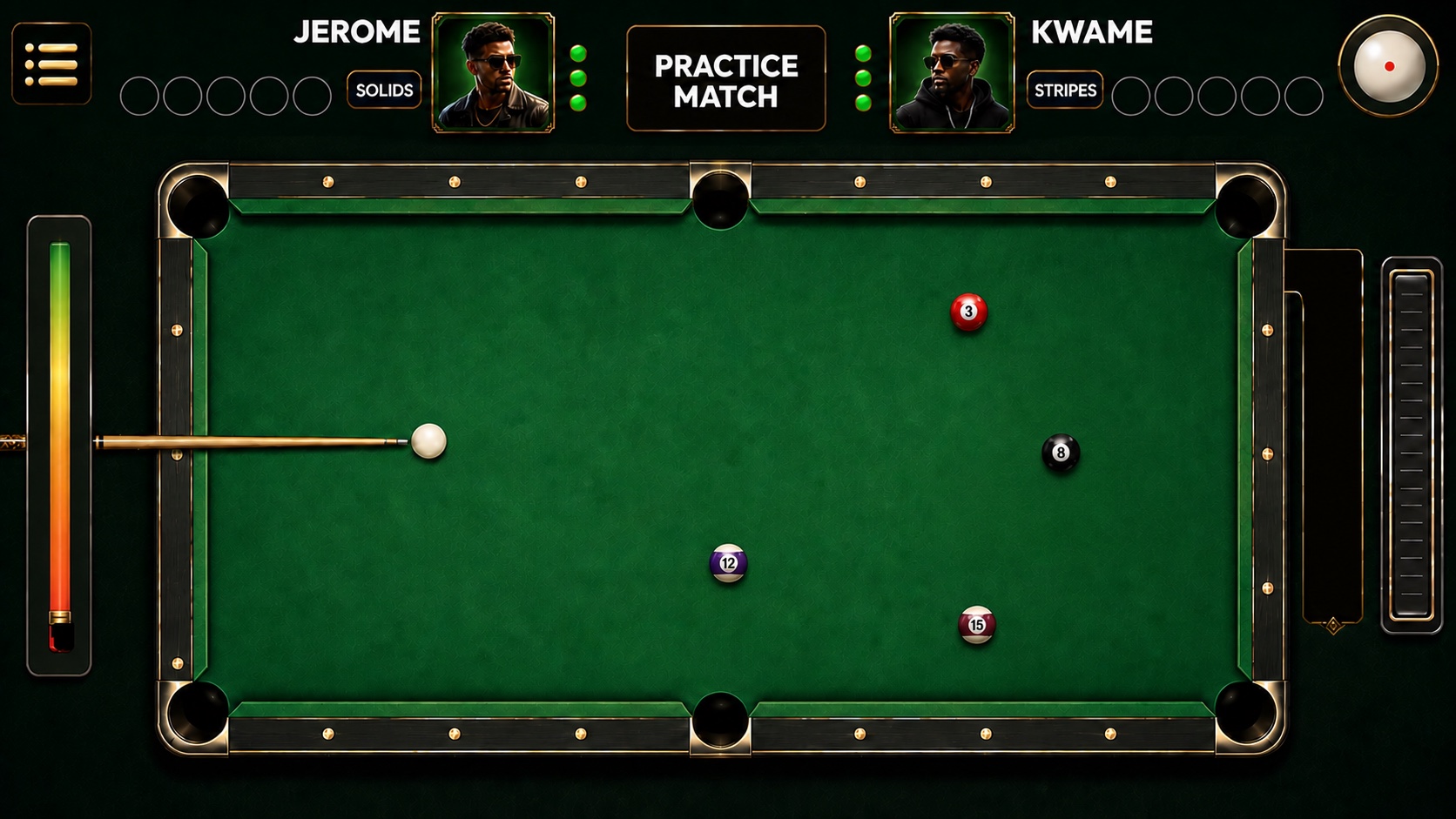
FULL-TABLE THEME VARIANTS / SAME PRODUCT CONTRACT
The table, HUD and controls remain complete while the visual world changes.
RULE ENGINE / CLEAR REFERENCES, CLEAR VARIANTS
Standard where it matters. Configurable where the product decides.
Rules become versioned product logic with named scenarios—not assumptions buried in UI or server code.
WPA-aligned rules
- Standard object groups are solids 1–7, stripes 9–15, and the 8-ball separate
- Documented break, group assignment and legal-shot flow
- Fouls, ball-in-hand, eight-ball and win/loss conditions
- Called-shot behavior only where selected for the product
- Acceptance scenarios mapped to the approved rule brief
WPA-aligned describes a rules reference, not affiliation, endorsement or certification by the World Pool-Billiard Association.
Configurable variants
- Quick-play assists, timers and beginner guidance
- House rules, practice variations and event modifiers
- Private-room options and mode-specific presentation
- Versioned rule configuration with explicit acceptance tests
Custom rules are treated as product decisions and tested separately from any standardized reference set.
OFFICIAL REFERENCE NOTES
WPA Rules of Play Unity Manual: fixed updates Unity Docs: server authority References inform discovery; they do not prescribe the final engine, architecture or rule variant.MATCH AUTHORITY / RESILIENCE / INTEGRITY
Multiplayer 8 Ball Pool Game Development
The target architecture is selected after prototype evidence. A typical authoritative path separates player input from trusted turn, state and result decisions.
Reference pattern only. Final topology, regions, hosting and simulation authority follow the approved concurrency, platform and operations brief.
MODE MIX / SELECT, DON’T ASSUME
One table can serve very different match promises.
- 01
Practice lab
Solo aiming, spin and bank-shot learning with optional guidance.
- 02
Quick match
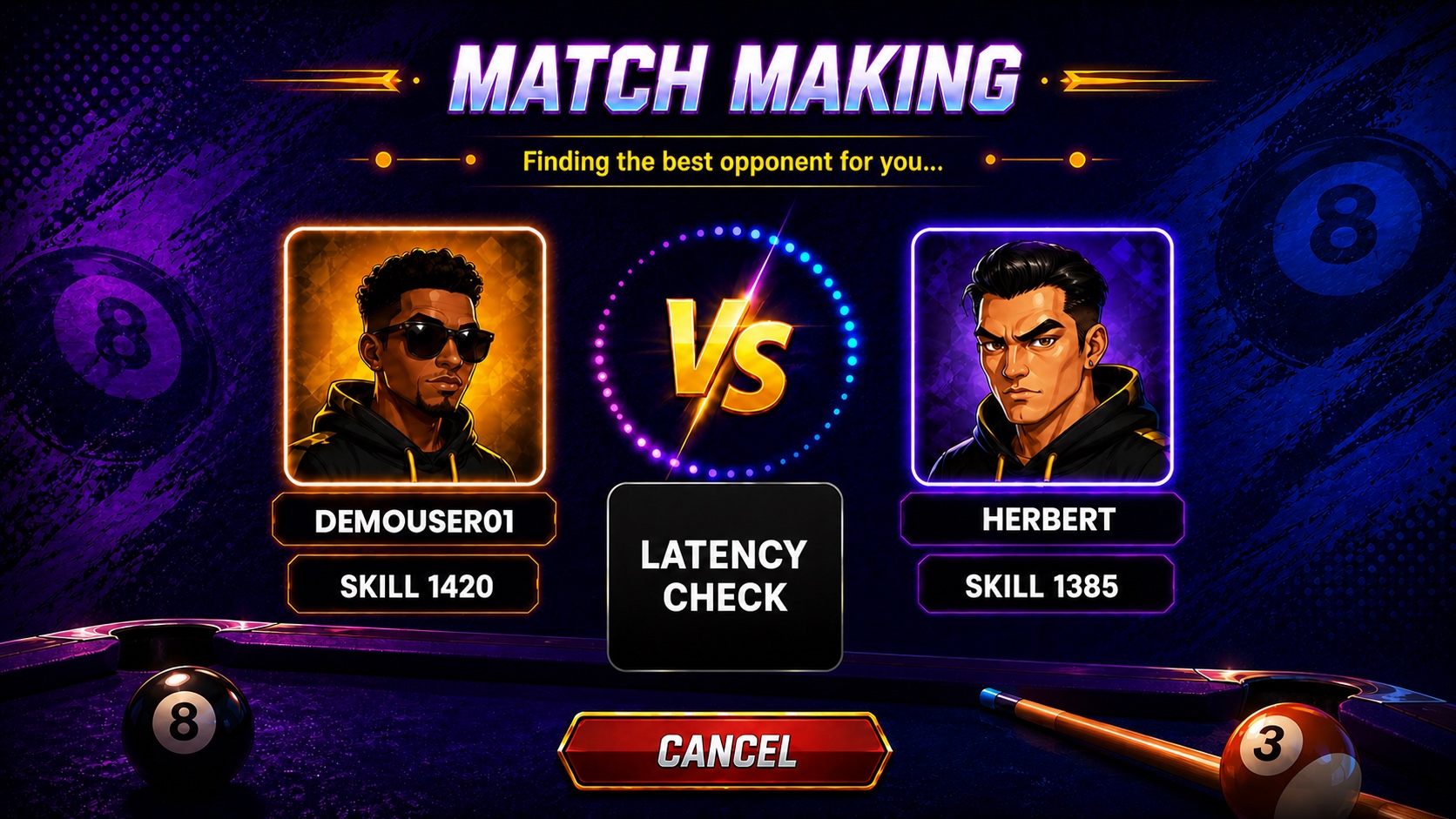
Fast 1v1 pairing around region, latency and agreed skill inputs.
- 03
Friends & rooms
Invites, private codes, rematches, spectators or chat when scoped.
- 04
Ranked seasons
Tier movement, protected result processing and season resets.
- 05
Brackets
Scheduled or asynchronous tournament structures selected per product.
- 06
Clubs & events
Social goals, event missions and moderated community surfaces.
FEATURE BLUEPRINT / PLAY, RETURN, OPERATE
Custom 8 Ball Pool Game App Features
A durable feature set links moment-to-moment play with progression, social reasons to return and the controls needed to operate the product.
Play feel
- Touch and pointer input
- Cue power and spin
- Aim-guide policies
- Camera and feedback
- Optional practice bot
Social play
- Friends and presence
- Private rooms
- Rematch and reactions
- Clubs and leaderboards
- Moderation controls
Progression
- Profile and levels
- Cosmetic collections
- Missions and achievements
- Ranked seasons
- Event progression
Live operation
- Remote configuration
- Content scheduling
- Segmented messaging
- Economy controls
- Support diagnostics
NON-RMG MONETIZATION / ENTERTAINMENT SCOPE
Earn through value—not wagering mechanics.
Potential models include premium access, advertising, passes, cosmetic tables or cues, subscriptions and non-withdrawable virtual currency—subject to audience, region and platform policy.
Scope boundary: this page describes an entertainment product. Cash-prize, wagering, deposit and withdrawal systems are outside Capermint's service scope for this product.
PLATFORM + ENGINE DECISIONS
Cross-platform pool game development for mobile, web, PC and console.
Unity may be a strong fit for iOS and Android pool game development from one production path, but engine and client architecture follow prototype results, target platforms, team capability and inherited constraints.
| Target | Product considerations | Possible engine path | Release evidence |
|---|---|---|---|
| iOS / iPadOS | Touch-first input, safe-area UI, device performance tiers | Unity or agreed native/hybrid path | Store, privacy and device acceptance |
| Android | Wide GPU, memory and aspect-ratio coverage | Unity or agreed native/hybrid path | Tiered device matrix and package review |
| Web / HTML5 | Pointer/touch, browser lifecycle and asset loading | HTML5/WebGL renderer selected after prototype | Browser matrix and hosting constraints |
| PC | Mouse, keyboard/controller and resolution support | Unity, Unreal or inherited stack | Installer/store and hardware matrix |
| Console | Controller, certification and platform services | Engine selected with platform brief | Dev access and certification plan required |
Existing codebases are evaluated before a rewrite, migration or engine change is recommended.
BACKEND + ADMIN / OPERABILITY BY DESIGN
Pool game backend and admin panel development
Role-based operational surfaces turn player support, matchmaking configuration, content, events and LiveOps into explicit workflows with permissions, validation and history—not direct database access.
QA / ACCEPTANCE / RELEASE EVIDENCE
Quality is a matrix of promises—not one final test phase.
The following model makes critical acceptance visible. Exact tolerances, devices, tools and environments are agreed in the project plan.
Shot physics
Golden shots, rail banks, spin and pocket-edge scenarios
Approved tolerances hold across selected devices
Rule engine
Break, foul, turn, assignment, eight-ball and end-state paths
No unresolved blocker in the approved ruleset
Multiplayer
Latency, packet loss, duplicate command and ordering simulations
Authoritative state remains valid under target conditions
Reconnect
Backgrounding, network switch, timeout and resume scenarios
Session recovers or exits with a defined player-safe result
Integrity
Command validation, impossible-action checks and result audits
Selected abuse cases are rejected and traceable
Performance
Frame time, memory, load and thermal checks
Budgets pass on the agreed device matrix
UX & input
Aspect ratios, touch targets, localization and accessibility checks
Critical flows remain legible and operable
Backend & admin
Permissions, configuration, rollback, moderation and support flows
Operational actions are scoped, logged and recoverable
Telemetry
Schema, payload, consent and dashboard verification
Release events are valid and decision-ready
Release
Build signing, store assets, runbook and rollback readiness
Release candidate clears the joint go/no-go review
DELIVERY PATH / FIVE VISIBLE GATES
8 Ball Pool Game Development Process
The structure stays adaptable, but every stage ends with something playable, inspectable or operational enough to support the next decision.
-
01
DISCOVER
Define the product and its hard questions.
Align audience, mode mix, rules, platforms, visual direction, backend needs and commercial boundaries before estimates harden.Product brief · risks · roadmap -
02
PROVE
Make the table and network risks playable.
Prototype input and shot behavior, then validate the selected multiplayer model before scaling content and operations.Shot lab · online proof · accepted scope -
03
PRODUCE
Build reviewable systems in connected milestones.
Gameplay, art, backend, admin and QA move against visible deliverables and acceptance criteria.Milestone builds · evidence · decisions -
04
LAUNCH
Harden the release and operational handoff.
Close performance, platform, telemetry, security and store-readiness work around an agreed release candidate.Release package · runbook · ownership -
05
GROW
Use production signals for the next release.
Prioritize stability, balancing, content and LiveOps using observed product health—not an assumed roadmap.Health review · prioritized release plan
ENGAGEMENT MODELS / CLEAR OWNERSHIP
Hire 8 Ball Pool Game Developers
Hire or outsource an 8 ball pool game development team around the work that must be owned. Role count follows scope; accountability, review cadence and integration boundaries are agreed before delivery begins.
Turnkey 8 ball pool product build
For a publisher or brand needing one accountable, end-to-end delivery path.
Custom game design, production and release, with agreed post-launch support.Co-development
For an internal team that owns product direction or part of the stack.
Defined system ownership, shared rituals and integration gates.Dedicated specialist pod
For sustained capacity in gameplay, backend, art, QA or LiveOps.
Named roles, cadence, backlog boundaries and measurable outputs.Existing-project takeover
For an inherited build with incomplete documentation or delivery risk.
Audit first, stabilization plan, access validation and staged ownership.COMMERCIAL MODEL / SCOPE BEFORE PRICE
8 Ball Pool Game Development Cost
There is no credible universal price for a multiplayer pool product. A useful estimate shows what drives effort, which risks require proof and what is explicitly excluded.
Mode depth
Practice, quick match, ranked, rooms, tournaments and clubs create different state and UI demands.
Physics ambition
Arcade guidance, advanced spin and simulation tolerances change prototyping and validation effort.
Multiplayer model
Regions, concurrency, reconnect, spectators and integrity controls affect backend scope.
Art & content
Original tables, cues, animation, VFX, UI, audio, localization and content volume drive production.
Operations
Admin, moderation, support, analytics, remote config and LiveOps determine live-service readiness.
Platforms
Device breadth, web or console support, integrations and certification expand acceptance work.
Inherited risk
Code quality, dependencies, missing accounts and production data are assessed before takeover pricing.
ESTIMATE INPUTS
Bring the decisions you know. We will expose the ones still missing.
OWNERSHIP / DELIVERABLES / HANDOFF
Make the product transferable from day one.
The contract controls IP assignment, pre-existing materials and third-party licenses. The delivery package makes those terms practical for the team receiving the product.
Source repositories and agreed branch history
Playable builds and build/release instructions
Game, rules, architecture and configuration documentation
Approved art, UI and source-production files
Backend services and role-based admin scope
QA evidence, known-issue register and release runbook
Third-party dependency and license inventory
Knowledge transfer and agreed support handoff
PROOF BRIDGE / VERIFY THE DELIVERY SYSTEM
Review relevant work. Inspect how decisions become builds.
The visuals on this page are illustrative interface studies adapted from supplied concepts. They do not assert a shipped product, client result or live metric. Evaluate Capermint through attributable portfolio work, a scoped prototype and a delivery plan with acceptance evidence.
BUYER GUIDE / 50 PRACTICAL ANSWERS
8 Ball Pool Game Development FAQs
Use these answers to prepare a sharper brief. Contract scope, technical discovery and target-platform requirements take precedence over any general answer below.
01 / PRODUCT
Product and scope
What does an 8 ball pool game development company build?
It can deliver the cue-and-table experience plus rules, modes, multiplayer, backend, admin, QA and release systems defined in the product scope.
Can Capermint build a new pool game from an idea?
Yes. A new engagement can begin with discovery and a playable shot prototype before the complete scope and production plan are approved.
What is custom 8 ball pool game development?
Custom development starts with the intended audience, rules, modes, brand, art direction, platforms and business model. Capermint then designs original game UI, shot behavior, progression, multiplayer, backend and operations around that product brief rather than applying a generic reskin.
Do you offer turnkey 8 ball pool game development?
Yes. A turnkey scope can cover discovery, UI/UX, original art, gameplay physics, mobile clients, authoritative multiplayer, backend, admin, QA, store preparation, deployment, handover and post-launch support. Exact inclusions, dependencies and acceptance gates are listed before production.
Can Capermint provide a white-label 8 ball pool game?
A white-label-ready route can be assessed when an appropriate reusable foundation exists and its rights are clear. Scope may include branding, UI, rules, modes, backend configuration and launch customization. Otherwise Capermint will recommend a custom build rather than misrepresenting a template as a finished product.
Can you build a pool game clone?
Capermint can build an original cue-sports product with familiar category mechanics, but it should not copy another publisher's protected code, brand, art, interface, data or trade dress. The product brief defines an original visual identity, progression model and implementation.
Can you build an HTML5 8 ball pool game for web browsers?
Yes, subject to prototype and browser-matrix findings. An HTML5 or WebGL client can support pointer and touch input, shared identity and online matches while loading, lifecycle, performance and hosting constraints are validated for the target browsers.
Can you develop a casual or hyper-casual pool game?
Yes. A casual product can use shorter sessions, clearer assists, faster onboarding and lighter progression. A hyper-casual direction needs an even narrower loop and distribution plan. Neither label replaces testing the shot feel, audience and retention premise.
Can you work from an existing game design document?
Yes. The team can assess the document, expose missing decisions and convert it into prioritized systems, milestones and acceptance criteria.
Which game modes can be included?
Common options include practice, quick 1v1, friend rooms, ranked seasons, tournaments and club events. The final mix is selected around audience and operational capacity.
Can the game have custom branding and original art?
Yes. Original tables, cues, UI, animation, VFX, audio and broader art direction can be created or integrated from approved client assets.
Can one backend support mobile and web clients?
Potentially. Shared identity, progression and match services can support multiple clients when platform constraints and simulation strategy are resolved during architecture.
Can Capermint take over an existing pool game?
Yes, subject to an audit of repositories, builds, dependencies, infrastructure, accounts, documentation and known defects before ownership expands.
Do you provide a clickable prototype or playable prototype?
Either may be appropriate. A clickable flow proves navigation; a playable prototype is preferred for shot feel, physics and multiplayer risk.
02 / PLAY
Physics and rules
How do you make pool physics feel accurate?
The team defines an accepted model for input, force, friction, collisions, cushions, spin and pockets, then validates it with repeatable golden-shot scenarios.
Can players apply top, back and side spin?
Yes, when advanced spin is in scope. Its control, transfer and post-contact behavior are prototyped and tested as part of the shot model.
Can the game use WPA-aligned 8-ball rules?
Yes. The approved rules can align to a WPA reference while remaining an independent product implementation with no implied affiliation or certification.
Can we use custom house rules?
Yes. Custom break, timer, foul, aim or event rules are documented as product variants and given their own acceptance scenarios.
Can aim guides vary by mode or player level?
Yes. Guide length, bounce preview and assistance can be mode- or progression-aware when the policy is clear and consistently enforced.
Do you build practice bots?
A practice bot or AI opponent can be scoped around shot selection, difficulty, thinking time and target device constraints.
How are edge-of-pocket outcomes tested?
Representative jaw, shelf, speed and approach-angle cases are replayed against signed-off tolerances to prevent visibly contradictory results.
Does every client need to simulate the same result?
The answer depends on the architecture. The prototype determines where simulation is authoritative and what replay tolerance is acceptable across platforms.
03 / NETWORK
Multiplayer and backend
Can you build real-time 1v1 multiplayer?
Yes. Scope can include matchmaking, rooms, turn authority, shot validation, state sync, results, rematches and reconnect behavior.
What is an authoritative multiplayer server?
It is the trusted service that validates important commands and resolves match state or results instead of accepting every client claim.
How does matchmaking work?
Matchmaking inputs can include region, latency, queue time, mode and a selected skill model. The exact policy is tuned and observed after launch.
What happens when a player loses connection?
The product defines grace periods, state recovery, retry limits and safe match outcomes, then tests them under backgrounding, network changes and packet loss.
Can the game include anti-cheat measures?
Yes. Typical layers include command validation, impossible-action checks, authoritative results, rate limits, audit logs and escalation tooling.
Can players invite friends to private rooms?
Yes. Private codes, deep links, invites, presence, rematches and optional spectators or chat can be included.
Can you build tournaments and leaderboards?
Yes. The format, scheduling, tie logic, ranking, reset cadence, moderation and operational controls must be selected in scope.
Do you provide backend monitoring?
The release can include logs, metrics, alerts, dashboards and a runbook for the selected services and support model.
04 / OPERATE
Admin, LiveOps and compliance
What can the admin console manage?
The agreed console may cover players, configuration, content, progression, matchmaking, moderation, events, support diagnostics and audit history.
Can values be changed without a client release?
Selected rules, content and economy values can use versioned remote configuration with permissions, validation and rollback controls.
Which analytics events are included?
The schema is defined around decisions such as onboarding, match health, shot behavior, progression, content and technical reliability—not raw event volume.
Can the game include chat and moderation?
Yes. The moderation approach can include filters, reports, mutes, sanctions, audit logs and human review based on the product’s audience and regions.
Can you schedule seasons and events?
Yes. Event configuration, start and end times, missions, rewards, messaging and fallback behavior can be administered when included in scope.
Is this page for real-money gaming development?
No. This page describes an entertainment product. Cash-prize, wagering, deposit and withdrawal systems are outside Capermint's service scope for this product.
Can the game use virtual currency?
A non-withdrawable virtual currency or cosmetic entitlement system can be designed with clear sources, sinks, disclosures and platform-policy review.
Can the product support localization and accessibility?
Yes. Language, text expansion, input, color, motion, readable feedback and assistive requirements are planned against the selected platforms and audience.
How do you secure player accounts, game APIs and admin tools?
Security scope can include trusted server decisions, authentication and authorization, role-based admin access, secret management, encrypted transport, rate limits, command validation, dependency review, logs and incident runbooks. Exact controls follow the architecture and risk assessment.
How are privacy, consent and platform compliance handled?
The product maps collected data, retention, consent, age considerations, SDK disclosures and store requirements for its selected audience and regions. Legal determinations remain with qualified counsel; the implementation and release evidence follow the approved requirements.
05 / DELIVERY
Commercials, ownership and support
How much does 8 ball pool game development cost?
A responsible estimate follows discovery of modes, physics depth, multiplayer, content, operations, platforms and inherited risk. Capermint does not present a fake fixed price without that scope.
What affects the 8 ball pool game development timeline?
The timeline depends on mode count, shot-physics depth, multiplayer and backend scope, original content, target platforms, integrations, compliance and inherited risk. A prototype can answer critical questions before a milestone plan and target release window are committed.
Which specialists may work on the project?
A team may include product, game design, gameplay and backend engineering, art, UI/UX, animation, QA, DevOps and production roles according to scope.
Can we hire or outsource to dedicated 8 ball pool game developers?
Yes. A dedicated or co-development team can provide gameplay, Unity, backend, art, UI/UX, QA or LiveOps capacity around defined ownership, cadence, backlog and integration responsibilities.
Who owns the source code and game assets?
Ownership, assignment, pre-existing materials and third-party licenses are defined in the contract. Handover follows those agreed terms.
Will we receive documentation and build instructions?
They can be explicit deliverables, including architecture, rules, configuration, build, release, known issues and operational runbooks.
Can Capermint support the game after launch?
Yes. Options can include warranty, maintenance, monitoring, balancing, content, events and a longer LiveOps cadence with agreed service boundaries.
Do you work with startups, publishers and enterprise product teams?
Yes. Capermint can structure B2B delivery for a funded startup, established publisher, agency, brand or enterprise team through a turnkey build, co-development boundary, dedicated specialists or an audit-first takeover.
Can Capermint sign an NDA and provide an SLA?
NDA terms can be agreed before sensitive product materials or system access are shared. Service levels for monitoring, support, response and maintenance depend on the post-launch engagement and are documented in the applicable contract rather than assumed from the build scope.
How do we start?
Share the audience, platforms, mode mix, current assets, desired launch window and major constraints. Capermint can then recommend discovery, a prototype or an audit-first takeover.
YOUR NEXT PLAYABLE DECISION
Start with the table. Leave with a product plan.
Share the audience, platforms, modes, current assets and major constraints. Capermint can recommend discovery, a shot prototype or an audit-first takeover.
New game projects · worldwide
Tell us what you’re building.
Share the idea, audience and ambition. We’ll reply with a practical view of scope, team shape, technology and the smartest first milestone.
01 / Scope
A useful first response
Clear assumptions, open questions and the right place to begin.
02 / Team
The right production shape
Full-cycle, co-development or dedicated specialists—built around ownership.
03 / Next move
A practical first milestone
Prototype, technical discovery or production planning—not a generic sales pitch.
- NDA available
- Reply within 12 hours
- Global delivery
Project brief / secure enquiry
Start with the playable idea.
Secure enquiry · NDA-first · No obligation