
Block and sliding puzzles
Define movement rules, board states, clear or escape conditions, touch controls and player feedback. Plan how levels will be authored, validated and playtested.
Search the native WordPress menu, then use the complete directory for every long-tail capability.
For founders, studios and publishers
Capermint designs and develops original mobile puzzle games for founders, studios and publishers. Our puzzle game development services cover game design, art, levels, engineering and release planning—for a playable prototype, first release or production work on an existing game.
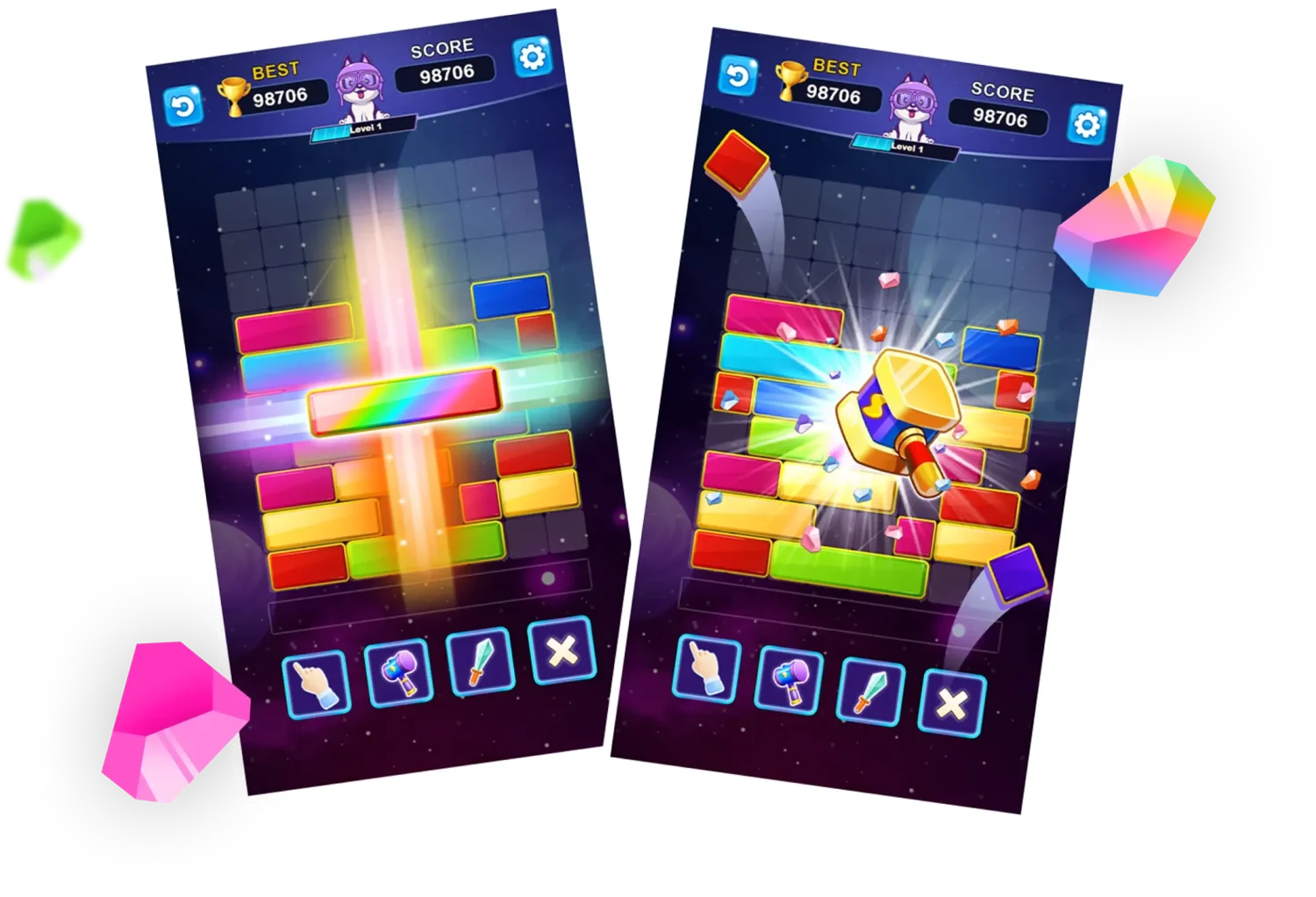
Published puzzle work
Players slide jewel blocks horizontally to complete lines, trigger visual feedback and build a score. Explore the board, controls and project artwork in the case study.
The iPhone game is listed on the App Store under Capermint Technologies Private Limited.
Your mechanic. Your identity.
The mechanic shapes the content tools, testing and player experience. Use reference games to explain the direction, then define your own artwork, levels and product identity.
Define movement rules, board states, clear or escape conditions, touch controls and player feedback. Plan how levels will be authored, validated and playtested.
Agree movement constraints, collision rules, hints, restart behavior and difficulty progression. Test readability and puzzle quality in a playable prototype.
Read the arrow-puzzle build guide ↗Scope matching rules, cascades, blockers, boosters and level objectives. A story, renovation system or world map adds separate art, progression and content work.
Explore Match 3 development ↗Puzzle game development services
Define the core loop, audience, controls and success rules. An early playable build lets you review board feel and difficulty before committing to a larger content library.
Build the agreed mechanics, saved progress and content workflow. Separate level data from presentation; include automated checks and human playtesting in the validation plan.
Scope original tiles, boards, interface, animation and audio. Plan tutorials, readable controls and understandable feedback for supported devices.
Include ads, purchases, analytics or backend services where the product needs them. Agree device coverage, offline behavior, integration testing, store materials and launch responsibilities.
Share the current build, technology, code access and production gap. A technical review can establish the scope for additional content, feature work, platform updates or ongoing support.
Plan the investment
A prototype, a first release and a game with live content operations need different budgets. Request an estimate that separates engineering, art, level production, integrations, testing and release support.
Identify recurring hosting, third-party services, new content, support and player-acquisition expenses separately. Set milestone dates once the scope and dependencies are agreed.
Request a puzzle game estimate ↗A reviewable production plan
Start with a brief and a playable direction, then expand into production, QA and release preparation. Agree acceptance criteria and a review process before work begins.
Before you choose a development partner
Share your concept, reference games, prototype status, target platforms, initial level scope, optional features, budget range and preferred launch window. Include your target market and meeting time zone.
Yes. Define the mechanic and the questions the prototype needs to answer, such as control precision, board readability and level difficulty. Agree its deliverables separately from a full store release.
Both can be included in the scope. Agree supported devices, platform integrations, testing coverage and store-account responsibilities. Browser delivery can be assessed separately against the required mechanic and integrations.
The schedule depends on gameplay, art, level production, integrations, platforms and review cycles. Ask for a milestone plan with dependencies and acceptance criteria; store review and scope changes can affect the launch date.
Put ownership, source-code delivery, project assets, documentation and access handover in the agreement. Identify third-party licenses and any pre-existing tools separately so you know what you can maintain and operate.
Share the build, engine, code access and the work you need. A review establishes whether the project needs content production, new features, performance work, integration changes or ongoing support, and which dependencies affect delivery.
Your next playable idea
Bring your concept, a reference or an existing build. Share the launch you want to fund so the first conversation can focus on a practical production direction.
Request a Puzzle Game Estimate ↗Planning a US launch? Include the intended US audience and target devices in your brief.
Your puzzle project brief
Describe your puzzle mechanic, target platforms, current stage and launch window in the form below. Include your budget range and target market if you have them.
New game projects · worldwide
Share the idea, audience and ambition. We’ll reply with a practical view of scope, team shape, technology and the smartest first milestone.
01 / Scope
Clear assumptions, open questions and the right place to begin.
02 / Team
Full-cycle, co-development or dedicated specialists—built around ownership.
03 / Next move
Prototype, technical discovery or production planning—not a generic sales pitch.
Project brief / secure enquiry
Secure enquiry · NDA-first · No obligation