Make the first move obvious
Build the experience around a direct horizontal slide and a clearly defined board.
Search the native WordPress menu, then use the complete directory for every long-tail capability.
CAPERMINT / CASUAL PUZZLE GAME
A small slide. A satisfying chain reaction.
A colorful block-sliding puzzle that turns simple horizontal moves into line clears, cascading effects and a pursuit of a better score.
Listed on the App Store as “Block Sliding – Drop Jewel.” The original Google Play destination currently returns “not found.”
THE PROJECT
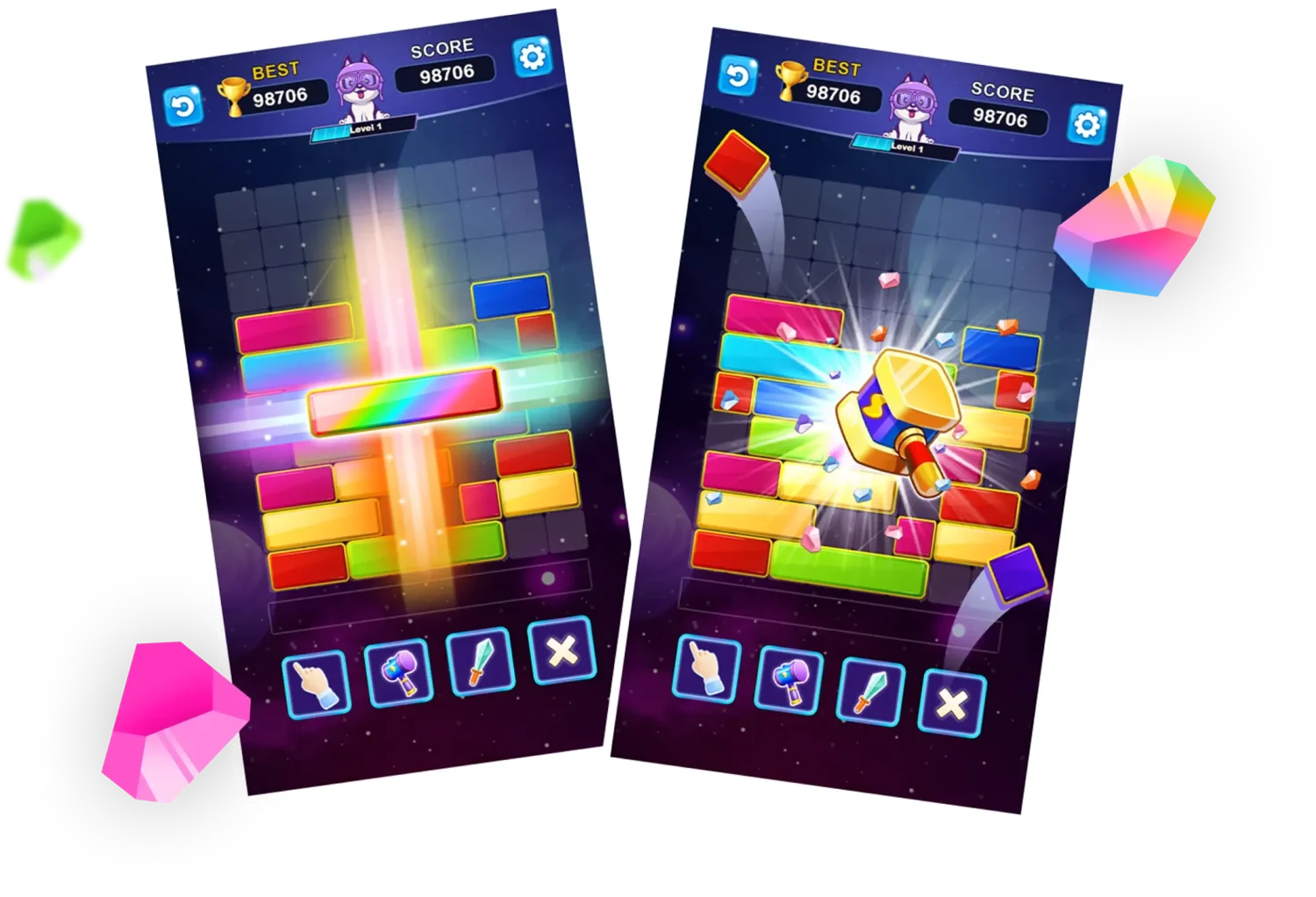
Drop Master takes a compact puzzle idea and gives it a vivid mobile presentation. Players move jewel blocks horizontally, create complete lines and watch the board react. The appeal comes from seeing how one move changes the possibilities around it.
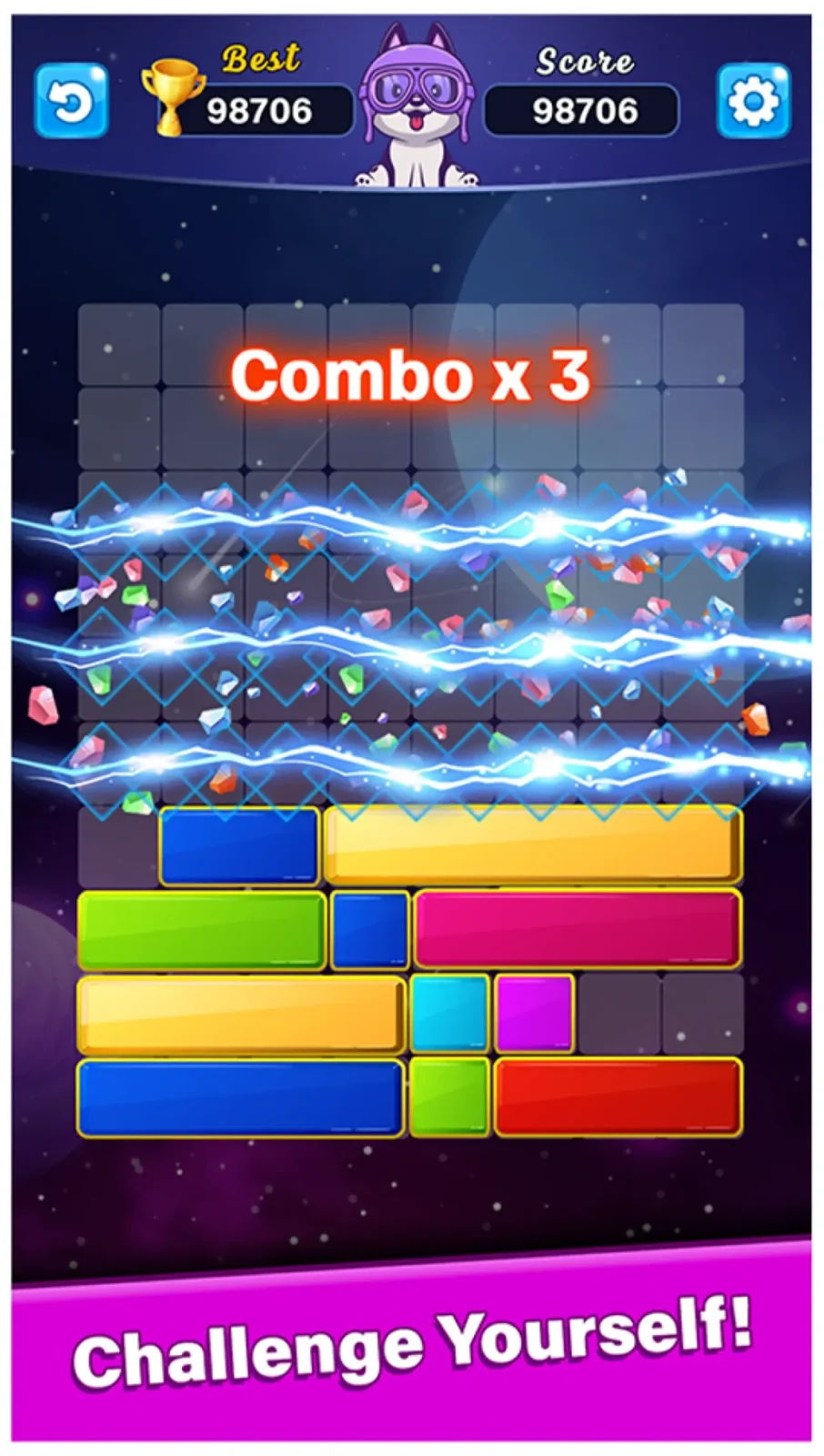
Capermint’s original case study presents the game under the Drop Master, Jewel Slide and Drop Jewel names. Its artwork documents bright blocks, a dark space-inspired background, score information and prominent visual feedback for line clears. The linked iPhone listing confirms the store name Block Sliding – Drop Jewel.
The project’s strongest design contrast is between a simple gesture and a changing board. The interface makes the puzzle itself the dominant surface, with supporting controls grouped beneath it.
Build the experience around a direct horizontal slide and a clearly defined board.
Use line-clear effects, score feedback and combo presentation to show the result of a move.
Give the blocks most of the screen while containing secondary controls around the edges.
PRODUCT VISUALS
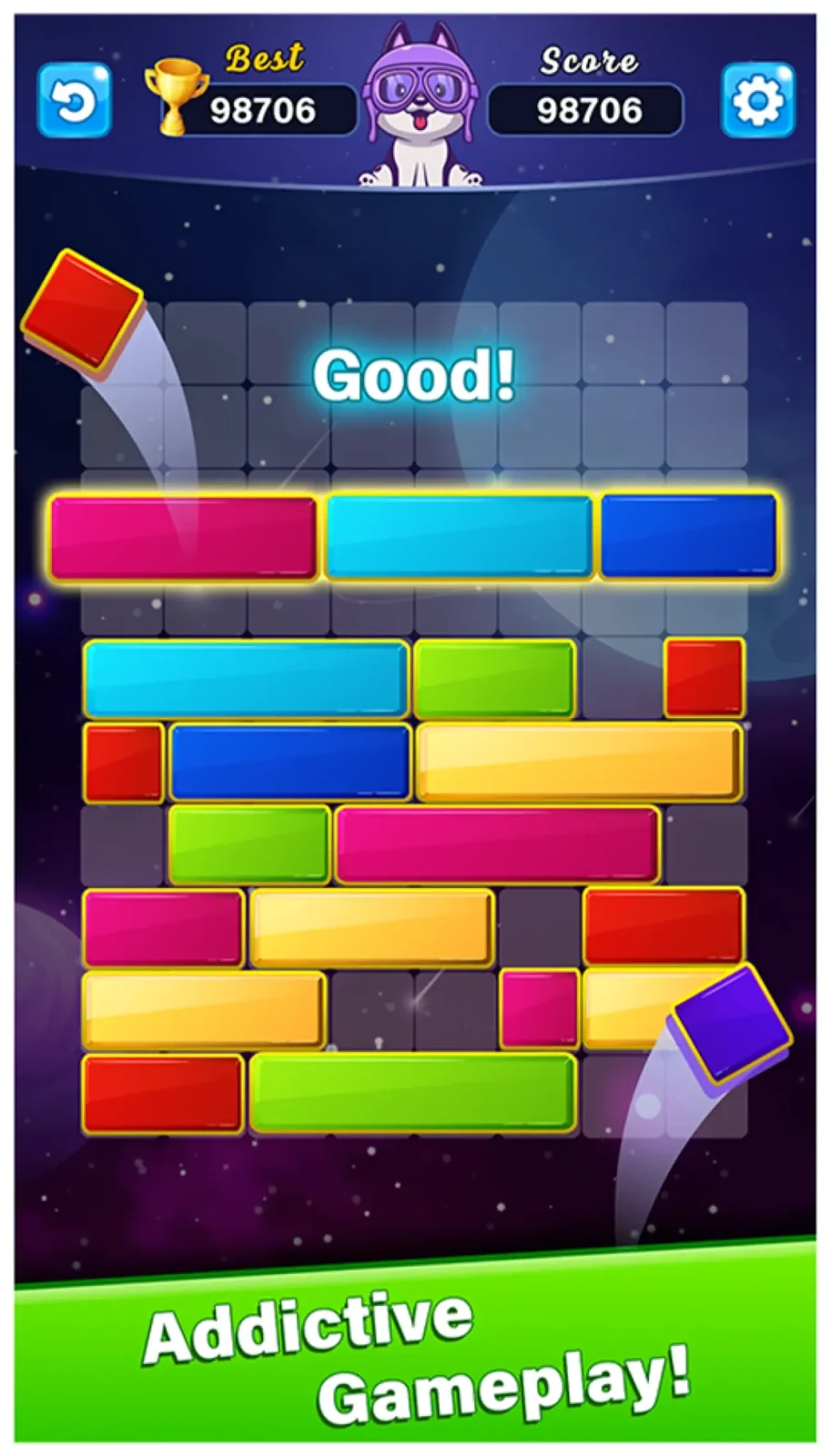
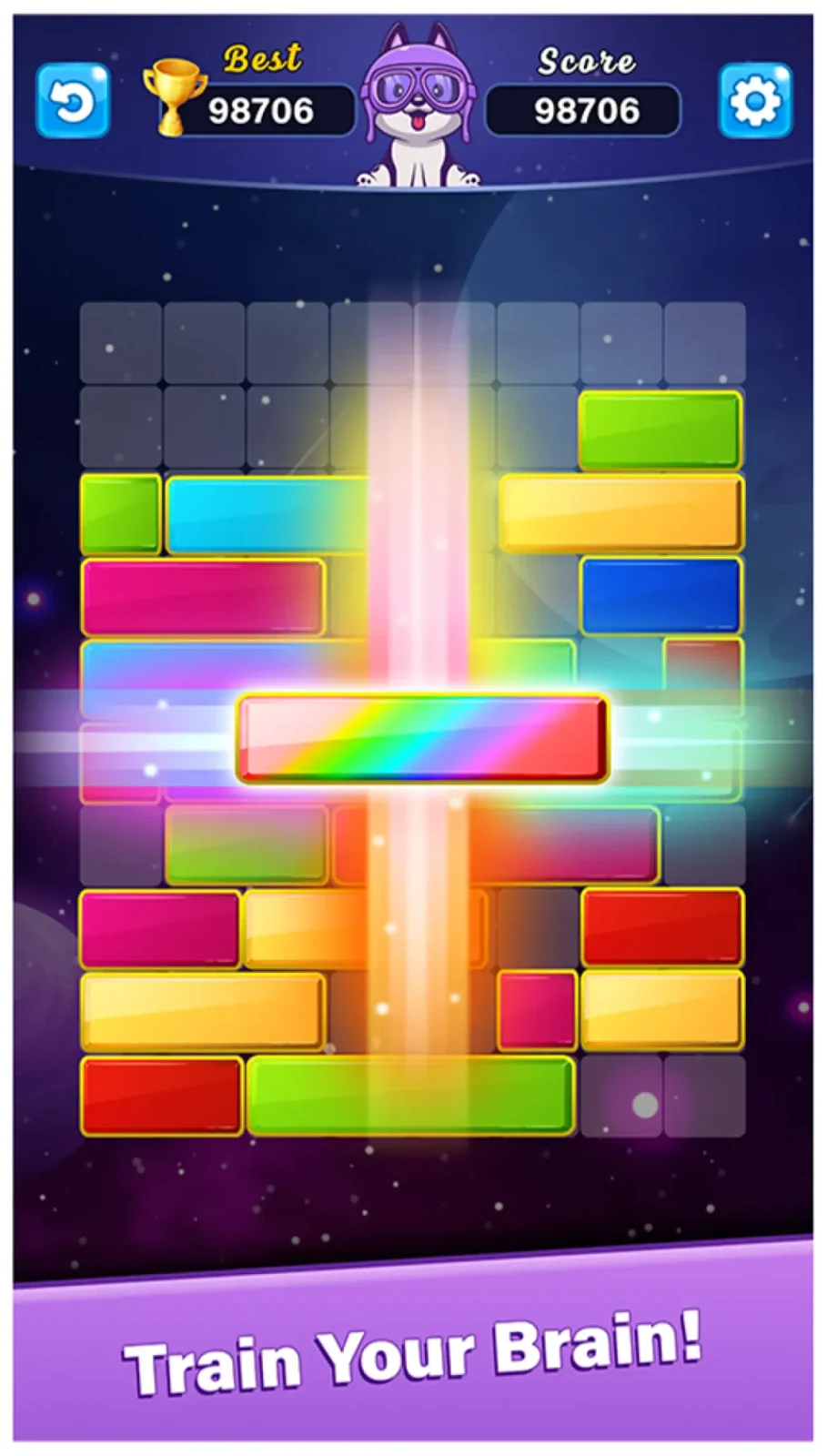
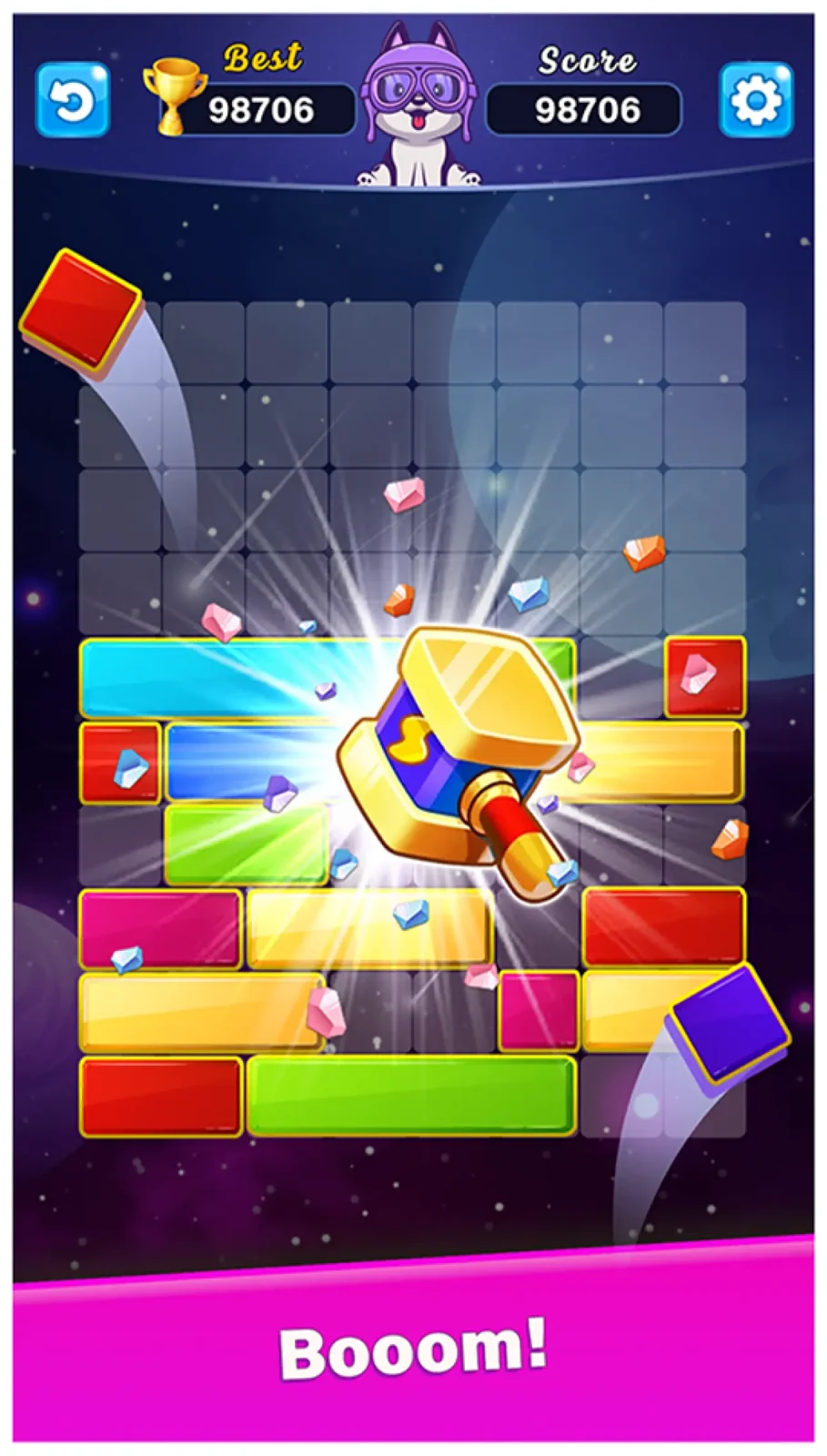
Original promotional gameplay screens from Capermint’s case study. The captions inside the artwork belong to the original presentation.
THE EXPERIENCE
The play loop makes cause and effect visible: each decision rearranges the space available for the next one.
Read the shapes and empty spaces across the board.
Move horizontally to change the arrangement of the jewels.
Line-clearing effects and score feedback mark a successful move.
Use the changed board to find the next opportunity and improve the run.
CHALLENGES & SOLUTIONS
The design challenges below are an analysis of the published features and interface, rather than a record of undocumented production incidents.
THE CHALLENGE
A casual puzzle needs a clear starting point without a long explanation.
THE RESPONSE
The published artwork puts the blocks and available gaps at the center of attention, with a direct sliding interaction.
Why it mattersThe player can connect a gesture to a visible change on the board.
THE CHALLENGE
A line clear can be hard to appreciate if feedback is too subtle.
THE RESPONSE
Bright beams, particles and combo labels make successful actions visually distinct in the original screens.
Why it mattersThe effect gives a move a clear conclusion and helps explain the score.
THE CHALLENGE
Strong effects and many colors can make a puzzle difficult to scan.
THE RESPONSE
The dark board background and outlined jewel shapes separate the playing pieces from decorative scenery.
Why it mattersPlayers can identify the puzzle state while enjoying the visual theme.
THE CHALLENGE
Scores, settings and power-up controls must fit on a narrow mobile display.
THE RESPONSE
The published layout places score information above the board and compact action buttons below it.
Why it mattersMost of the screen remains available for the puzzle itself.
PRODUCT FEATURES
The core interaction shifts jewel blocks across the puzzle board.
Completed rows create the main moment of progress.
Visible scoring helps players follow the result of successful moves.
The original screens show chained-clear feedback and score effects.
Dedicated icons and effect artwork form part of the published interface.
Jewel colors, dark space scenery and bold feedback define the game’s identity.
PRODUCT APPROACH
The product design connects input, board state and feedback. The published material does not identify the underlying engine or implementation architecture.
Build attention around the relationship between a block and the space it can occupy.
Use a distinct effect to explain when a line has cleared.
Keep supporting controls separate from the area where the player solves the puzzle.
The App Store version history records interface updates, bug fixes and performance work.
DESIGN & USABILITY
The visual system gives each action energy while preserving a readable puzzle surface.
Different jewel colors help the arrangement stand out from its background.
The tall board supports a growing stack and leaves room for the score above it.
Combo text and luminous effects give successful moves a celebratory finish.
OUTCOMES & IMPACT
The result combines the core game, supporting controls and a distinctive visual language.
One clear gesture sits at the center of the puzzle.
Score and line-clear effects explain the result of play.
The iPhone product is listed under Capermint Technologies Private Limited.
The outcomes describe the published product scope. No independently verified revenue, retention or conversion figures were supplied.
PROJECT QUESTIONS
Capermint’s project uses Drop Master and Jewel Slide naming. The linked iPhone listing is Block Sliding – Drop Jewel.
Players slide jewel blocks horizontally to complete lines and build a score.
The gallery uses original project promotional screens showing the board, line-clear feedback, a power-up effect and a combo.
The Google Play link in the original source currently returns a not-found page. It is not presented as an active download.
No verified performance dataset was supplied. The case study describes the design and published product rather than inventing growth figures.