
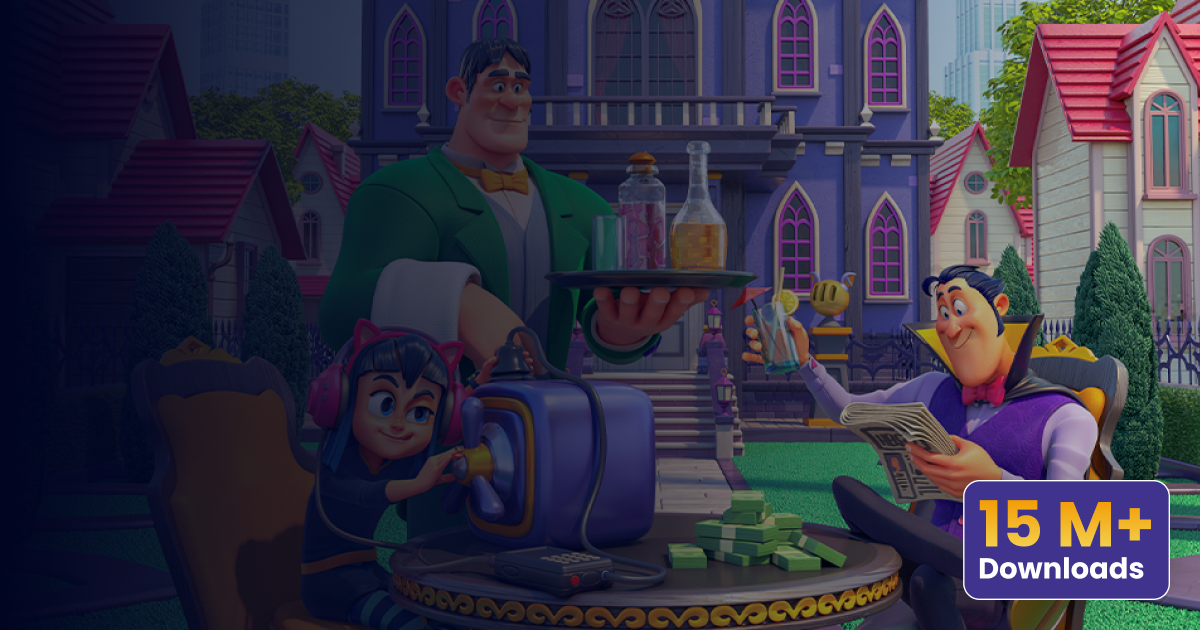
The mobile gaming industry has witnessed exponential growth, with match-3 puzzle games consistently dominating download charts and revenue rankings. If you’re looking to develop a game like Match Villains, you’re tapping into a proven market with immense potential.
Match Villains combines addictive match-3 mechanics with villain-themed progression, creating an engaging experience that keeps players coming back for more.
What is Match-3 Puzzle Game?
Match-3 puzzle games represent one of the most lucrative segments in mobile gaming, generating billions in revenue annually. The genre’s success stems from its simple yet compelling gameplay loop, broad demographic appeal, and effective monetization strategies.
Games like Candy Crush, Homescapes, and Match Villains have demonstrated that with the right combination of engaging mechanics and strategic design, puzzle games can achieve remarkable commercial success.
In this comprehensive guide, you’ll learn everything needed to bring your match-3 puzzle game vision to life. We’ll explore the custom mobile game development process, technology stack requirements, cost estimates, monetization strategies, and marketing approaches.
Whether you’re an entrepreneur, indie developer, or established studio, this roadmap will equip you with actionable insights to develop a successful Match Villains-style game.
- Match Villains Game
- How to Build a Game Like Match Villains?
- Technology Stack to Develop a Game Like Match Villains
- Step-by-Step Process to Develop a Game Like Match Villains
- How Much Does It Cost to Develop a Game Like Match Villains?
- How Match Villains Game Earn Money?
- Key Challenges in Developing a Match-3 Puzzle Game & How to Overcome Them
- Why Choose a Professional Game Development Company?
- Conclusion: Build Your Own Game Like Match Villains Today
Match Villains Game
Match Villains-style games represent an evolution of traditional match-3 puzzle mechanics, incorporating narrative elements and character-driven progression. At its core, the gameplay revolves around matching three or more identical items on a grid-based board to clear objectives and advance through levels.
What is Match Villains Game Core Concept?
The fundamental match-3 puzzle logic requires players to swap adjacent tiles to create horizontal or vertical matches of three or more identical elements. When matches occur, those tiles disappear, causing remaining tiles to fall and potentially create cascade effects. This simple mechanic creates satisfying gameplay loops that are easy to learn but challenging to master.
Ready to Build a Match-3 Game Like Match Villains?
Partner with Capermint to turn your game idea into a high-performing, visually engaging reality. From concept to launch, our Unity experts handle everything.
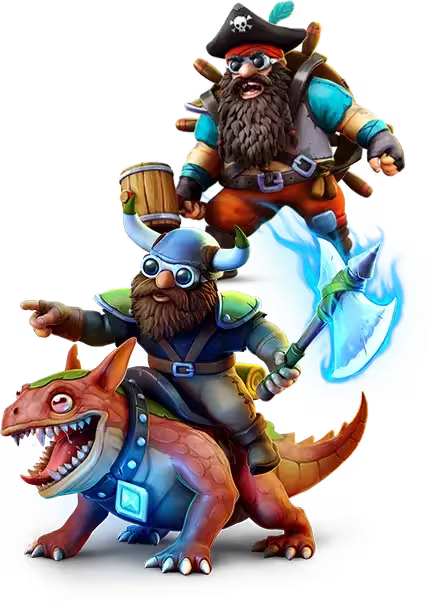
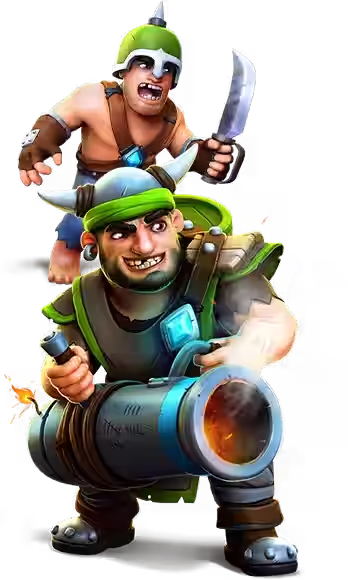
The villain-based progression system adds depth beyond standard match-3 gameplay. Players encounter different villains across levels, each presenting unique challenges and requiring specific strategies to defeat.
This narrative framework transforms repetitive matching into a story-driven adventure, significantly boosting player engagement and retention.
Level-based difficulty scaling ensures players experience steady progression without overwhelming frustration. Early levels introduce basic mechanics, while advanced stages incorporate complex objectives, limited moves, and intricate board layouts.
This graduated difficulty curve maintains the delicate balance between challenge and accessibility that defines successful casual puzzle games.
Player engagement elements like boosters, power-ups, and story mode enhance the core experience. Creating matches of four or more tiles generates special power-ups with unique abilities, such as explosive bombs, row-clearing rockets, or color-changing wildcards.
These mechanics add strategic depth, allowing players to plan combinations and execute satisfying chain reactions.
How to Build a Game Like Match Villains?
Core Gameplay Features
The match-3 board system forms the foundation of your game. This includes the grid layout, tile-swapping mechanics, match detection algorithms, and cascade physics. The board must respond smoothly to player input while efficiently processing complex match combinations in real-time.
Power-ups and boosters provide strategic options that differentiate your game from competitors. Standard power-ups include line clearers, area-effect explosives, and color transformers.
Boosters available before or during gameplay, like extra moves, shuffles, or starting advantages, offer monetization opportunities while helping players overcome challenging levels.
Level objectives and time limits create varied gameplay experiences. Objectives might include reaching target scores, collecting specific items, clearing obstacles, or defeating villains within move limits. This variety prevents monotony across hundreds of levels.
Advanced Game Mechanics
Villain abilities and challenges introduce dynamic obstacles that evolve as players progress. Each villain might have signature moves, such as freezing tiles, creating barriers, or regenerating health, requiring players to adapt their strategies and utilize power-ups effectively.
Dynamic level generation keeps content fresh without requiring the manual design of thousands of levels. Procedural generation algorithms create new board layouts while maintaining balanced difficulty and solvability. This technology significantly reduces content development costs while extending gameplay longevity.
AI-driven difficulty progression analyzes player performance to adjust challenge levels dynamically. If players struggle repeatedly, the system can subtly increase power-up frequency or reduce objective requirements. Conversely, skilled players encounter tougher configurations, maintaining engagement across skill levels.
Player Engagement Features
Daily rewards and streaks incentivize consistent play. Players receive escalating rewards for consecutive logins, creating habit-forming patterns that boost retention metrics. These rewards might include coins, boosters, or exclusive power-ups.
In-game events and tournaments inject competitive elements into single-player experiences. Limited-time events with exclusive rewards create urgency, while leaderboards foster social competition. These features drive re-engagement and provide regular content updates without major development overhead.
Social sharing and leaderboards leverage network effects for organic growth. Players can share achievements, request lives from friends, or compete for high scores. Social integration transforms solitary puzzle-solving into community experiences, significantly improving retention and virality.
Monetization Features
In-app purchases form the primary revenue stream for most match-3 games. Players purchase virtual currency, booster packages, extra moves, or lives. Offering various price points ensures accessibility across spending preferences.
Rewarded video ads provide non-paying players value while generating revenue. Players voluntarily watch advertisements to receive boosters, extra moves, or continue failed attempts. This model respects player choice while monetizing engaged users who prefer not to spend money.
Battle pass or season rewards create recurring revenue through subscription-like models. Players purchase seasonal passes granting exclusive rewards for completing challenges, encouraging sustained engagement throughout the season.
Top-grossing match-3 games typically generate 60–70% of revenue from in-app purchases, making monetization planning critical from the early development stage.
Technology Stack to Develop a Game Like Match Villains
Game Engine
Choosing between Unity and Unreal Engine represents a critical decision. Unity dominates match-3 game development due to its 2D capabilities, extensive asset store, robust documentation, and cross-platform deployment efficiency. While Unreal Engine offers superior graphics rendering, Unity’s lightweight framework, faster iteration cycles, and C# scripting make it ideal for casual puzzle games requiring frequent updates and optimizations.
Programming Languages
C# serves as the primary language for Unity development, offering object-oriented programming with strong type safety. For native iOS development, Swift provides modern syntax and performance. Java or Kotlin handles Android-specific implementations. C++ might be used for performance-critical algorithms like match detection or procedural generation.
Backend & Database
Firebase provides comprehensive backend services including real-time databases, authentication, cloud storage, and push notifications. Its scalability and ease of integration make it popular for mobile game development.
Node.js offers flexibility for custom backend logic, handling player data, progression tracking, and event management. AWS provides enterprise-grade infrastructure for games requiring extensive server resources. PlayFab specializes in game backend services, offering leaderboards, player analytics, and economy management out-of-the-box.
Game Analytics & Tracking
Player behavior tracking illuminates how users interact with your game. Analytics tools monitor level completion rates, purchasing patterns, session durations, and drop-off points. This data informs design iterations and monetization optimization.
Crash reporting ensures technical stability by capturing error logs and device-specific issues. A/B testing allows experimentation with different features, UI layouts, or difficulty curves, enabling data-driven design decisions.
Step-by-Step Process to Develop a Game Like Match Villains
Game Concept & Market Research
Begin with thorough competitor analysis examining successful match-3 games. Identify what works core mechanics, monetization strategies, retention tactics, and opportunities for differentiation. Analyze player reviews to understand pain points and desired features.
Target audience research defines who you’re building for. Match-3 game development typically appeal to broad demographics, but specific themes, difficulty levels, and monetization approaches vary by audience segments. Understanding your players guides all subsequent design decisions.
Game Design Document (GDD)
The GDD serves as your development blueprint. Document gameplay flow detailing how players progress from tutorial through advanced levels. Outline level design structures including objective types, board layouts, and difficulty progression curves.
Create UI/UX wireframes mapping screen layouts, navigation flows, and interaction patterns. The GDD ensures all team members share a unified vision, reducing miscommunication and costly revisions.
UI/UX Design
Visual style establishes your game’s identity. Match-3 games benefit from vibrant colors, clear tile designs, and satisfying animations. Your aesthetic should appeal to target demographics while ensuring gameplay clarity players must quickly distinguish tile types during fast-paced matching.
Villain design and animations bring personality to progression systems. Each villain requires distinctive visual characteristics and animated behaviors that telegraph their abilities and create emotional investment in defeating them.
Color psychology influences player emotions and engagement. Bright, warm colors create energetic, positive experiences suited to casual gaming, while strategic color choices ensure accessibility for color-blind players.
Game Development Phase
Frontend development implements game logic, UI elements, and player interactions. Developers build the match-3 engine, power-up systems, level progression, and menu navigation. Optimization ensures smooth performance across device specifications.
Backend integration connects your game to server infrastructure, enabling cloud saves, social features, leaderboards, and live events. Real-time updates allow you to modify level difficulty, introduce events, or fix issues without requiring app updates.
Testing & Quality Assurance
Functional testing verifies all features work as intended across scenarios. Testers attempt to break systems, exploring edge cases that reveal bugs or exploits.
Performance testing ensures smooth gameplay across target devices. Monitor frame rates, memory usage, battery consumption, and load times to optimize player experience.
Beta testing gathers real-world feedback from target audiences. Beta players identify confusing mechanics, frustrating difficulty spikes, and engagement issues before public launch.
Game Launch & Post-Launch Support
App Store and Play Store deployment requires preparing store listings with compelling descriptions, screenshots, and preview videos. App Store Optimization (ASO) improves discoverability through keyword optimization and visual asset testing.
Ongoing updates and bug fixes maintain player satisfaction. Regular content additions—new levels, events, features—keep existing players engaged while attracting new users. Feature upgrades respond to player feedback and market trends, ensuring your game remains competitive.
Building a successful match-3 puzzle game requires more than just great ideas. It demands the right technology, game mechanics, and monetization strategy.
At Capermint Technologies, we specialize in custom match-3 and casual game development, helping startups and enterprises launch scalable, high-performing mobile games.
How Much Does It Cost to Develop a Game Like Match Villains?
Factors Affecting Game Development Cost
Feature complexity dramatically impacts budget. Basic match-3 game development mechanics cost less than games incorporating villain battles, narrative systems, or procedural generation. Each additional feature requires design, development, testing, and maintenance resources.
Platform choice affects costs. Developing game for Android, iOS, or cross-platform simultaneously requires different resource allocations. Cross-platform frameworks like Unity reduce costs compared to separate native development.
Art and animation quality influences budgets significantly. High-quality 2D artwork, smooth animations, and particle effects require skilled artists and extended production time. Visual polish differentiates premium games but increases investment.
Backend infrastructure complexity scales with feature requirements. Simple games storing only local progress cost less than those requiring real-time leaderboards, social features, or live events demanding robust server architecture.
Multiplayer versus single-player represents major cost differences. Real-time multiplayer requires complex networking code, server infrastructure, and extensive testing, substantially increasing development expenses.
Match Villains Like Game Development Cost Breakdown
| Version | Estimated Cost | Features Included | Best For |
|---|---|---|---|
| Basic Version | $25,000 – $45,000 | – Core match-3 mechanics – 50–100 levels – Basic power-ups – Simple UI – Local progression |
Proof of concept (POC) or MVP launch |
| Mid-Level Version | $60,000 – $95,000 | – Villain progression system – 200+ levels – Advanced power-ups – Backend integration – Social features – In-app purchases (IAP) – Ad integration – Polished graphics |
Commercially viable product |
| Advanced Version | $120,000 – $180,000+ | – Dynamic level generation – AI difficulty adjustment – Extensive animations – Live events system – Tournament modes – Comprehensive analytics – Multiplayer components – Premium audio -visual quality |
Competing with top-tier titles in the market |
Ongoing Maintenance Cost
Server hosting scales with player base. Cloud services charge based on active users, data storage, and bandwidth consumption.
Updates and content expansion require continuous development resources. Successful games release new levels regularly, requiring ongoing artist and designer engagement.
Marketing and ASO demand sustained investment. User acquisition costs, influencer partnerships, and optimization efforts continue post-launch to maintain growth.
How Match Villains Game Earn Money?
- In-app purchases: Generate the majority of revenue for top match-3 games. Offer virtual currency packages at various price points, booster bundles providing gameplay advantages, and cosmetic items like tile themes or villain skins. Effective IAP design balances value proposition with perceived fairness, avoiding pay-to-win mechanics that alienate players.
- Reward-based ads: Allow non-paying players to access premium benefits voluntarily. Players watch 15-30 second videos to receive extra moves, boosters, or currency. This model respects player agency while monetizing engagement, typically generating $0.01-$0.05 per ad view.
- Subscription models: Provide recurring revenue through premium tiers. Monthly subscriptions might offer daily booster deliveries, unlimited lives, exclusive levels, or ad-free experiences. This predictable revenue stream complements transactional purchases.
Seasonal content packs create urgency and exclusivity. Limited-time purchases tied to holidays or special events drive impulse buying through FOMO (fear of missing out) psychology.
Brand collaborations introduce cross-promotional opportunities. Partnering with popular franchises for themed events or limited-edition content attracts new audiences while generating licensing revenue.
Key Challenges in Developing a Match-3 Puzzle Game & How to Overcome Them
- User retention remains the primary challenge in casual gaming. Combat churn through daily rewards, progressive difficulty curves that avoid frustration, regular content updates, and meaningful progression systems that create long-term investment.
- High competition in casual gaming means differentiation is essential. Develop unique themes, innovative mechanics, or compelling narratives that distinguish your game. Focus on execution quality rather than copying existing successful titles.
- Balancing difficulty level requires extensive testing and iteration. Too easy becomes boring; too difficult frustrates players into abandoning your game. Implement telemetry tracking completion rates and implement dynamic difficulty adjustment to maintain optimal challenge levels.
- Monetization versus user experience represents a delicate balance. Aggressive monetization alienates players while insufficient monetization fails to sustain operations. Ensure free players can progress meaningfully while paying players receive clear value without creating unfair advantages.
- Server scalability becomes critical during successful launches. Design backend architecture anticipating growth, utilize cloud services that scale automatically, and implement caching strategies reducing database load.
Why Choose a Professional Game Development Company?
Faster time-to-market comes from experienced teams who’ve navigated development challenges previously. Professional game development studios streamline processes, anticipate obstacles, and execute efficiently, reducing your game’s launch timeline.
Expert UI/UX and gameplay balance separate successful games from failures. Professionals understand subtle design nuances animation timing, feedback loops, progression pacing that create satisfying experiences.
Secure backend architecture protects player data and prevents exploits. Professional developers implement industry-standard security practices, encryption, and anti-cheat measures crucial for commercial games.
Scalable game infrastructure ensures your game handles success gracefully. Proper architecture supports growth from hundreds to millions of players without performance degradation.
Ongoing support and updates maintain your game’s competitiveness. Development partnerships extend beyond launch, providing continuous improvements, bug fixes, and feature additions that sustain player engagement.
Conclusion: Build Your Own Game Like Match Villains Today
Developing a game like Match Villains represents a significant but achievable undertaking. With match-3 puzzle games consistently proving their market viability and monetization potential, now is an opportune time to enter this lucrative space. Success requires careful planning, the right technology stack, experienced development talent, and strategic post-launch support.
The casual gaming market continues expanding, with mobile puzzle games attracting diverse demographics worldwide. By combining addictive core mechanics, compelling progression systems, fair monetization, and ongoing content updates, your Match Villains-style game can capture meaningful market share and generate substantial revenue.
Choosing the right development partner accelerates your path to success. Whether you’re validating a game concept or ready to build a full-scale commercial product, partnering with experienced game developers ensures your vision becomes reality efficiently and effectively.