

Match-3 games have become a significant segment of the casual gaming industry, engaging millions of players globally with their simple yet addictive gameplay.
These games, characterized by their straightforward mechanics and engaging levels, are a source of entertainment and a lucrative business model.
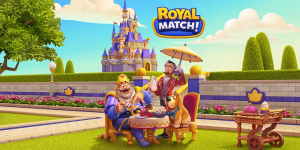
Match-3 games like Candy Crush Saga, Royal Match, and Toon Blast continue to dominate mobile gaming, generating billions in revenue annually.
At Capermint Technologies, we are top-rated Match-3 game developers, leveraging our expertise to create engaging and profitable gaming experiences.
- What is a Match-3 Game?
- How Match-3 Puzzle Games Work?
- Business Model of Match-3 Puzzle Games
- Key Features of Match-3 Puzzle Games
- How to Develop a Match-3 Game?
- Technologies to Develop a Match 3 Game
- How Much Does It Cost to Develop a Match-3 Puzzle Game?
- How Much Time Does It Take to Develop a Match-3 Puzzle Game?
- Top 5 Match-3 Puzzle Game Examples
- Latest News on Match-3 Games
- Why Capermint is the Best for Match-3 Game Development?
- Takeaway
What is a Match-3 Game?
Match-3 puzzle games are a type of tile-matching video game where the player’s goal is to swap two adjacent items to create a line of three or more items of the same type. These games often feature colorful graphics, engaging sound effects, and increasingly challenging levels. The core appeal lies in their accessibility and the satisfying experience of creating matches and combos.
How Match-3 Puzzle Games Work?
Core Mechanics
1. Grid Layout
The game grid contains various items, such as candies, gems, or fruits.
2. Swapping
Players can swap two adjacent items to form a horizontal or vertical line of three or more identical items.
3. Matching
When a match is made, the matched items disappear from the grid.
4. Falling Mechanism
New items fall from the top to fill the empty spaces left by the disappeared items, potentially creating new matches.
5. Special Items
Matching more than three items or creating specific patterns can generate special items with unique abilities, such as clearing a row or column.
Game Progression
1. Levels
Each level has specific objectives, such as reaching a certain score, collecting particular items, or clearing obstacles within a limited number of moves.
2. Challenges
As players progress, levels become more challenging with the introduction of obstacles like locked tiles, barriers, and limited moves.
3. Rewards
Players earn rewards like power-ups, boosters, and in-game currency for completing levels.
Business Model of Match-3 Puzzle Games
Match 3 puzzle games adopt various monetization strategies to generate revenue:
1. Freemium Model
The game is free, but players can purchase in-game items, boosters, and extra lives through microtransactions.
2. Advertisements
Revenue is generated through ads displayed within the game, which players can opt to remove by making an in-app purchase.
3. In-App Purchases
Selling virtual currency, power-ups, and additional moves to enhance the gaming experience.
4. Subscription Model
Offering a subscription that provides players with exclusive benefits, such as ad-free gameplay, daily rewards, and special items.
Key Features of Match-3 Puzzle Games
1. Multiple Levels
Hundreds or even thousands of levels with varying objectives and difficulty.
2. Power-Ups and Boosters
Special items that help players overcome challenging levels.
3. Daily Rewards and Challenges
Incentives for players to log in daily and complete specific challenges for rewards.
4. Leaderboards and Social Integration
Features that allow players to compete with friends and other players globally.
5. Engaging Graphics and Sound Effects
High-quality visuals and immersive sound effects that enhance the gaming experience.
6. Customizable Characters and Themes
Options for players to personalize their game experience.
7. Story Mode
Integrate a compelling storyline that progresses as players advance through levels, adding depth and engagement to the game.
8. Events and Tournaments
Host special in-game events and tournaments where players can compete for exclusive rewards, fostering a sense of community and competition.
9. Social Sharing
Allow players to share their achievements and progress on social media platforms, encouraging word-of-mouth promotion.
10. Customizable Avatars
Enable players to create and customize their avatars, adding a personal touch to their gaming experience.
11. Offline Mode
Provide an offline mode so players can enjoy the game without needing an internet connection, increasing accessibility.
12. Daily Challenges
Offer daily challenges that reward players for logging in and completing specific tasks, encouraging regular engagement.
13. In-Game Tutorials
Include interactive tutorials that guide new players through the game’s mechanics, making it easy for anyone to start playing.
14. Localization
Localize the game for different languages and regions to reach a broader audience and enhance user experience for non-English speakers.
15. Achievements and Badges
Introduce a system of achievements and badges that players can earn by completing specific milestones or challenges, adding an element of accomplishment.
16. Cloud Save
Implement cloud saving to allow players to sync their progress across multiple devices, ensuring they never lose their achievements.
17. Push Notifications
Use push notifications to remind players about daily rewards, events, and other important updates, keeping them engaged.
18. Feedback and Rating System
Provide an easy way for players to give feedback and rate the game, helping developers make improvements and understand player preferences.
How to Develop a Match-3 Game?
1. Conceptualization
Theme and Storyline
- Define a unique theme and storyline to distinguish your game from competitors.
Target Audience
- Identify your target audience and tailor the game’s features and difficulty levels accordingly.
2. Game Design
User Interface (UI)
- Create an intuitive and visually appealing interface.
Graphics and Animations
- Design high-quality graphics and animations that enhance gameplay.
Sound Design
- Develop engaging sound effects and background music that complement the game’s theme.
3. Development
Game Engine
- Choose a suitable game engine like Unity or Unreal Engine for development.
Coding
- Implement the game mechanics, level designs, and user interactions.
Integration
- Integrate features like in-app purchases, ads, and social sharing options.
4. Testing
Beta Testing
- Conduct thorough testing to identify and fix bugs and ensure smooth gameplay.
User Feedback
- Collect feedback from beta testers to make necessary adjustments and improvements.
5. Launch
Platforms
- Release the game on multiple platforms, including iOS, Android, and web.
Marketing
- Promote the game through social media, influencer collaborations, and targeted advertisements.
6. Post-Launch Support
Updates
- Regularly update the game with new levels, features, and bug fixes.
Customer Support
- Provide excellent customer support to address player issues and feedback.
Technologies to Develop a Match 3 Game
Developing a Player vs. Player (PvP) Match-3 puzzle game involves incorporating additional technologies and features to support real-time multiplayer interactions, competitive gameplay, and enhanced user experience. Here are the key technologies and tools required to develop a PvP Match-3 puzzle game:
1. Game Engines
Unity
Unity is ideal for developing 2D and 3D games, including PvP Match 3 puzzle games. It offers robust tools and support for multiplayer functionalities.
Unity Features
- Powerful 2D engine
- Extensive asset store
- Cross-platform support
- Rich animation tools
- Integrated multiplayer services
Unreal Engine
Unreal Engine is known for its high-quality graphics and performance, making it suitable for visually stunning PvP games.
Unreal Engine Features
- High-fidelity graphics
- Advanced visual scripting (Blueprints)
- Cross-platform capabilities
- Comprehensive documentation
- Integrated multiplayer support
2. Programming Languages
C#
C# is the primary language used in Unity, offering simplicity and versatility for game development.
C# Benefits
- Easy to learn
- Strong support from Unity
- Object-oriented features
C++
C++ is used in Unreal Engine and provides performance and control over system resources.
C++ Benefits
- High performance
- Rich set of libraries
- Widely used in the gaming industry
3. Networking and Multiplayer Services
Photon
Photon is a popular networking framework for real-time multiplayer games.
Photon Features
- Real-time communication
- Cross-platform support
- Easy integration with Unity
- Scalable infrastructure
Mirror
Mirror is an open-source networking solution for Unity that simplifies multiplayer game development.
Mirror Features
- High-level API
- Customizable
- Supports multiple transport layers
- Open-source community support
PlayFab
PlayFab, part of Microsoft Azure, provides backend services for multiplayer games.
PlayFab Features
- Real-time multiplayer
- Matchmaking services
- Player statistics and leaderboards
- Cloud saving
4. Development Tools
Visual Studio
Visual Studio is a powerful IDE supporting C# and C++ development.
Visual Studio Features
Advanced debugging tools
Code completion and refactoring
Integrated with Unity and Unreal Engine
Xcode
Xcode is an IDE for macOS that supports iOS game development.
Xcode Features
- Comprehensive tools for app development
- Simulator for testing
- Integration with Apple’s developer tools
5. Graphics and Animation Tools
Adobe Photoshop
Photoshop is used for creating and editing game assets, such as characters, backgrounds, and UI elements.
Adobe Photoshop Features
- Advanced editing tools
- Layer management
- Integration with other Adobe products
Spine
Spine is a tool for creating 2D skeletal animations, bringing characters and elements to life.
Spine Features
- Bone-based animation
- Inverse kinematics
- Integration with Unity and other engines
6. Sound and Music
Audacity
Overview: Audacity is a free, open-source audio editor for creating and editing sound effects and music tracks.
Audacity Features
- Multi-track editing
- Effects and plugins
- User-friendly interface
FMOD
FMOD is a sound effects engine that allows developers to create complex audio environments.
FMOD Features
- Real-time editing
- Cross-platform support
- Integration with Unity and Unreal Engine
7. Analytics and Monetization
Firebase
Firebase provides tools for real-time analytics, user engagement, and monetization.
Firebase Features
- Crash reporting
- In-app messaging
- AdMob integration
Google Analytics
Google Analytics helps track player behavior, engagement, and game performance.
Google Analytics Features
- Detailed reports
- Customizable metrics
- Integration with other Google services
8. Cloud Services
Amazon Web Services (AWS)
Overview: AWS offers cloud computing services for game hosting, data storage, and scaling.
Amazon Web Services Features
- Reliable infrastructure
- Scalable resources
- Various game development tools
Microsoft Azure
Azure provides cloud services for game development, including server hosting and database management.
Microsoft Azure Features
- Integration with Visual Studio
- Scalable cloud services
- AI and machine learning tools
How Much Does It Cost to Develop a Match-3 Puzzle Game?
Match-3 game development costs start from $5000 to $10,000 for a single platform (Android or iOS) with basic functionality. If you wish to develop a Match-3 puzzle game with all the advanced features and functionalities, with support to multiple platforms, it may cost higher based on functionalities.
The developing cost of the Match-3 puzzle game also depends on the company that you choose.
Small company charges: $15 – $40 / hour
Intermediate company charges: $50 – $100 / hour
Enterprise-level company charges: $100 – $250 / hour
You can contact us if you are looking for a game development company to develop a Match-3 Puzzle game. We have solid technical Match-3 Puzzle game developers who have developed various Match-3 Puzzle games. Check out our portfolio to learn more about our hyper casual game development.
How Much Time Does It Take to Develop a Match-3 Puzzle Game?
The development time for a Match-3 puzzle game depends on its complexity and features. Typically, the development timeline is as follows:
Basic Game: 3 – 6 months
Mid-Level Game: 6 – 9 months
High-End Game: 9 – 12 months
Top 5 Match-3 Puzzle Game Examples
To better understand the potential and appeal of Match-3 puzzle games, let’s look at some of the most successful examples in this genre:
1. Candy Crush Saga
Developer: King
Platform: iOS, Android, Facebook, Windows
Candy Crush Saga is one of the most popular Match-3 games globally. It features colorful candy-themed levels, each with unique challenges. The game is known for its addictive gameplay, frequent updates, and social integration that allows players to compete with friends.
2. Bejeweled
Developer: PopCap Games
Platform: iOS, Android, Windows, Mac, consoles
Bejeweled is a classic Match-3 puzzle game that laid the foundation for many games in this genre. Players match gems to create combos and achieve high scores. Its simple yet captivating gameplay has made it a favorite among casual gamers for years.
3. Gardenscapes
Developer: Playrix
Platform: iOS, Android, Facebook
Gardenscapes combines Match-3 mechanics with garden renovation. Players solve Match-3 puzzles to earn stars, which they use to restore and decorate a garden. The game includes a charming storyline and characters, adding depth to the traditional Match-3 gameplay.
4. Homescapes
Developer: Playrix
Platform: iOS, Android, Facebook
Similar to Gardenscapes, Homescapes focuses on home renovation. Players help the main character, Austin, renovate his childhood home by solving Match-3 puzzles. The game features engaging levels, a heartwarming storyline, and customization options.
5. Match Masters
Developer: Candivore
Platform: iOS, Android
Match Masters offers a unique twist on the Match-3 genre by incorporating multiplayer elements. Players compete against each other in real time to make matches and score points. The game includes various power-ups and boosters that add a strategic layer to the gameplay, making it both competitive and exciting.
Latest News on Match-3 Games
Bleach Soul Puzzle: A new Match-3 puzzle game based on the popular anime Bleach just released in 2024. This game promises a fresh twist to the genre with its unique storyline and engaging gameplay.
Match Factory: Match Factory has surpassed $20 million in revenue, with 99% of earnings coming from iOS. This success highlights the lucrative potential of well-designed Match-3 puzzle games.
Why Capermint is the Best for Match-3 Game Development?
 Capermint Technologies has a team of skilled developers with extensive experience in creating engaging and successful Match-3 puzzle games.
Customization: We offer tailored solutions to meet your specific game requirements and objectives.
Quality Assurance: Our rigorous testing processes ensure that your game is bug-free and delivers a smooth user experience.
Ongoing Support: We provide continuous support and updates to keep your game relevant and engaging for players.
Client Satisfaction: Our commitment to client satisfaction ensures that we deliver high-quality, profitable, and engaging games that meet your business goals.
Takeaway
Match-3 puzzle games are a popular and profitable segment of the casual gaming market. With the right development team, you can create a game that captivates players and generates significant revenue. Capermint Technologies is your ideal partner in developing a high-quality Match-3 game.
Our expertise, commitment to quality, and comprehensive support make us the best choice for bringing your game idea to life.
Ready to turn your Match-3 puzzle game idea into reality? Contact Capermint Technologies today!