
Battle royale games have done something remarkable: a simple premise — drop onto a map, shrink the zone, last one wins — became one of the most-watched, most-played, and most lucrative entertainment formats in history. In 2026 the genre shows no signs of slowing, with the global market valued at $18.3 billion and mobile platforms driving nearly half of all player activity.
This guide covers the full picture: what defines the genre, how it evolved, the mechanics that make it addictive, a ranked and deeply reviewed list of the top 15 titles active in 2026 — including real logos and direct download links — and what it takes to build a competitive battle royale game of your own.
- Battle Royale Market in 2026
- What Is a Battle Royale Game?
- History of Battle Royale Games
- Core Mechanics That Define the Genre
- Top 15 Battle Royale Games in 2026
- Platform Comparison: Where to Play Each Game
- Build a Battle Royale Game: What It Actually Takes in 2026
- Frequently Asked Questions
- Ready to Build Your Battle Royale Game?
Battle Royale Market in 2026
Battle Royale Market Revenue Growth (2022–2031, USD Billions)
North America leads with a 34% global market share, driven by esports culture and strong console penetration. Asia-Pacific commands 43% of player volume — dominated by mobile-first titles like Free Fire and BGMI. Europe accounts for 20%, anchored by PC gaming and a mature esports infrastructure.
What Is a Battle Royale Game?
A battle royale game is a multiplayer format in which a large number of players — typically 50 to 150 — are dropped onto a large map with no starting equipment. They scavenge for weapons, armour, and supplies while a constantly shrinking safe zone forces survivors into increasingly intense confrontations. The last player or team standing wins.
"The shrinking zone is the game's invisible designer — it creates urgency, forces encounters, and ensures no two matches ever unfold the same way."
What separates the best titles from the pack is what they layer on top: building mechanics (Fortnite), hero abilities (Apex Legends), realistic ballistics (PUBG), melee combat (Naraka), or physics-based chaos (Fall Guys). The formula is simple. The depth is limitless.
Why Players Keep Coming Back
- Every match is unique — where you land, what you find, who you fight. No two games play identically.
- Social by design — duo and squad modes turn gaming into a shared experience. Over 60% of players report playing regularly with real-life friends.
- Achievement loop — battle passes, seasonal skins, ranked ladders, and challenges provide structured progression beyond wins.
- Spectator-friendly — Fortnite generated 11.8M viewer-hours in a single week in early 2026 on Twitch alone.
- Free to access — dominant model across the genre. Cosmetic-only monetisation keeps the player base broad and competitive.
History of Battle Royale Games
The genre didn't emerge from a studio boardroom — it grew from modding communities and a Japanese film's cultural legacy.
Battle Royale (film)
Kinji Fukasaku's film — 42 students on an island, one survivor — established the cultural template. The concept entered gaming vocabulary through this lens.
ARMA 2 & early mods
Brendan Greene (PlayerUnknown) created battle royale mods for ARMA 2 and ARMA 3. These established the core loop: large map, shrinking zone, scavenging, last one wins.
PUBG launches — the genre goes mainstream
PlayerUnknown's Battlegrounds sold 4 million copies in its first month. It hit 3.2 million concurrent Steam players in January 2018 — a record at the time. Battle royale became a genre.
Fortnite Battle Royale launches free
Epic launched Fortnite BR free in September 2017. Within two months: 30 million players. The free-to-play model became the genre's permanent standard.
Apex Legends redefines movement
Zero pre-launch marketing, 25 million players in the first week. Its ping system and movement mechanics set a new design benchmark copied across the industry.
Mobile takes over
COVID lockdowns drove PUBG Mobile and Free Fire to record highs. Free Fire peaked at 150 million DAU in 2021. Mobile became the dominant global platform.
Genre matures — AI, live events, cross-play
AI-driven anti-cheat, seamless cross-platform play, in-game concerts and live events, micro-betting integration. Fortnite's all-time peak: 44.7M concurrent players, November 2024.
Core Mechanics That Define the Genre
The Shrinking Zone
A closing safe area compresses the map over time, forcing encounters. Zone timing is the primary pacing lever — its speed and damage scaling define match rhythm.
Drop & Landing
Players choose landing zones from a moving plane or bus. Hot drops create early chaos; remote areas offer safer loot. Where you land is often the match's most important decision.
Looting & Inventory
Scavenging weapons, armour, and consumables from the map or eliminated players. Inventory management is a core skill dimension — what to keep, what to drop.
Squad Dynamics
Solo, duo, and squad modes each change the game entirely. Communication, role specialisation, and revive mechanics shift dramatically in team play.
Monetisation Model
Free-to-play with cosmetic microtransactions and seasonal battle passes is the dominant model. In-game purchases represent 64% of total Battle Royale revenue as of 2024.
Cross-Platform Play
Cross-play between PC, console, and mobile broadens matchmaking pools. About 41% of Battle Royale players engage across multiple platforms.
Top 15 Battle Royale Games in 2026
Ranked by active player base, innovation, content depth, and competitive longevity — not just hype. Each entry includes the official game logo, direct download links, platform data, and an honest appraisal of strengths and weaknesses.
Fortnite is not just the most popular battle royale — it is one of the most successful entertainment products in history. Its building mechanics add a vertical skill dimension absent from every competitor. Seasonal chapter resets, licensed collaborations (Marvel, Star Wars, NFL), and live in-game concerts have turned it into a cultural platform.
Blitz Royale (June 2025) added a 32-player, 5-minute mobile-first mode. The Fortnite Creative mode and UEFN tool have enabled tens of thousands of player-made islands, extending the ecosystem well beyond the core Battle Royale mode.
PUBG is the genre's founding text. Realistic ballistics, true-to-life weapon handling, and deliberate pacing still define "hardcore battle royale." Update 35.1 (2025) introduced a Recall system for downed players, reworked Aim Punch for smoother gunplay, and unified mechanics across maps.
PUBG went free-to-play in January 2022 and continues to maintain a loyal competitive player base. Erangel, Miramar, Vikendi, and Rondo each reward different strategic approaches — making map knowledge a genuine skill dimension.
Apex Legends remains the most mechanically refined battle royale in 2026. Sliding, wall-climbing, and zip-line traversal make combat feel kinetic and vertical. The ping system — a context-sensitive communication tool enabling full team coordination without voice chat — was so influential it was widely copied across the industry.
The ALGS (Apex Legends Global Series) is among the most technically demanding esports leagues in gaming. With 25+ unique Legends each with distinct abilities, genuine team compositions and strategic depth reward high-level coordination.
Warzone brought CoD's industry-leading gunplay to the battle royale format, peaking at 100 million players in 2022. Its defining feature — the Gulag — gives eliminated players a 1v1 chance to respawn, softening the harsh early-game elimination experience. The return of Verdansk in 2025 drove a major nostalgia-fuelled re-engagement wave.
Activision's improved anti-cheat has made meaningful progress against the persistent hacking issues that plagued earlier seasons. Warzone remains one of the most-played FPS titles globally in 2026, with constant seasonal integration alongside the main CoD release cycle.
Fire
Free Fire cracked the code for emerging markets: a full battle royale experience on low-end smartphones, with 10-minute matches. Available in 130+ countries, it dominates South/Southeast Asia, Latin America, and parts of Africa where competitors' hardware requirements were prohibitive. The 50-player format shortens matches without sacrificing tension.
The Free Fire World Series 2021 drew 5.4 million concurrent esports viewers — the highest ever for an esports event outside China at the time. In 2026 it sustains 13.95 million daily active users.
Want to Build the Next Battle Royale Hit?
Capermint has delivered custom battle royale games across mobile, PC, and console — full-cycle from concept through live operations and seasonal content updates.
PUBG Mobile brought the full PC experience to smartphones — same map layouts, weapon systems, and tactical depth, optimised for touch controls. It became the highest-grossing mobile battle royale globally from 2022 through 2024. In India, BGMI (Battlegrounds Mobile India) operates as a localised variant with a major domestic competitive scene backed by Krafton's continued investment.
Regional esports leagues in South Asia, Southeast Asia, and the Middle East reinforce PUBG Mobile's position as mobile gaming's most competitive Battle Royale platform.
CoD: Mobile hit 100 million downloads in its first week in 2019 — the fastest mobile game to that milestone at the time. In 2026, with 650M+ lifetime downloads, it remains one of the most-played mobile games globally. The full battle royale mode (Isolated map, 100 players) runs alongside classic 5v5 multiplayer modes.
Gyroscope aiming, console-quality graphics, and seasonal integration with the broader CoD universe keep it fresh. Its content library — maps from Black Ops, Modern Warfare, and beyond — provides unrivalled variety for CoD fans on mobile.
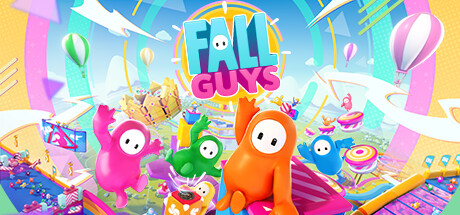
Fall Guys takes the last-one-standing format and replaces weapons with chaotic obstacle courses, team-based mini-games, and physics-driven elimination — battle royale as a TV game show. Acquired by Epic in 2021 and relaunched free-to-play in June 2022, it hit 50 million players in two weeks. Regular season updates and Fortnite cross-promotions keep it culturally relevant.
Super People merges PUBG-style tactical realism with 12 unique character classes (Sniper, Psychic, Driver, etc.), crafting mechanics, and passive skill levelling within each match. Players gather materials throughout the game to upgrade weapons and armour — a persistent in-session progression dimension that no other tactical BR replicates.

Naraka: Bladepoint is the genre's most original major release in years — a melee-first battle royale set in a mythological Asian world where grappling hooks, swords, and spears dominate. Its vertical movement system and directional parry/counter combat create a skill ceiling unlike anything else in the BR genre, with 35M+ players globally and top-tier Steam concurrent peaks proving its mainstream appeal.
Hunt: Showdown sets battle royale in 1890s Louisiana where small teams hunt AI boss monsters to claim bounties — while competing against and avoiding other hunter teams. With only 12 players per match, a single gunshot in the swamp triggers immediate strategic decisions. The 1896 engine upgrade (2024) dramatically improved visual fidelity. Permadeath mechanics create genuine stakes most BR titles can't match.
The Finals features fully destructible environments — walls, floors, and entire buildings collapse mid-match, permanently altering the battlefield. Built by former DICE developers using a proprietary physics engine, it hit 10 million players in its first month. Class-based loadouts (Light, Medium, Heavy) and a show-format universe create team compositions with genuine strategic depth and a unique identity no other BR replicates.
Realm Royale is the genre's leading fantasy-themed title — bows, wands, and hammers replace guns in a medieval world. The Reforged update rebuilt graphics, progression, and added full cross-platform support including Nintendo Switch. The in-match Forge mechanic lets players craft class-specific abilities mid-game. For players fatigued by military aesthetics, it offers a genuine visual and mechanical alternative.
Darwin Project offers intimate 10-player battle royale where crafting warm clothing and tracking footprints through the snow are as important as gunplay. Its Show Director role — an 11th participant who can intervene by affecting weather, dropping supply airdrops, or closing zone sectors — creates an interactive streaming layer that no other BR title has replicated. Ideal for content creators and streamers seeking audience participation mechanics.
Warzone Mobile brings the full Verdansk battle royale experience to smartphones — the same iconic map, 120-player lobbies, and CoD-quality gunplay in a mobile-optimised package. Pre-registrations crossed 25 million weeks before launch, signalling massive pent-up demand for a premium military BR on mobile. Cross-progression with console Warzone lets players carry cosmetics across platforms.
Warzone Mobile fills the gap between the ultra-casual Free Fire audience and the tactical PUBG Mobile experience, targeting the millions of CoD fans who want their favourite universe on the go.
Platform Comparison: Where to Play Each Game
Battle Royale Market by Platform — Player Share 2026
| Game | PC | Console | Mobile | Cross-Play |
|---|---|---|---|---|
| Fortnite | Steam/Epic | PS4/5, Xbox, Switch | iOS + Sideload Android | Full |
| PUBG: Battlegrounds | Steam | PS4/5, Xbox | Separate app | Console only |
| Apex Legends | Steam/Origin | PS4/5, Xbox, Switch | Limited | Full |
| Warzone | Steam/Battle.net | PS4/5, Xbox | Warzone Mobile (separate) | Full PC+Console |
| Free Fire | No | No | iOS + Android | Mobile only |
| PUBG Mobile / BGMI | No | No | iOS + Android | Mobile only |
| CoD: Mobile | No | No | iOS + Android | Mobile only |
| Fall Guys | Steam/Epic | PS4/5, Xbox, Switch | No | Full |
| Naraka: Bladepoint | Steam | PS5, Xbox | No | Full |
| The Finals | Steam | PS5, Xbox | No | Full |
| Warzone Mobile | No | No | iOS + Android | Cosmetics w/ Warzone |
Build a Battle Royale Game: What It Actually Takes in 2026
Battle royale is one of gaming's biggest opportunities — and one of its most technically demanding formats. Here's what you need to know before starting development.
Core Technical Challenges
- Authoritative server architecture — Real-time synchronisation of 60–150 players across a large map requires dedicated servers with regional distribution. Peer-to-peer cannot handle this reliably, and latency issues destroy player experience instantly.
- Anti-cheat from day one — High-stakes format makes BR games primary targets for aimbots and wallhacks. Ship without robust anti-cheat and your reputation is compromised before the first season ends.
- Zone timing and balance — The shrinking zone's speed, damage scaling, and final-circle mechanics are your primary pacing lever. This requires hundreds of playtests — not a feature to bolt on in post-production.
- Large-world map optimisation — BR maps (4x4 km to 8x8 km) require LOD systems, occlusion culling, and streaming solutions fundamentally different from small-arena game development.
- Loot system probability design — Weapon and item spawn rates directly affect game balance. Too much variance creates frustration; too little kills the scavenging loop entirely.
- Skill-based matchmaking (SBMM) — Balancing 100 players with wildly varying skill levels into fun matches across the spectrum is significantly harder than traditional 5v5 SBMM.
Recommended Tech Stack for Battle Royale Development
| Layer | Recommended Stack | Why It Matters |
|---|---|---|
| Game Engine | Unreal Engine 5 / Unity | UE5 Nanite+Lumen for AAA fidelity; Unity for mobile-first or indie budget |
| Networking | Photon, PlayFab, custom UDP | Authoritative server model essential — peer-to-peer creates desync and cheating |
| Backend / LiveOps | AWS GameLift, Azure PlayFab | Auto-scaling for concurrent player spikes around launch or live events |
| Anti-Cheat | Easy Anti-Cheat, BattlEye | Industry-standard; custom solutions require sustained dedicated engineering |
| Analytics | GameAnalytics, Amplitude | Player behaviour data essential for zone timing, loot balance, and retention |
| Matchmaking | AWS GameLift FlexMatch | Configurable SBMM with regional routing and latency-aware placement |
Monetisation That Works in 2026
Free-to-play with cosmetic monetisation is the dominant proven model. In-game purchases represent 64% of total battle royale revenue globally. Key principles:
- Never pay-to-win — Cosmetics only. Any gameplay advantage for real money destroys competitive integrity and community trust rapidly.
- Battle pass rhythm — 10–12 week seasonal cadence with a clearly communicated roadmap. Players pay for structured progression; uncertainty kills recurring revenue.
- Collaboration events — Licensed crossovers with brands, films, and musicians create urgency-driven limited-time purchases. Fortnite has mastered this better than any competitor.
- Ranked cosmetics — Exclusive skins and badges for high-ranked players create social status signals that motivate spending without affecting balance.
Capermint: Your Battle Royale Development Partner
Full-cycle BR game development across mobile, PC, and console — custom anti-cheat, dedicated server infrastructure, shrinking zone systems, loot balancing, and post-launch LiveOps support. From concept to seasonal content.
Frequently Asked Questions
Ready to Build Your Battle Royale Game?
Capermint's game development team has shipped battle royale experiences across mobile, PC, and console — from initial design through live operations and seasonal content. Let's build yours.