

At a glance
Gamification mechanics at a glance: what we build and what it costs
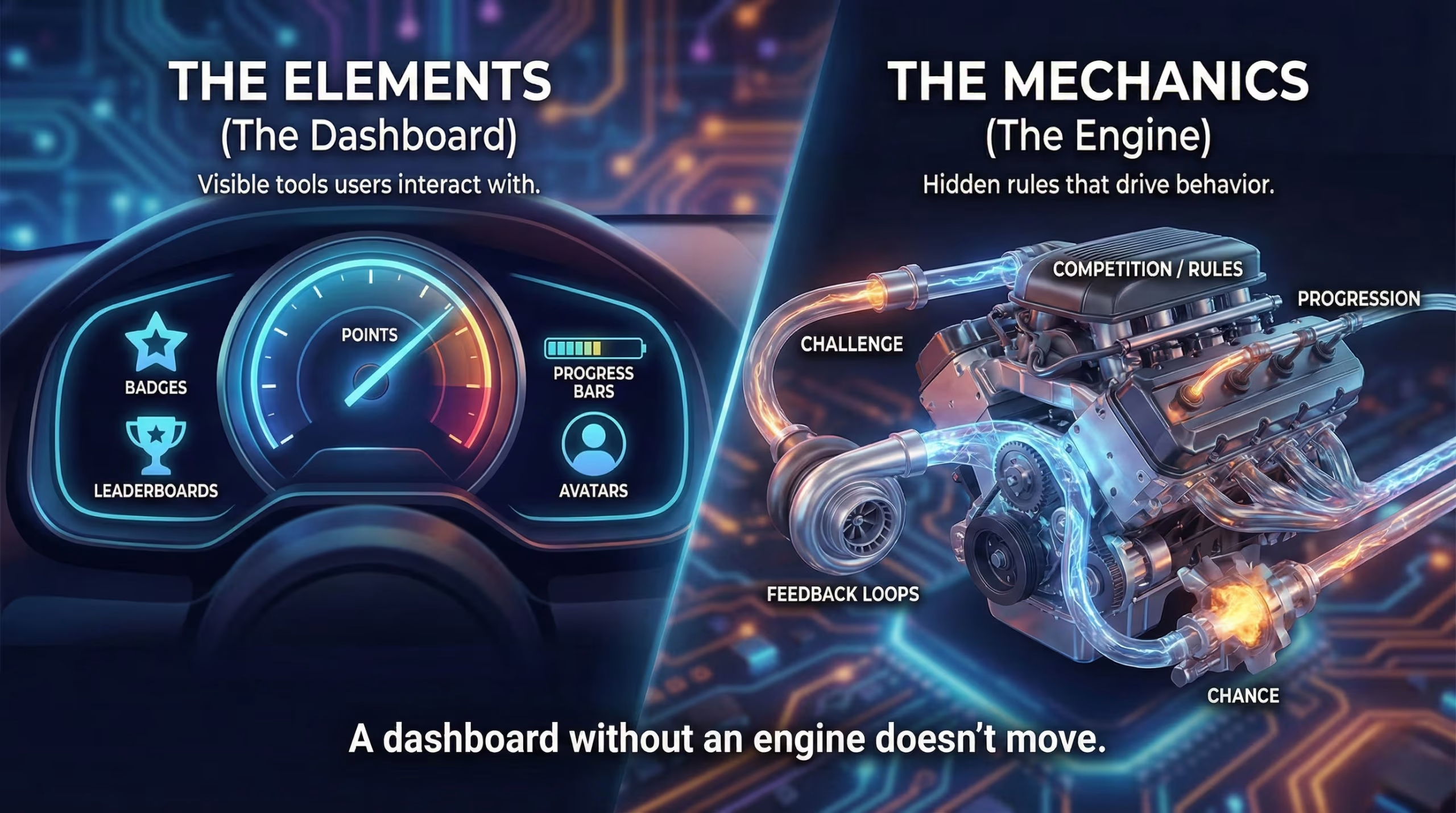
Gamification mechanics are the rules (progression, competition, chance and feedback loops) that drive user behavior; elements such as points, streaks, badges and leaderboards make them visible. Capermint designs and builds them into apps, LMS, loyalty and fintech products for US, Canadian and global teams. A first mechanics layer typically costs $10K–$40K and takes 2–8 weeks.
| What we build | Mechanics layers (points and XP, streaks, badges, levels, quests, leaderboards, rewards) for existing apps (mobile app gamification), loyalty program gamification, fintech and banking gamification and learning products, plus gamified apps and branded mini-games |
|---|---|
| Delivery models | Fixed-scope project, dedicated team (billed monthly), or co-development and staff augmentation alongside your developers (hire game designers) |
| Typical timeline | Points, badges and progress bars 2–4 weeks; challenges and leaderboards 4–8 weeks; advanced or cross-platform systems 8–12 weeks or more; custom platforms in phased releases |
| Typical price | $10K–$40K for a first mechanics layer; $40K–$120K for a cross-platform layer; $120K+ for a custom platform (USD). Final quote after a scoping call |
| Tech stack | Unity for game-like modules (Unreal on request); native or React Native app front ends; Node.js services with REST and WebSocket APIs; cloud hosting such as AWS |
| Platforms and integrations | iOS, Android and web; connects to your CRM, LMS, HRIS, loyalty or payments back end through APIs and an event-tracking layer |
| Testing and compliance readiness | Economy balancing, leaderboard load tests and reward-abuse testing; prize mechanics built to the promotion rules your counsel sets for each market |
| Studio and markets | Founded 2014 in Ahmedabad, India; over 200 specialists; Clutch 4.9/5 from 13 reviews; calls scheduled in US and Canadian business hours; projects taken from buyers worldwide |
Choosing mechanics
How to choose gamification mechanics: goal, mechanic, KPI
Start from the one behavior you need to change, pick the smallest set of mechanics that rewards it, and decide up front which metric proves it worked. The table maps common goals to starting mechanics from the list above.
| Business goal | Mechanics to start with | KPI to watch |
|---|---|---|
| Build a daily habit (language, fitness, wellness) | Streaks with a freeze option, daily quests, progress bars, reminders tied to the action | D7 and D30 retention, active days per week |
| Course or training completion (LMS, onboarding, compliance training; see educational game development) | Levels, unlockable lessons, skill trees, certificates | Completion rate, time to completion, assessment scores |
| Purchase frequency and order value (retail, ecommerce gamification) | Points, status tiers, spend-threshold challenges, limited-time offers; mystery rewards only under sweepstakes rules | Purchase frequency, average order value, redemption rate |
| Savings and financial habits (fintech, banking) | Savings goals with progress bars, milestones and badges; no paid chance-based prizes | Deposit frequency, balance growth, feature adoption |
| Adherence and recovery (healthcare gamification) | Daily streaks, wearable-linked challenges, reminder triggers, team challenges | Adherence rate, check-in frequency |
| Team performance (sales, operations, HR) | Team leaderboards, relative ranks, badges for verified outcomes, peer kudos | Quota attainment, error or safety-incident rate, participation |
| Referrals and community | Referral rewards, gifting, team challenges, easy sharing of achievements | Invite conversion rate, retention of referred users |
Reward verified outcomes, not raw activity: a leaderboard for calls made rewards volume, while one for qualified meetings rewards results.
Cost and timeline
What it costs to build gamification mechanics
Typical ranges in USD for designing, building and testing gamification mechanics, anchored on Capermint's published project bands. For strategy, consulting or a full program, see our gamification services.
| Tier | Typical scope | Typical price (USD) | Timeline |
|---|---|---|---|
| Mechanics MVP | One platform or one existing app: 3 to 5 core mechanics such as points and XP, streaks, badges, progress bars and a simple leaderboard; rules engine, admin panel to tune rewards, analytics events | $10K–$40K | Typically 2–8 weeks |
| Cross-platform gamification layer | iOS, Android and web: levels, quests, virtual currency and rewards store, team challenges, real-time leaderboards, notifications, CRM or LMS integration | $40K–$120K | Typically 8–12 weeks or more |
| Custom gamification platform | Multi-tenant rules and rewards engine, virtual economy and wallet, partner reward fulfillment, SSO, live-ops tools, anti-fraud and reporting | $120K+ | Phased releases over several months |
Final quotes follow a scoping call where we fix the mechanics list, platforms, integrations and target markets.
Process
How we design and build gamification mechanics
Scoping call and estimate
We agree the behaviors you want to change, the KPIs that prove it (retention, completion, frequency), platforms and markets, then send an itemized quote within 48 hours. An NDA is available before detailed discovery.
Behavior and economy design
Our game designers map each target behavior to dynamics, mechanics and components, set reward schedules and point values, and model the virtual economy so rewards keep their value. The output is a gamification design document.
UX and prototype
Wireframes and a clickable prototype of progress bars, badges, leaderboards and feedback effects that you can test with a sample of users before the build.
Build and integration
Rules and rewards engine, event tracking and APIs into your existing app or LMS, game-like modules in Unity where needed, and an admin panel to tune rewards without a new app release.
QA, balancing and abuse testing
Functional and load testing for real-time leaderboards, economy simulation to catch point inflation, and tests against point farming, bots and fake streaks.
Launch, measure and iterate
Staged rollout with a control group, retention dashboards and A/B tests on reward values, then seasonal events and new quests if you want live ops.
Markets and compliance
Markets and compliance for chance-based mechanics
Points, badges, levels and streaks rarely raise gambling or promotion-law issues, but chance-based prize mechanics can. In the US, a promotion that combines a prize, chance and a required purchase is generally treated as an illegal lottery, so spin-the-wheel, raffle and mystery-box rewards with real prizes usually run as sweepstakes with a free method of entry and official rules, and some states add registration or bonding requirements. In Canada, contests typically use a skill-testing question and disclose prizes and odds. Real-money wagering is licensed jurisdiction by jurisdiction: by state in the US; in Canada through iGaming Ontario and the AGCO in Ontario and provincial lottery corporations elsewhere. India's Promotion and Regulation of Online Gaming Act 2025 prohibits online money games, so for India we build free-to-play, social and e-sports formats. Paid loot boxes face gambling or consumer-protection rules in some countries, and apps for US children under 13 must meet COPPA. Brands and operators are responsible for licensing and promotion rules; we build to the technical requirements of the target jurisdiction. General information, not legal advice.
FAQ
More questions about gamification mechanics
Which gamification mechanics cost the most to build?
Real-time and economy mechanics cost the most: live leaderboards, virtual currency with a rewards store, team or multiplayer challenges, and anything tied to real prizes. Points, badges, streaks and progress bars cost the least. Typical ranges are $10K–$40K for a first mechanics layer on one platform, $40K–$120K for a cross-platform layer with quests, currency and integrations, and $120K+ for a custom platform. Final quotes follow a scoping call.
How long does each type of gamification mechanic take to build?
Points, badges and progress bars typically take 2–4 weeks to design, build and test. Challenges and leaderboards typically take 4–8 weeks, and advanced or cross-platform systems with quests, virtual currency and social features take 8–12 weeks or more. Custom platforms ship in phased releases. Clean event tracking and API access on your side shorten every estimate.
Which gamification mechanics improve user retention most?
Streaks, visible progress (progress bars, levels, checklists) and reminders tied to a real action are the mechanics most often used to lift retention, because each gives users a reason to return on a schedule. Quests and badges help when they reward meaningful achievements, and leaderboards work best when users compete with people of similar skill. Confirm the effect with an A/B test against a control group.
What are the main types of gamification mechanics?
Kevin Werbach and Dan Hunter's framework in For the Win lists ten mechanics: challenges, chance, competition, cooperation, feedback, resource acquisition, rewards, transactions, turns and win states. They sit between dynamics (constraints, emotions, narrative, progression, relationships) and components such as points, badges, leaderboards and avatars.
How many gamification mechanics should we launch with?
Start with two to four mechanics tied to the one behavior that matters most, such as a daily lesson, a weekly purchase or a completed training module. Launching dozens of elements at once confuses users and hides which mechanic moved the metric. Add quests, social features or seasonal events once the core loop is proven.
Do leaderboards motivate or discourage users?
Both, depending on the design. A single global leaderboard tends to motivate the few users near the top and discourage everyone else. Relative boards (your rank and the people just above and below you), friend or team boards, and skill-bracketed leagues that reset weekly keep more users within reach of a better rank.
How do you measure whether gamification mechanics are working?
Assign one business KPI to each mechanic and compare users who see it with a control group that does not. Typical measures are D1, D7 and D30 retention, DAU/MAU, session frequency, course or task completion and, for commerce, purchase frequency and average order value. Event tracking and a dashboard should ship with the first release so reward values can be tuned with A/B tests.
How do you keep points and rewards from inflating or being farmed?
Design the economy before the screens. Set what each action earns and what points buy, cap daily earnings per action, and add sinks such as redemptions, expiring points or cosmetic upgrades so balances do not inflate. Validate every scoring event on the server rather than the device, add rate limits and checks for bot-like patterns, and simulate several months of activity before launch.
Which gamification mechanics carry legal or ethical risk?
Mechanics that combine chance, a prize and payment carry the most legal risk: spin-the-wheel or raffle rewards with real prizes, paid mystery boxes or loot boxes, wagering, and staking or tradable token rewards, which can fall under gambling, promotion or financial rules. Mechanics built on loss aversion or sunk cost, such as punishing streaks or hard paywalls, can erode trust. This is general information, not legal advice.
What are examples of gamification mechanics in well-known apps?
Duolingo uses daily streaks with streak freezes, XP and weekly leagues where users are promoted or demoted. Strava uses segment leaderboards and monthly challenges that award digital badges. Starbucks Rewards uses Stars earned on purchases, redeemable rewards and bonus-Star challenges. These are public examples of the mechanics, not Capermint projects.
Plan your gamification mechanics with Capermint
Send a short brief: the behavior you want to change, your users, platforms and markets. We reply within 48 hours with an itemized scope, timeline and budget range, and an NDA is available before detailed discovery.