
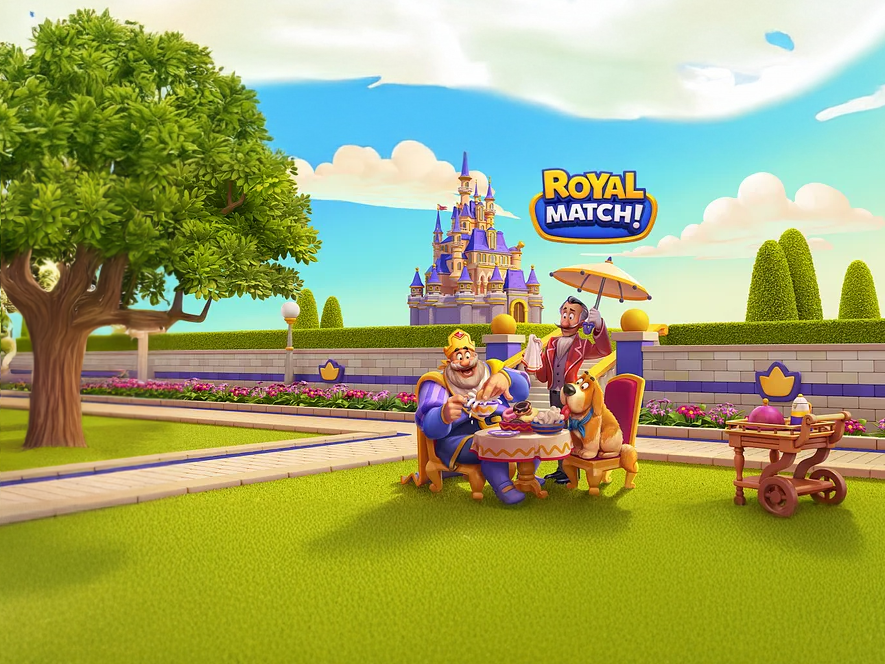
When we think of top mobile games, why does one name almost always come to mind – Candy Crush?
For years, match-3 puzzle games have been considered a “solved genre,” dominated by a few giants and nearly impossible for new entrants to disrupt. The assumption was simple: the market is saturated, players are loyal, and innovation is limited.
But that assumption turned out to be wrong.
Match-3 Genre is Far From Saturated
The global mobile gaming market crossed $90 billion, and puzzle games consistently rank among the top revenue-generating categories. What’s more surprising is that newer titles are not just surviving – they’re outperforming decade-old leaders. One such standout is Royal Match, a game that proved that smart design, not first-mover advantage, wins in the long run.
Royal Match didn’t reinvent the match-3 formula. Instead, it refined everything:
- Cleaner mechanics
- Smarter level progression
- Aggressive live-ops
- And monetization that doesn’t feel forced
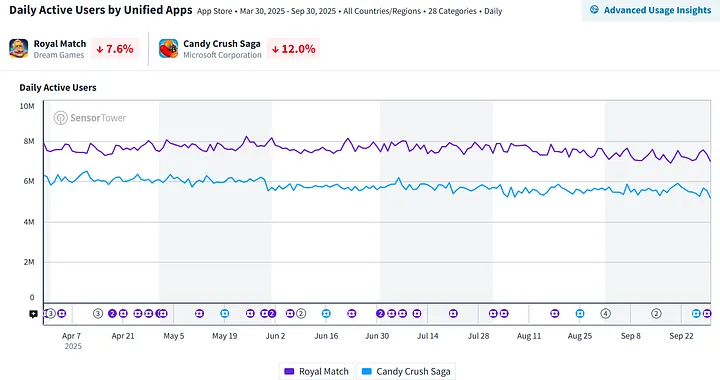
(Daily active users for Royal Match and Candy Crush Saga from April 2025–September 2025 from Sensor Tower)
The result?
👉 Tens of millions of monthly active players
👉 Over $80M in monthly revenue at its peak
👉 A benchmark for how modern match-3 games should be built
So the Real Question Is…
If a new game can rise in one of the most competitive mobile genres without radical innovation, then:
- How is Royal Match designed under the hood?
- What makes players stick around for thousands of levels?
- How does it make money without frustrating users?
- And most importantly, how can you develop a game like Royal Match, and how much does it actually cost?
That’s exactly what this guide answers. So, let’s get started!
- What is a Royal Match?
- How to Play Royal Match?
- Key Features of Royal Match
- How to Develop a Game Like Royal Match?
- How Does Royal Match Keep Players Engaged?
- Monetization Strategy: How Does Royal Match Make Money?
- How Do You Create the Puzzle Mechanics for Royal Match-Like Games?
- Challenges in Developing a Game Like Royal Match and Solutions
- How to Implement Social Features in Your Puzzle Game?
- How to Test and Launch a Puzzle Game Like Royal Match?
- How to Retain Players After Launch?
- How Much Does it Cost to Develop a Game Like Royal Match?
- How Much Time Does it Take to Develop a Game Like Royal Match?
- 3. Advanced Version
- Why Capermint is the Best Royal Match-Like Game Development Company?
What is a Royal Match?
Royal Match is a mobile match-3 puzzle game developed by Dream Games, a relatively new player in the mobile gaming market. Despite being a newcomer, the game quickly gained massive popularity and has become one of the top revenue-generating titles in the puzzle game genre.
While Royal Match follows the familiar match-3 mechanics players love, it introduces a more immersive story-driven experience, clever progression systems, and innovative features that set it apart from the competition.
Core Gameplay Mechanics
At its core, Royal Match follows the classic match-3 formula: players swap adjacent tiles to form groups of three or more of the same color, clearing the tiles from the board. However, it’s not just about matching tiles; it’s about the journey. Here’s what makes it unique:
- Levels with Themed Objectives:
Each level has a specific goal, whether it’s clearing a certain number of tiles, collecting certain items, or completing puzzles within a time limit. - Power-Ups and Boosters:
Special power-ups help players clear difficult levels, including bomb tiles, rainbow-colored tiles, and other strategic items. - Story Progression:
Unlike many other match-3 games, Royal Match incorporates a narrative where the player helps a royal character, often the king, restore and renovate a royal palace. Each completed level unlocks new parts of the story and a new area of the palace to renovate.
Impressive Growth and Success
Royal Match has become a massive success in the mobile gaming world, generating $1.44 billion in 2025, a significant increase from previous years. Since its launch in 2021, it has accumulated over 300 million installations and has earned more than $3 billion in lifetime revenue. This remarkable performance proves that there is still immense opportunity in the puzzle genre one many once thought was oversaturated.
How to Play Royal Match?
Royal Match is a simple, yet strategic match-3 puzzle game. Here’s a quick rundown on how to play:
Core Gameplay
- Match-3 Mechanics:
Swap adjacent tiles to form a match of three or more identical tiles. When matched, they disappear, and new tiles fill the board. - Level Objectives:
Each level has a specific goal, such as clearing tiles, collecting items, or completing the task within a set number of moves or time limit.
Power-Ups and Boosters
- Special Power-Ups:
Use boosters like Color Bombs (clear all tiles of one color) or Rockets (clear rows or columns) to help complete challenging levels.
Story Progression
- Renovation Mechanic:
As you progress, you help the king restore his royal palace by unlocking new areas to renovate after completing levels.
Key Features of Royal Match
Royal Match stands out in the crowded match-3 genre by combining engaging gameplay with a rich set of features. Here’s a closer look at what makes it so unique:
Story-Driven Gameplay: Renovate the Royal Palace
One of the most compelling aspects of Royal Match is its story-driven gameplay. As players progress through levels, they assist the king in restoring his royal palace. This adds an immersive narrative element, where each level completed unlocks new areas to renovate, creating a sense of achievement beyond the traditional puzzle-solving.
- Unlocking new rooms and areas of the palace
- A dynamic story that progresses as players advance
- A personal stake in the game’s storyline
Unique Level Design: A New Challenge at Every Turn
Royal Match introduces a variety of obstacles that elevate the match-3 experience:
- Locked tiles, stone blocks, and other barriers require strategic thinking to overcome.
- These obstacles introduce puzzle variety, keeping gameplay fresh and encouraging players to develop new strategies as they progress.
Each level feels unique and challenges players to think differently.
Power-Ups and Combos: Master the Board
The true magic of Royal Match lies in its power-ups and boosters, which add another layer of strategy:
- Color Bombs, Rockets, and Rainbow Bombs can be combined for explosive effects that clear large portions of the board.
- Combining boosters offers players a chance to create devastating combos, allowing for exciting and satisfying moments in the game.
Strategically using these tools is key to mastering challenging levels.
Engaging Visuals and Animations: A Feast for the Eyes
The game’s vibrant and dynamic visuals make every moment visually captivating:
- Bright, colorful graphics make the gameplay a visual delight, with smooth transitions and animations.
- The visual appeal is designed to enhance the game’s reward system, where every successful match or power-up triggers a satisfying animation that keeps players engaged.
Regular Updates and Events: Always Something New
To keep players coming back, Royal Match regularly rolls out live events and updates:
- Seasonal events, special challenges, and limited-time rewards provide fresh content regularly.
- These updates ensure that players are constantly engaged, with new features, rewards, and challenges to look forward to.
By offering consistent updates, Royal Match ensures its longevity and keeps the experience exciting.
How to Develop a Game Like Royal Match?
Developing a game like Royal Match is an exciting yet intricate process. It requires blending creativity with technical expertise. So, let’s take a journey through the steps involved in bringing a match-3 puzzle game to life:
Step 1: Choosing the Right Game Engine
You could start with Unity, which has been a go-to for developers who want to create both 2D and 3D experiences. It provides powerful tools, perfect for developing immersive gameplay. On the other hand, Cocos2d is a simpler alternative, designed specifically for mobile games and ideal for a lightweight approach.
Step 2: Crafting Engaging Game Design and Levels
The fun doesn’t just come from matching tiles – it’s about how players interact with them. You’ll design core mechanics around swapping tiles and creating matches, but power-ups and obstacles will spice things up. Imagine adding obstacles that block tile movement or special power-ups that clear entire rows or columns.
Each level should be a challenge, but not an obstacle in itself. Think about player progression. Can you make them feel like they’re advancing through a story? Here’s where the magic happens – add a renovation system or narrative arc, something that lets players feel like their actions have purpose.
Step 3: Power-Ups, Boosters, and Combos
It’s time to think about those colorful explosions and shiny effects. You’ll need boosters like Color Bombs, Rockets, or even Rainbow Bombs, and the ability for players to combine them for massive effects. These aren’t just flashy; they’re essential for strategizing tougher levels.
Step 4: Monetization Strategies
Here, your game can shine with in-app purchases. Maybe players can buy extra moves, boosters, or in-game currency to help them progress faster. You could also incorporate rewarded ads, optional ads that reward players with coins or power-ups when watched.
Consider creating limited-time events that let players earn exclusive items or boosts, driving excitement and encouraging purchases.
Step 5: Backend Infrastructure
You’ll need a solid infrastructure to store player data and synchronize progress. Firebase or AWS are great for managing cloud storage and real-time syncing, ensuring players don’t lose their data across devices. For multiplayer features, Photon or PlayFab would be a good choice for creating competitive, real-time features.
Step 6: Testing and Launch
Beta testing will give you valuable feedback on game mechanics, level difficulty, and monetization strategies. Use the feedback to fine-tune everything, ensuring the game is bug-free and engaging. And don’t forget about App Store Optimization (ASO) – use the right keywords, create compelling screenshots, and ensure your app stands out on the store.
How Does Royal Match Keep Players Engaged?
Royal Match doesn’t rely on luck or novelty to keep players hooked. Its engagement strategy is systematic, data-driven, and psychological. Here’s how it keeps players playing for months – sometimes years.
1. Smart Level Progression (Difficulty That Feels “Fair”)
- Levels start easy to build confidence
- Difficulty increases gradually, not abruptly
- Hard levels are often followed by easier “relief” levels
This creates a flow state where players feel challenged – but never punished.
2. Reward Systems That Trigger Motivation
Royal Match constantly rewards players through:
- Stars for completing levels
- Coins for purchases and boosts
- Free boosters after streaks or retries
These rewards tap into short-term gratification, keeping players emotionally invested even after failures.
3. Power-Ups That Feel Earned, Not Forced
- Power-ups are unlocked through gameplay, not only purchases
- Combo power-ups create spectacle moments (big board clears)
- Visual + sound effects amplify satisfaction
Result: Players feel smart using boosters – not desperate.
4. Long-Term Goals Beyond Levels
Unlike basic match-3 games, Royal Match gives players a meta-goal:
- Restoring and upgrading the royal palace
- Unlocking new areas, rooms, and themes
This adds a sense of progress beyond “just clearing another level.”
5. Live Events & Time-Limited Challenges
- Limited-time events create urgency
- Exclusive rewards increase replay frequency
- Events often target different player types (casual vs competitive)
This ensures players return daily – even if they’re stuck on a level.
Monetization Strategy: How Does Royal Match Make Money?
Royal Match has perfected the art of monetization by offering multiple revenue streams without compromising the player experience. Here’s how the game strikes the perfect balance between fun and profit:
1. In-App Purchases (IAP)
Boosters and Power-Ups
Players can purchase boosters, extra moves, and power-ups to help them overcome difficult levels. These purchases can enhance the game experience without forcing players to buy them.
Currency Packs
In-game coins are available for purchase, allowing players to buy lives, power-ups, and boosters. This accelerates progression, offering both convenience and rewards for those who want to invest in their gameplay.
2. Advertisements
Rewarded Ads
Optional video ads offer players extra moves, coins, or boosters in exchange for watching. This provides a non-intrusive way for players to get rewards without feeling pressured.
Interstitial Ads
These ads are displayed between levels, but are carefully spaced out to avoid frustration. Players don’t feel bombarded and can choose when they want to watch.
Ad-Free Option
For players who prefer an uninterrupted experience, Royal Match offers a paid ad-free option, ensuring the game remains enjoyable regardless of the monetization strategy.
3. Seasonal Events & Offers
Limited-Time Events
Seasonal challenges offer exclusive rewards and in-game boosts, motivating players to participate and spend. These events create urgency, with players rushing to complete tasks before the event ends.
Exclusive Content
The addition of limited-time items or special rooms in the royal palace encourages purchases for exclusive content, creating excitement and enhancing the overall player experience.
4. Cosmetic Purchases
Skins and Customization
For players who want to personalize their game, Royal Match offers a variety of cosmetic upgrades. From themed tiles to character skins, these cosmetic items don’t impact gameplay but allow players to express themselves.
5. Subscription Model
VIP Membership
A premium subscription grants players additional perks like daily rewards, boosters, and exclusive content. This model ensures recurring revenue while giving players tangible benefits.
How Do You Create the Puzzle Mechanics for Royal Match-Like Games?
Creating compelling puzzle mechanics is at the heart of every great match-3 game. Here’s how to design engaging puzzles that keep players hooked:
1. Basic Match-3 Design
- Tile Matching: Swap adjacent tiles to form groups of three or more identical tiles, which are then cleared from the board.
- Level Objectives: Each level should have a unique goal, such as clearing certain tiles, collecting items, or matching a specified number of colors.
2. Increasing Complexity
- Obstacles: Introduce barriers like locked tiles, stone blocks, or barricades that require extra effort or strategy to overcome.
- Timed Levels: Add levels where players must complete objectives within a certain time limit, adding urgency and challenge.
3. Power-Ups and Boosters
- Special Tiles: Design power-ups like Color Bombs, Rockets, and Rainbow Bombs to help players clear difficult areas.
- Combo Mechanics: Allow players to combine power-ups for even more powerful effects, creating a sense of strategic depth.
4. Balancing Difficulty
- Gradual Difficulty Curve: Start with easy levels to hook players, but increase the complexity gradually. New obstacles and objectives should be introduced at the right pace.
- Rewarding Progression: Reward players with boosters or coins for completing levels, motivating them to keep playing.
5. Randomization vs. Pre-Designed Levels
- Level Design: While some levels can be randomized (using procedural generation), it’s essential to balance this with pre-designed levels to ensure fairness and strategic depth.
- Test and Iterate: Continuously test levels to ensure they’re challenging, but not frustrating. Adjust based on player feedback and data.
Challenges in Developing a Game Like Royal Match and Solutions
Challenge 1: Ensuring Addictive Gameplay
Keeping the gameplay engaging and rewarding without losing player interest as the game progresses.
Solution
Implement a gradual difficulty curve with new obstacles and frequent reward systems to motivate players and maintain a balance between challenge and enjoyment.
Challenge 2: Balancing Monetization Without Annoying Players
Monetizing the game without frustrating players or turning the experience into “pay-to-win.”
Solution
Use a freemium model with in-app purchases for boosters and extra lives. Offer rewarded ads that give players incentives without interrupting gameplay.
Challenge 3: Creating Engaging, Varied Levels
Designing levels that remain interesting without becoming too repetitive or too difficult.
Solution
Mix pre-designed levels with randomization to offer variety. Gradually introduce new obstacles and challenges to maintain player interest.
Challenge 4: Handling Large Player Data
Managing player data, especially when dealing with millions of users, can affect performance.
Solution
Use cloud-based solutions like Firebase or AWS for smooth data syncing and storage, ensuring optimal performance.
Challenge 5: Retaining Players Long-Term
Keeping players engaged after the initial novelty wears off.
Solution
Introduce seasonal events, limited-time challenges, and new levels regularly, along with a storyline or renovation mechanic to encourage long-term commitment.
How to Implement Social Features in Your Puzzle Game?
Incorporating social features is a fantastic way to increase player engagement, retention, and even organic marketing. By creating a more interactive experience, you can turn players into advocates for your game. Here’s how to do it:
1. Leaderboards: Competitive Spirit
Adding leaderboards allows players to compete for top spots based on high scores or level progress. This introduces an element of competition that motivates players to play more to improve their rankings.
- Global and Friends Leaderboards: Displaying both global scores and friends’ rankings creates a sense of community and competition at every level.
- Incentivize Progress: Rewarding players with exclusive items or in-game currency for achieving high ranks can encourage more participation.
2. Multiplayer Challenges: Friendly Competition
Friend challenges allow players to challenge their friends directly, creating a more personal connection within the game. Players can:
- Send invites to friends to beat their high score or conquer a specific level.
- Encourage camaraderie by allowing players to form teams or compete in group challenges.
This builds a social aspect, where players engage more frequently, not just for rewards but also for fun interactions with friends.
3. Social Sharing: Amplify Organic Growth
Let players share their progress, achievements, and high scores on platforms like Facebook, Instagram, and Twitter. Not only does this keep your current users engaged, but it also:
- Encourages organic marketing, as players promote the game within their social circles.
- Acts as a word-of-mouth promotion, increasing visibility and attracting new players.
4. In-Game Chat: Build a Community
A chat feature within the game lets players:
- Communicate with each other, share strategies, and discuss game mechanics.
- Form teams or groups where players can compete or collaborate together.
This adds a layer of community interaction, turning your game into a more social hub for players.
5. Daily/Weekly Challenges: Create Urgency
Time-limited challenges add an exciting element of urgency:
- Players can compete for exclusive rewards or boosts, encouraging them to log in daily or weekly.
- These challenges create a sense of competition, motivating players to interact with the game regularly and stay involved.
By integrating these social features, you can transform your puzzle game from just a fun experience into a community-driven phenomenon. Players will keep coming back, share their progress, and invite their friends, giving your game the viral potential it needs to succeed.
How to Test and Launch a Puzzle Game Like Royal Match?
Launching a game like Royal Match requires meticulous testing and a well-planned launch. The process begins with beta testing. Start with a closed beta to gather feedback and identify bugs. After making adjustments, expand to an open beta to refine the game further with a larger audience.
Quality Assurance (QA) is next. Conduct thorough testing across multiple devices to ensure the game performs smoothly on all platforms, especially lower-end smartphones. This helps catch any remaining glitches before launch.
To ensure your game is discoverable, focus on App Store Optimization (ASO). Use relevant keywords, high-quality screenshots, and a compelling description to make your game stand out and rank higher in search results.
For the Launch Strategy, begin with a soft launch in smaller markets to minimize risk. After addressing any final tweaks, execute a global launch with targeted social media campaigns and influencer partnerships to drive downloads and reviews.
Finally, post-launch support is essential. Regular updates, bug fixes, and new content will keep players engaged and coming back for more.
How to Retain Players After Launch?
Maintaining player engagement long-term is one of the most challenging yet crucial aspects of game development. Here’s how to keep players invested in your puzzle game after launch:
1. Regular Content Updates
New content is essential to maintaining interest. To keep players engaged:
- Introduce new levels periodically to keep the game feeling fresh.
- Add new power-ups and game mechanics to shake up the gameplay.
By offering new content, you create excitement and anticipation, which encourages players to return.
2. Seasonal Events and Limited-Time Challenges
Create a sense of urgency and exclusivity with:
- Seasonal events tied to holidays or special occasions.
- Time-limited challenges with exclusive rewards, such as unique boosters or coins.
These events provide fresh goals and motivate players to play actively during the event period.
3. Daily Login Bonuses
Reward players who log in daily with incremental bonuses:
- Coins, boosters, or extra moves encourage players to come back each day.
- The rewards should grow in value the more consecutive days players log in.
This simple yet effective tactic fosters a habit of returning daily.
4. Push Notifications
Keep players engaged through personalized notifications:
- Remind them of new updates, exclusive events, or daily rewards.
- Ensure that notifications are non-intrusive and relevant to each player’s progress and preferences.
Effective push notifications help maintain visibility without feeling spammy.
5. In-Game Social Features
Encourage social interaction:
- Leaderboards and friend challenges keep players motivated through competition.
- Adding features like guilds or teams strengthens community and loyalty.
By fostering community engagement, players are more likely to stick around and share their progress with others.
How Much Does it Cost to Develop a Game Like Royal Match?
Developing a high-quality match-3 puzzle game like Royal Match is a significant investment. The cost depends on the scope and features you choose for your game. Here’s an overview of the estimated costs based on various development phases:
Estimated Development Cost:
- Basic Version: A minimal viable product (MVP) with core gameplay and basic features for a single platform (Android or iOS) would cost between $50,000 and $100,000.
- Mid-Level Version: A more polished version with better graphics, additional features, and basic backend support for one platform would cost around $100,000 to $250,000.
- Advanced Version: A full-featured game with advanced graphics, multiple platforms, live events, and robust backend infrastructure could cost between $500,000 and $1 million+.
How Much Time Does it Take to Develop a Game Like Royal Match?
The development timeline for a game like Royal Match depends on the complexity, features, and scope. Here’s a breakdown of how long it might take to develop different versions of the game:
1. Basic Version (MVP)
- Timeframe: 3 to 6 months
- Description: A simple version with core gameplay mechanics, basic power-ups, and limited levels. This version focuses on creating the foundational gameplay elements and will be ready for a soft launch.
2. Mid-Level Version
- Timeframe: 6 to 12 months
- Description: A more polished version with enhanced graphics, story progression, and basic backend infrastructure. This version will be tested in multiple markets and refined based on feedback.
3. Advanced Version
- Timeframe: 12 to 18+ months
- Description: A fully developed game with advanced features, multiple platforms, and live events. This version requires more time for design, testing, and optimization across devices.
Why Capermint is the Best Royal Match-Like Game Development Company?
If you’re looking to develop a match-3 puzzle game like Royal Match, Capermint Technologies is the perfect partner to bring your vision to life. Here’s why:
1. Proven Expertise in Game Development
With years of experience in the mobile gaming industry, Capermint specializes in developing highly engaging puzzle games. Our team is skilled in creating seamless, addictive gameplay mechanics and stunning graphics that keep players hooked.
2. Custom Solutions for Every Client
We understand that every game is unique. Whether you want a basic version with minimal features or an advanced version with a rich story, we offer customized solutions tailored to your needs and budget.
3. End-to-End Game Development
From initial concept design to game launch and post-launch support, we handle the entire development process. Our team works on game mechanics, UI/UX design, monetization strategies, and quality assurance to ensure the game is ready for the market.
4. Expertise in Cross-Platform Development
We develop games for multiple platforms including iOS, Android, and cross-platform play. Our games perform well across various devices, ensuring a smooth experience for players.
5. Ongoing Support and Updates
At Capermint, our commitment doesn’t end at launch. We provide ongoing support, including game updates, seasonal events, and bug fixes, to keep your game fresh and engaging for players over the long term.
Conclusion
Developing a game like Royal Match is an exciting yet complex journey that requires careful planning, creativity, and the right tools. From crafting addictive gameplay mechanics to building a compelling narrative and implementing successful monetization strategies, there are many factors that contribute to making a game successful in today’s competitive mobile gaming market.
In this article, we’ve explored:
- The core gameplay mechanics that make Royal Match so engaging.
- How to design levels, power-ups, and integrate social features.
- The costs and timeframes are involved in creating a similar game.
- Why Capermint Technologies is the ideal partner for bringing your match-3 game idea to life.
If you’re ready to take your Royal Match-like game from concept to launch, Capermint Technologies is here to help. With years of experience in game development, we can guide you through the process, ensuring your game is a success.
Let’s build something great together – get in touch with Capermint Technologies today!