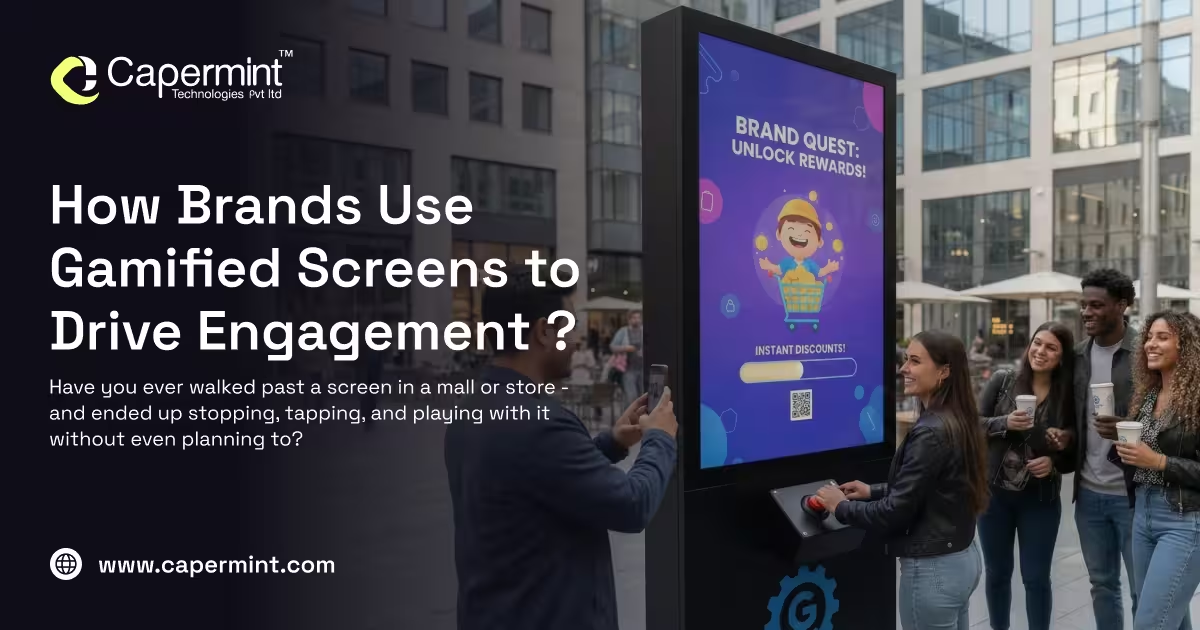
A large interactive display catches your eye. You tap the screen, it responds instantly, and suddenly you’re answering questions, competing in a quick challenge, or exploring products through a playful interaction. A few minutes later, you’ve spent more time with the brand than you intended, and you remember it.
Brands like Nike, Samsung, and Coca-Cola have been creating these moments using interactive displays placed in physical spaces. Instead of pushing ads, they invite people to participate. The result isn’t just attention, it’s engagement that influences purchases and brings users back again.
These interactive displays work because they change how people interact with screens:
- People participate instead of just watching.
- Time spent with the brand increases naturally.
- The experience becomes memorable, not skippable.
Yet not every interactive screen succeeds. Some draw crowds, while others are ignored after a few seconds.
In this article, we’ll explore how brands use interactive display solutions – especially gamified screens – to drive engagement in physical spaces, real-world examples of what works, and the technology and design principles behind interactive displays that people actually want to use.
What Is an Interactive Display?
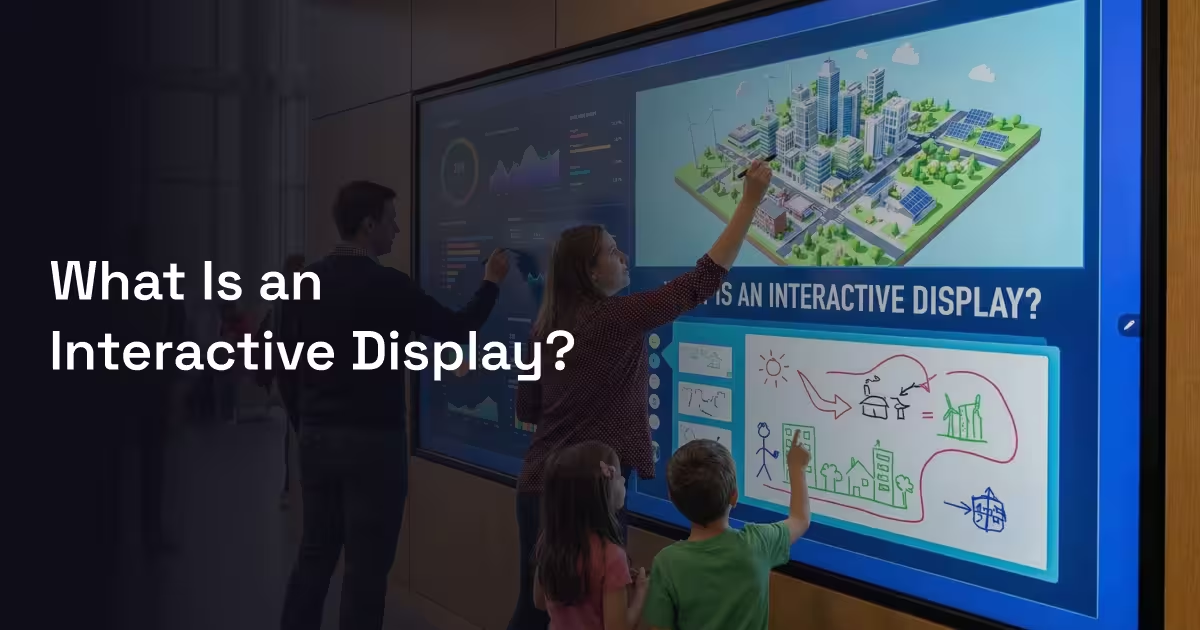
An interactive display is a digital screen that allows users to actively engage with content through touch, motion, or other real-time inputs, instead of simply watching it. Unlike static digital screens that deliver one-way messages, interactive displays respond to user actions, turning viewers into participants.
These displays are commonly used in physical spaces such as retail stores, malls, events, museums, and brand activations, where engagement time and user attention directly impact outcomes like brand recall and purchase decisions.
What makes interactive displays powerful is not just the hardware, it’s how interaction changes behavior. Research consistently shows that when people can interact with a screen, they spend more time with it, absorb more information, and are more likely to act.
Interactive Display Statistics That Show Why Brands Are Investing
To understand why interactive displays are becoming a priority for brands, the numbers tell a clear story:
- Interactive retail displays have been shown to increase customer engagement by up to 50%, based on data collected across 50 retail stores.
- Interactive displays can extend dwell time by around 30%, giving brands more time to influence decisions.
- 63% of shoppers say digital and interactive displays influence their purchasing decisions, especially in physical retail environments.
- According to industry studies, interactive and digital displays attract up to 400% more viewers than static signage, making them far more effective at stopping foot traffic.
- 87% of shoppers say they would shop in-store more often if interactive screens were available, particularly for product information and comparisons
These figures highlight a key shift: people don’t just notice interactive displays, they engage with them, remember them, and act on them.
In a world where attention in physical spaces is limited, interactive displays turn screens from passive communication tools into active engagement engines.
Types of Interactive Displays Used by Brands
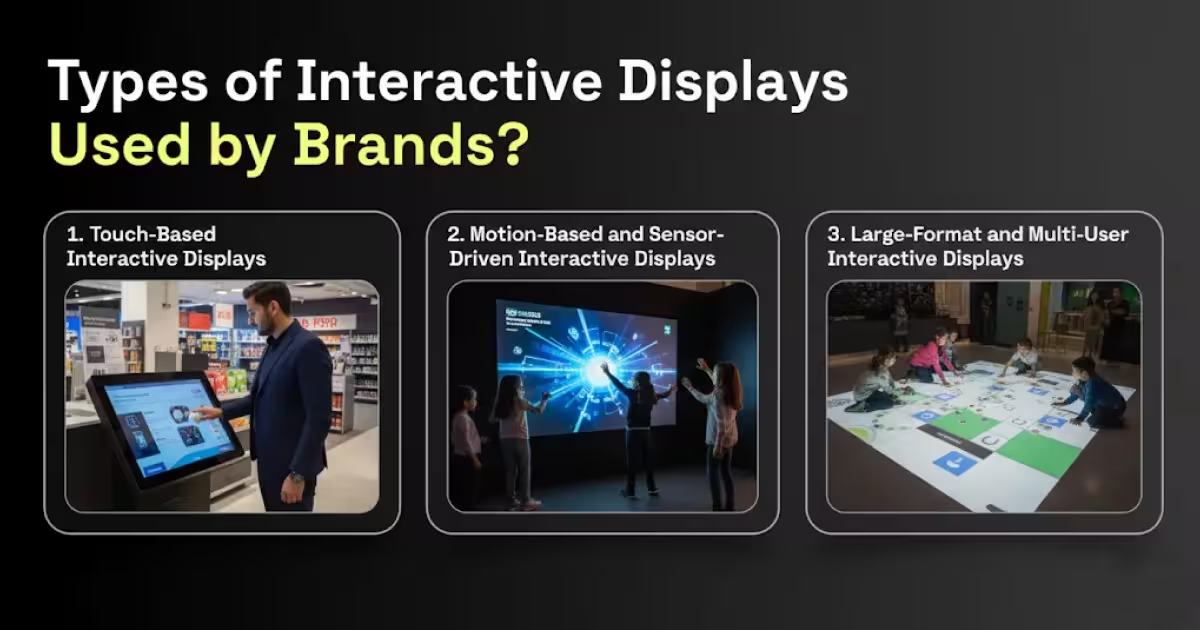
Interactive displays are not one-size-fits-all. Brands choose different types of interactive displays based on the environment, user behavior, and the level of engagement they want to create. Understanding these types helps explain why some interactive experiences feel effortless, while others feel clunky or ignored.
Touch-Based Interactive Displays
Touch-based interactive displays are the most widely used form of interactive display in retail stores, malls, kiosks, and brand showrooms. These displays respond directly to user input through taps, swipes, and gestures.
Common examples include:
- Product exploration screens in retail stores.
- Interactive kiosks for ordering or browsing.
- Quiz-based or game-like brand experiences.
Touch interaction feels natural and intuitive, which is why it works especially well for first-time users. When combined with game mechanics such as challenges, progress indicators, or rewards touch-based displays can significantly increase dwell time and engagement.
Motion-Based and Sensor-Driven Interactive Displays
Motion-based interactive displays use cameras, sensors, or depth-tracking technology to respond to physical movement rather than touch. Users interact by moving their bodies, hands, or gestures in front of the screen.
These interactive displays are commonly used in:
- Brand activations and events.
- Sports and fitness experiences.
- Public installations where touch may be impractical.
Because they feel immersive and unexpected, motion-based displays are particularly effective at attracting crowds. When paired with interactive games such as reaction challenges or physical competitions, they create high-energy experiences that are difficult to ignore.
Large-Format and Multi-User Interactive Displays
Large-format interactive displays are designed for multiple users to interact at the same time. These are often wall-sized or floor-mounted screens placed in high-footfall areas such as malls, museums, exhibitions, and event venues.
Brands use these displays to:
- Encourage social interaction.
- Create competitive or collaborative experiences.
- Turn public spaces into shared engagement zones.
Multi-user interactive displays work especially well with game-based experiences like leaderboards, timed challenges, or team-based interactions. The social element amplifies engagement, making the experience more memorable and shareable.
Interactive Display vs Static Digital Screens
| Aspect | Interactive Display | Static Digital Screen |
|---|---|---|
| User Interaction | Users actively engage through touch, motion, or real-time input. | Users only view content passively. |
| Level of Engagement | High engagement driven by participation and interaction. | Limited engagement, often ignored after a glance. |
| Dwell Time | Keeps users engaged longer, especially when gamified. | Typically receives only a few seconds of attention. |
| User Experience | Feels immersive, responsive, and personalized. | Feels one-directional and repetitive. |
| Brand Recall | Stronger recall due to hands-on interaction. | Lower recall due to passive consumption. |
| Data & Insights | Captures meaningful interaction data and user behavior. | Limited or no actionable data. |
| Content Flexibility | Content adapts based on user actions. | Content plays on a fixed loop. |
| Best Use Cases | Retail, events, malls, museums, brand activations. | Waiting areas, basic advertising, announcements. |
In physical environments where attention is limited, static digital screens are easy to overlook. Interactive displays stand out by giving people a reason to stop, engage, and participate.
This fundamental difference, passive viewing versus active participation, is why interactive displays are becoming the preferred choice for brands looking to create memorable experiences in real-world spaces.
Why Brands Are Investing in Interactive Displays
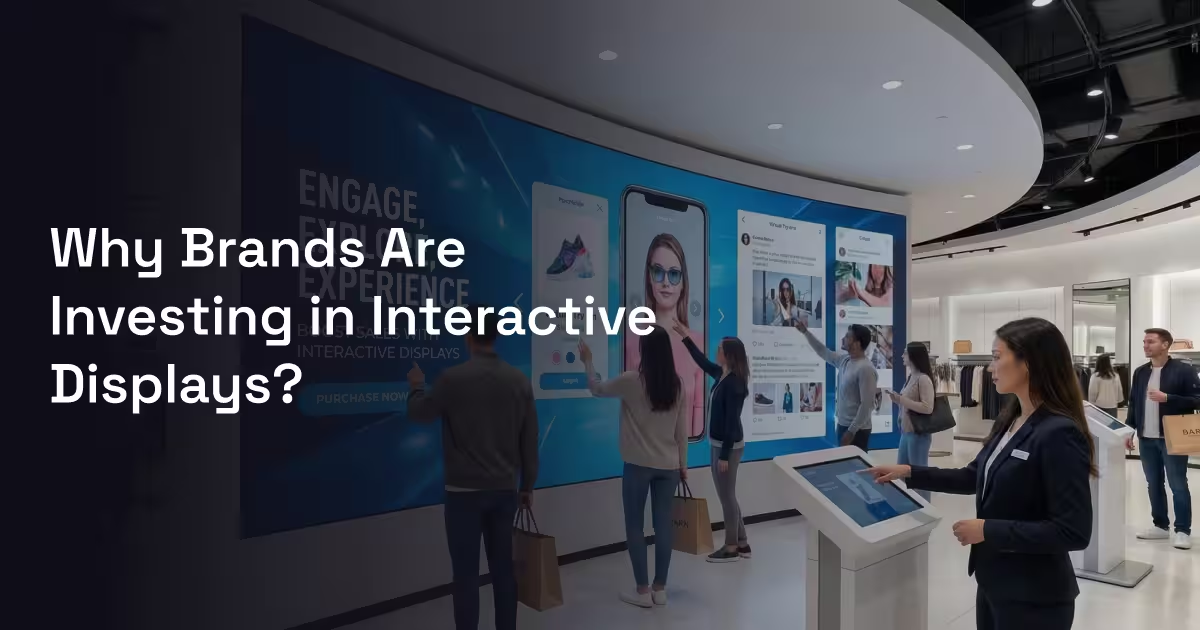
Brands aren’t adopting interactive displays because they look impressive, they’re investing in them because they change how people behave in physical spaces. When attention is scarce and competition is everywhere, interaction becomes a strategic advantage.
Here’s why interactive displays are becoming a priority for brands across industries:
- They turn attention into participation
Traditional screens compete for attention. Interactive displays convert that attention into action: taps, choices, movement, and play. Participation creates a stronger mental connection than passive viewing ever can. - They increase dwell time naturally
When users interact with a display, especially through game-like experiences, they stay longer without being forced. More time spent with a brand directly increases the chances of product discovery, consideration, and purchase. - They improve brand recall and memorability
People forget ads. They remember experiences. Interactive displays create moments users associate with a brand, making it more likely they’ll recall it later or talk about it with others. - They influence purchasing decisions in real time
Interactive product exploration, quizzes, comparisons, and challenges help users move from curiosity to confidence. Instead of pushing information, brands guide decisions through interaction. - They generate actionable user data
Every interaction, taps, choices, completion rates, repeat engagement, provides insight. Brands can analyze this data to understand preferences, optimize content, and improve future experiences. - They encourage repeat visits
Interactive displays, especially gamified ones, give users a reason to come back. New challenges, updated content, or competitive elements keep the experience fresh instead of repetitive.
For brands operating in physical spaces, interactive displays bridge the gap between digital engagement and real-world presence. They don’t just display content, they create experiences that people choose to engage with.
How Brands Use Interactive Displays to Drive Engagement
Brands use interactive displays strategically, placing them where attention, curiosity, and decision-making naturally happen. When designed correctly, these displays don’t interrupt the user journey, they become part of it.
Below are the most common and effective ways brands use interactive displays to drive engagement in physical spaces.
Interactive Displays in Retail Stores and Malls
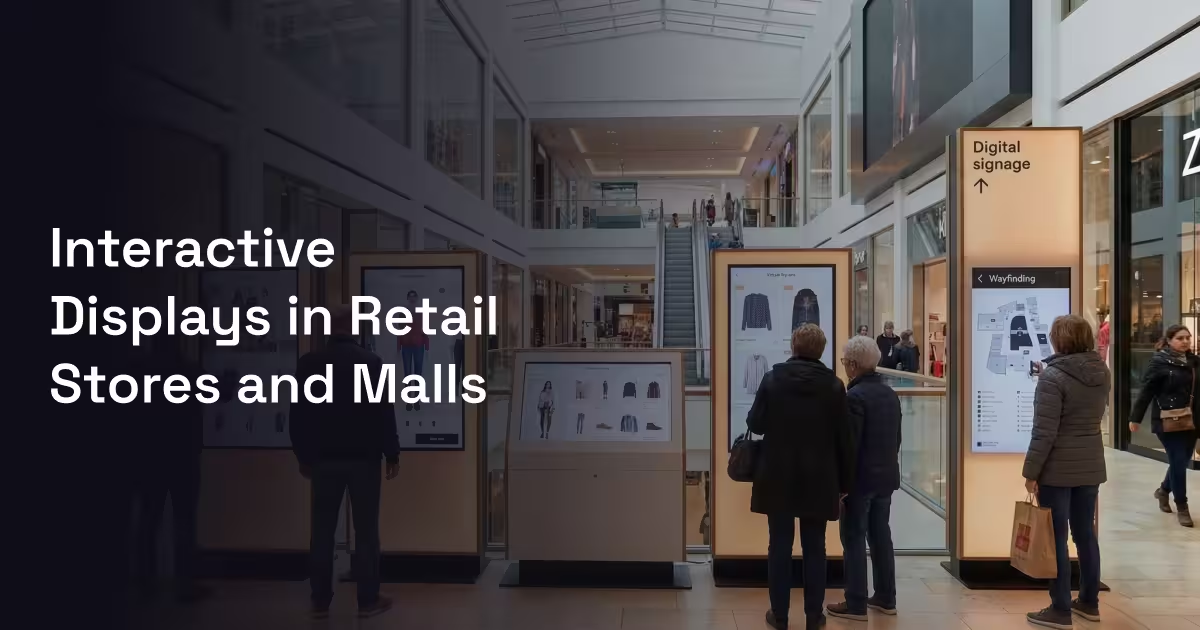
In retail environments, interactive displays help customers explore products at their own pace. Instead of relying on sales staff or static signage, brands use interactive screens to let users browse features, compare options, and discover recommendations through touch-based interactions.
Common retail use cases include:
- Interactive product catalogs and comparisons
- Style or preference-based quizzes
- Touch-enabled product demos
These experiences reduce friction in the buying process and make customers feel more confident in their choices, often leading to higher conversion rates.
Interactive Displays at Events and Brand Activations
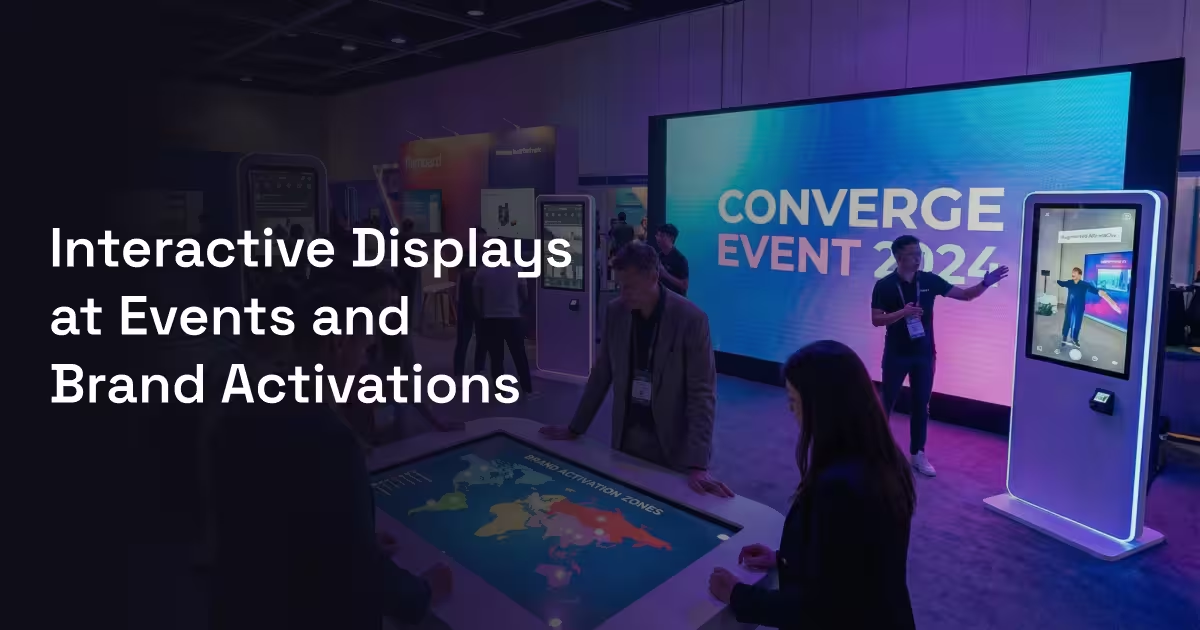
Events and brand activations are ideal environments for interactive displays because people arrive expecting to engage. Brands use large interactive screens and gamified experiences to attract crowds, encourage participation, and create memorable moments.
Popular event use cases include:
- Quick challenge-based games
- Reaction-time or skill-based competitions
- Leaderboards and score tracking
By turning engagement into play, brands increase dwell time and create experiences that attendees remember long after the event ends.
Interactive Displays in Museums and Public Spaces
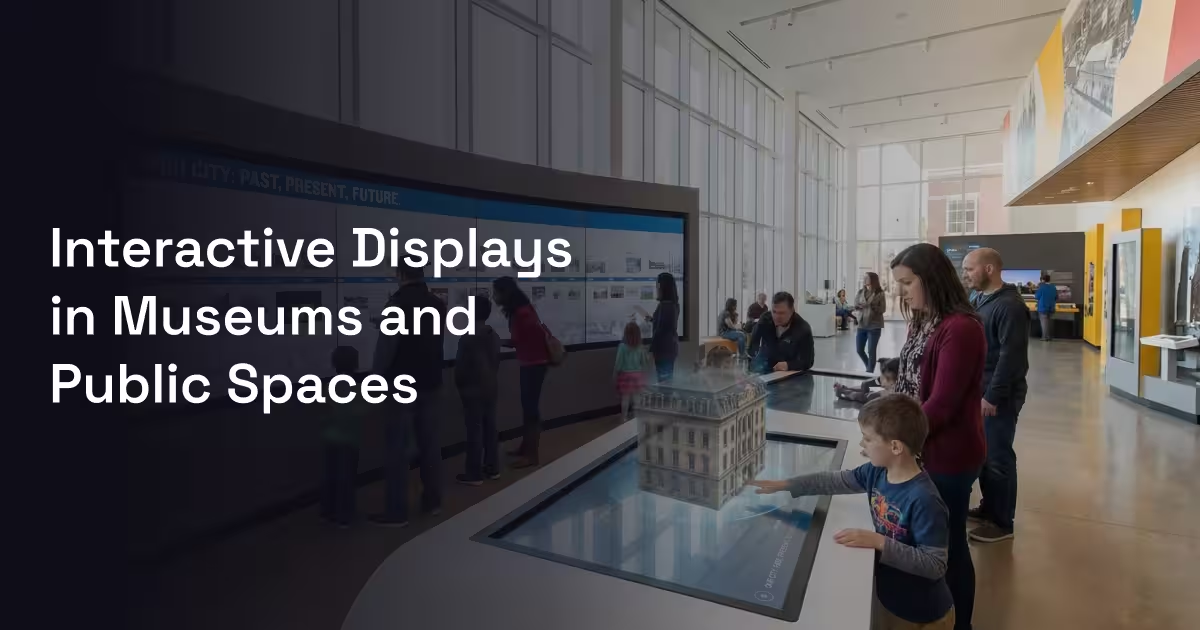
Museums and public spaces use interactive displays to make information engaging rather than overwhelming. Instead of reading long descriptions, users learn by interacting, answering questions, solving puzzles, or exploring content at their own pace.
Typical use cases include:
- Educational quizzes and interactive storytelling
- Multi-user learning experiences
- Touch and motion-based discovery screens
These displays make complex information easier to absorb and more enjoyable, especially for younger audiences.
Interactive Displays for Brand Storytelling
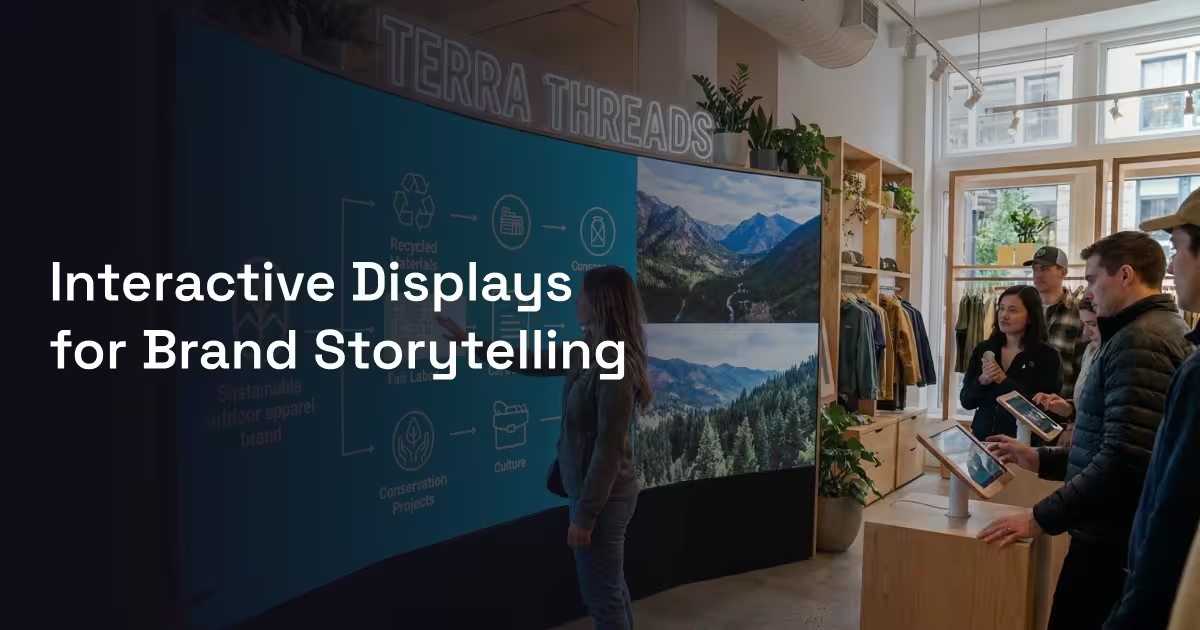
Beyond utility and entertainment, interactive displays are increasingly used to tell brand stories. Through guided interactions, users explore a brand’s values, history, or innovation journey in a way that feels personal and engaging.
This approach works because:
- Users control the pace of exploration
- Content adapts based on choices
- The experience feels unique, not scripted
Story-driven interactive displays help brands build emotional connections rather than just awareness.
The Role of Gamification in Interactive Display Experiences
Not all interactive displays perform the same. Some attract users instantly, while others lose attention within seconds. The difference is rarely the screen size or resolution – it’s gamification.
Gamification applies game design principles to interactive displays, transforming simple interactions into experiences people want to complete. Instead of asking users to “tap to continue,” gamified displays give them a reason to stay.
Here’s why gamification makes such a measurable impact on interactive display engagement:
Gamification Turns Interaction Into Motivation
Basic interaction answers how users engage. Gamification answers why they should.
By introducing elements like goals, challenges, and feedback, interactive displays tap into natural human motivations – curiosity, competition, and achievement. Users are no longer just exploring content; they’re trying to complete something.
Key Game Mechanics Used in Interactive Displays
Successful interactive display games often rely on a combination of simple but effective mechanics:
- Challenges and Objectives
Clear goals give users a reason to interact and stay engaged. - Timers and Progress Indicators
Time-based interactions create urgency and focus. - Rewards and Unlockables
Discounts, points, or visual rewards reinforce participation. - Leaderboards and Competition
Social comparison increases repeat interaction, especially in public spaces. - Instant Feedback
Visual and audio responses make interactions feel responsive and satisfying.
These mechanics are lightweight, fast, and perfectly suited for short attention spans in physical environments.
Why Gamified Interactive Displays Outperform Standard Interactions
Gamified displays consistently outperform standard interactive screens because they:
- Encourage active participation instead of passive browsing
- Increase dwell time without friction
- Create memorable experiences, not just touchpoints
- Drive repeat engagement through competition or progression
In physical spaces where users may only spend a few minutes, even small game elements can dramatically improve outcomes.
Gamification Works Best When It Feels Natural
The most effective interactive display games don’t feel like “games” at first glance. They feel intuitive, playful, and aligned with the brand’s message. When gamification is subtle and purposeful, it enhances the experience without overwhelming the user.
This balance between simplicity and engagement is what separates successful interactive displays from ones that get ignored.
Real-World Examples of Brands Using Interactive Display Games
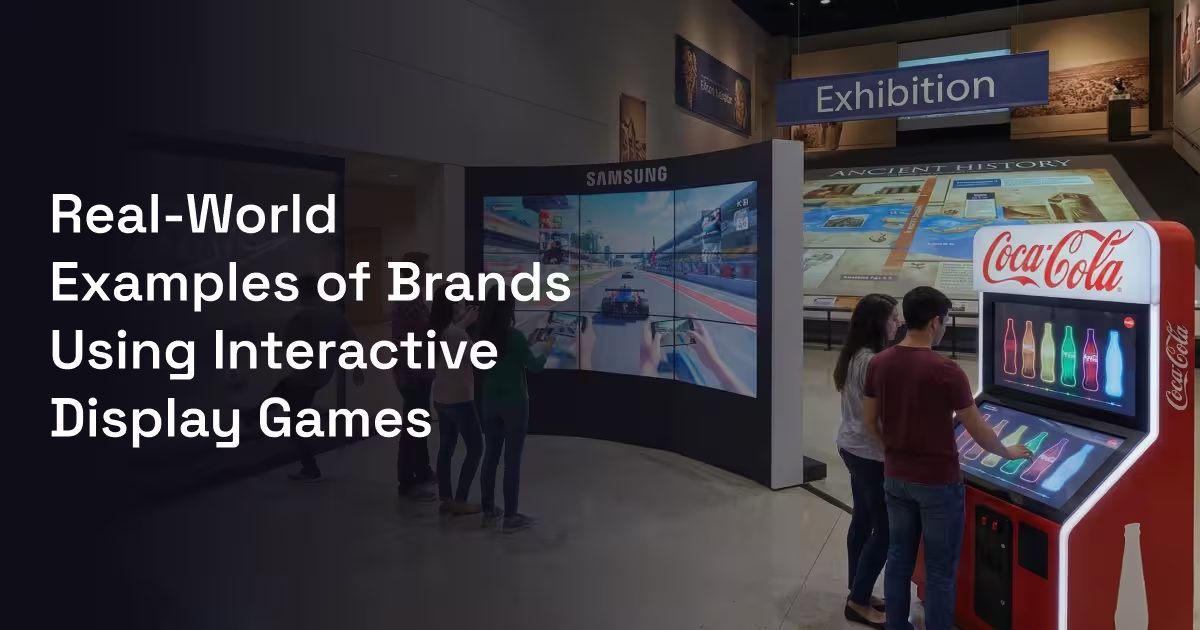
Interactive display games are no longer experimental concepts. Global brands across industries are actively using them to attract attention, increase engagement, and create memorable physical-space experiences. Below are real-world examples that show how interactive displays perform when applied correctly.
Nike: Turning Physical Activity Into Play
Nike has used interactive displays at brand activations and retail events to create motion-based, game-like experiences. Users compete in quick reaction challenges or physical tasks displayed on large screens, with real-time feedback and scoring.
Why it works:
- Combines physical movement with digital interaction
- Encourages competition and repeat participation
- Reinforces Nike’s performance-driven brand identity
These interactive display games turn brand engagement into an energetic, shareable experience rather than a passive interaction.
Samsung: Gamified Product Exploration
Samsung has deployed interactive touch displays at product launches and retail spaces that allow users to explore device features through quizzes, challenges, and guided interactions. Instead of browsing specifications, users learn by interacting.
Why it works:
- Makes complex product features easy to understand
- Keeps users engaged longer than traditional demos
- Reduces dependence on sales staff
Gamification helps Samsung transform product education into an engaging, hands-on experience.
Coca-Cola: Interactive Displays in Public Spaces
Coca-Cola has frequently used interactive displays in malls and public areas to create short, playful brand experiences. These displays often include simple games, challenges, or interactive storytelling elements tied to rewards.
Why it works:
- Designed for short attention spans
- Encourages spontaneous participation
- Creates positive emotional associations with the brand
The focus isn’t on selling directly, but on creating memorable moments that strengthen brand recall.
Museums and Exhibitions: Learning Through Interaction
Museums and science centers use interactive display games to make learning more engaging. Visitors interact with touch and motion-based displays to solve puzzles, answer questions, or explore historical and scientific concepts.
Why it works:
- Turns passive learning into active discovery
- Appeals to both adults and children
- Encourages longer visits and deeper understanding
These displays show how interactive games can educate as effectively as they entertain.
What These Examples Have in Common
Across industries and environments, successful interactive display games share a few key traits:
- Simple, intuitive interactions
- Clear goals or challenges
- Immediate feedback
- Experiences designed for short but impactful sessions
These principles consistently turn interactive displays into engagement drivers rather than background screens.
Technology Behind Interactive Display Solutions
Every interactive display experience is powered by a layered technology stack. While users see a simple, responsive screen, multiple systems work together behind the scenes to deliver real-time interaction, stability, and engagement.
Think of an interactive display as four connected layers.
1. Display & Input Layer (What Users Touch and See)
This is the most visible layer and the first point of interaction for users.
It typically includes:
- High-resolution commercial-grade display screens
- Touch input technologies (capacitive or infrared)
- Cameras and motion sensors for gesture-based interaction
In public environments, this layer must be highly responsive and durable, as it handles continuous user interaction throughout the day.
2. Interaction Engine (How the Screen Responds)
This layer controls how the display reacts to user input in real time.
It manages:
- Touch and motion input handling
- Animations and visual feedback
- Game logic such as scoring, timers, and progression
For gamified interactive displays, this layer is critical. Even minor delays or inconsistencies can break immersion and reduce engagement.
3. Application & Content Layer (What Users Experience)
This is where the actual interactive experience is built.
It includes:
- Custom interactive applications
- Game-based or guided experiences
- Content logic that adapts based on user actions
This layer is designed to be flexible, allowing brands to update experiences, refresh content, or run new campaigns without changing hardware.
4. Integration & Analytics Layer (What Brands Measure)
Modern interactive display solutions are data-driven. This layer connects the experience to backend systems and analytics tools.
It enables brands to:
- Track user interactions and engagement levels
- Measure completion rates and dwell time
- Optimize experiences based on real usage data
This layer turns interactive displays from visual tools into measurable engagement platforms.
Challenges in Building Interactive Display Experiences
Interactive displays look simple on the surface, but building experiences that work reliably in real-world environments is anything but. Many projects fail not because the idea is wrong, but because critical challenges are underestimated.
Below are the key challenges brands face when developing interactive display experiences, and why they matter.
Challenge 1: Real-Time Performance Expectations
The problem:
Users expect instant feedback. Even a slight delay between touch and response can break immersion.
Why it matters:
In physical spaces, people won’t wait. If the display feels slow or unresponsive, they disengage immediately, often walking away for good.
What goes wrong when ignored:
- Abandoned interactions
- Lower engagement rates
- Negative brand perception
Challenge 2: Multiple Users, One Screen
The problem:
Public interactive displays often attract more than one user at a time.
Why it matters:
Handling simultaneous inputs without confusion or lag requires careful system design.
What goes wrong when ignored:
- Conflicting inputs
- Unintended interactions
- Frustrated users and chaotic experiences
Challenge 3: Hardware Reliability in Public Spaces
The problem:
Interactive displays operate for long hours and face constant use.
Why it matters:
Any hardware failure directly affects user experience and reflects poorly on the brand.
What goes wrong when ignored:
- Screen degradation
- Sensor inaccuracies
- Frequent downtime and maintenance issues
Challenge 4: Content Updates and Scalability
The problem:
Interactive displays need fresh content to stay relevant.
Why it matters:
Brands often deploy multiple displays across locations, events, or campaigns.
What goes wrong when ignored:
- Difficult content updates
- Inconsistent experiences
- Limited long-term value
Challenge 5: Engagement Without Overcomplication
The problem:
It’s tempting to add more features, interactions, or animations.
Why it matters:
Too much complexity overwhelms users, especially in busy environments.
What goes wrong when ignored:
- Confusing user journeys
- Shorter interaction times
- Experiences that look impressive but don’t perform
The Real Takeaway
Successful interactive display experiences balance performance, simplicity, and reliability. Ignoring these challenges leads to displays that attract attention, but fail to sustain engagement.
Addressing them early is what separates high-impact interactive displays from forgettable ones.
How Interactive Display Games Are Designed and Developed
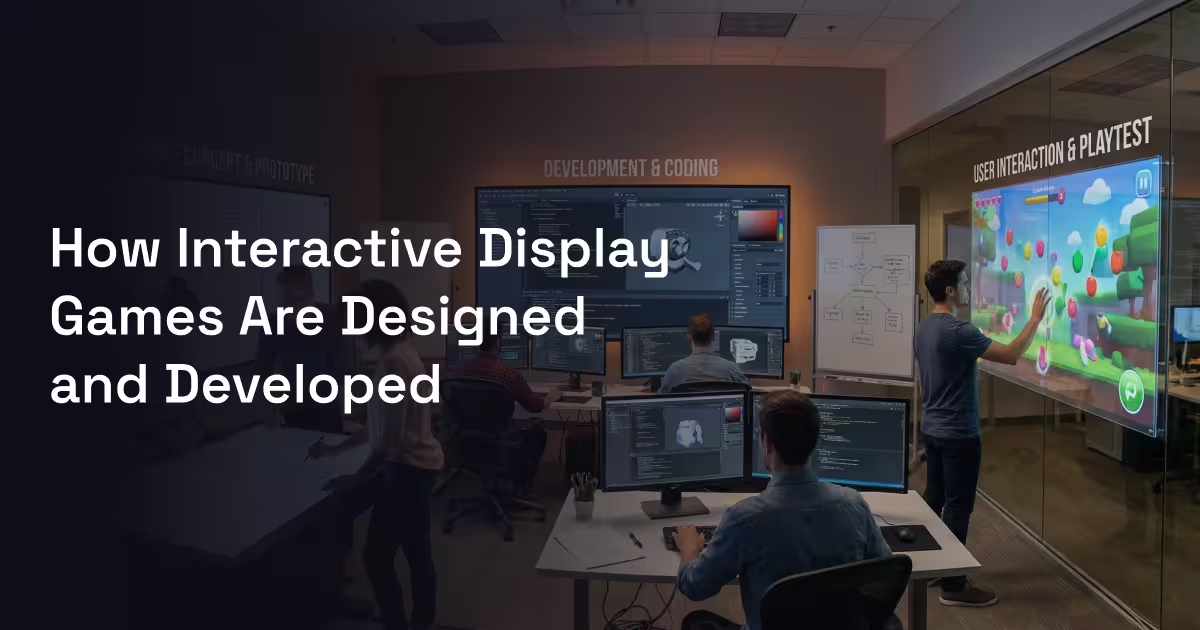
Building an effective interactive display game is not about adding visuals to a screen, it’s about designing an experience that works in real-world conditions. Successful projects follow a structured development process that balances creativity, technology, and usability.
Below is a step-by-step approach to how interactive display games are typically designed and developed.
Step 1: Define the Objective and Environment
Every interactive display project starts with a clear purpose. Brands need to define what the display is meant to achieve and where it will be used.
Key questions include:
- Is the goal engagement, education, or conversion?
- Will the display be used in a mall, store, event, or public space?
- How much time will users likely spend interacting with it?
Clear objectives ensure the experience is designed for real user behavior, not assumptions.
Step 2: Design the User Journey and Interaction Flow
Once the objective is clear, the next step is mapping how users will interact with the display from start to finish.
This includes:
- Entry points that attract attention
- Simple, intuitive interactions
- Clear feedback after every action
For gamified displays, this step defines challenges, progression, and rewards—keeping the experience engaging without being overwhelming.
Step 3: Develop the Game Logic and Interactive Content
At this stage, the interactive display game is built using custom software and real-time interaction frameworks.
Development focuses on:
- Game mechanics such as scoring, timers, and levels
- Responsive animations and transitions
- Accurate handling of touch or motion inputs
The goal is to ensure smooth performance, even with multiple users interacting at the same time.
Step 4: Optimize for Hardware and Performance
Interactive displays run in public environments, so performance optimization is critical.
This step involves:
- Ensuring fast response times
- Optimizing graphics for the display hardware
- Preventing lag, crashes, or overheating
Performance issues at this stage can undo all the effort invested in design and development.
Step 5: Test in Real-World Conditions
Testing goes beyond internal QA. Interactive display games must be tested in environments that closely resemble real deployment conditions.
Testing typically includes:
- Multiple users interacting simultaneously
- Extended run-time testing
- Edge cases such as unexpected inputs
This helps identify issues that wouldn’t appear in controlled environments.
Step 6: Deploy, Monitor, and Improve
After deployment, the work doesn’t stop. Interactive display games need continuous monitoring and optimization.
This step focuses on:
- Tracking engagement and interaction data
- Updating content to keep the experience fresh
- Improving performance based on real usage
The most successful interactive displays evolve over time instead of staying static.
Why Capermint Is the Right Partner for Interactive Display Solutions

Interactive displays demand more than visual design, they require real-time performance, intuitive interaction, and reliability in physical environments. This is where Capermint’s background in game development creates a clear advantage.
1. Built on Real-Time Game Development Expertise
Interactive displays must respond instantly to user input. Any lag breaks engagement. Capermint’s experience building real-time games means performance, responsiveness, and smooth interaction are core strengths, not afterthoughts.
2. Strong Gamification and Engagement Design
Touch alone doesn’t create engagement, game mechanics do. Capermint applies proven game design principles to interactive displays, turning screens into experiences that encourage participation, repeat interaction, and memorability.
3. Fully Custom, Scalable Interactive Solutions
Every brand and environment is different. Capermint builds custom interactive display solutions, designed to scale, evolve, and adapt as campaigns, content, or locations change, without relying on rigid templates.
4. Designed for Real-World, High-Traffic Environments
Public interactive displays face constant use and unpredictable behavior. Capermint designs solutions specifically for physical spaces, focusing on stability, long run-times, and reliability in high-footfall environments.
5. Data-Driven Approach to Engagement
Interactive displays are most effective when performance can be measured. Capermint integrates analytics into interactive experiences, helping brands understand user behavior and continuously improve engagement.
The Bottom Line
Capermint combines game development expertise, interactive technology, and real-world deployment experience to build interactive display solutions that don’t just look impressive—but perform reliably and drive engagement.
Conclusion
Interactive displays have moved far beyond static screens and simple touch interactions. Today, they are powerful engagement tools that transform physical spaces into experiences, where users don’t just watch, but participate.
As brands compete for attention in real-world environments, interactive displays stand out by increasing dwell time, strengthening brand recall, and influencing decisions through meaningful interaction. When combined with gamification and thoughtful design, these displays create experiences people remember and return to.
However, the success of an interactive display solution depends on more than the screen itself. Performance, simplicity, reliability, and engagement design all play a critical role, especially in high-traffic public spaces.
This is where the right development partner makes the difference. With a strong foundation in game development and interactive technology, Capermint helps brands build interactive display solutions that are engaging, scalable, and built to perform in the real world.
For brands looking to turn physical spaces into interactive, high-impact experiences, interactive displays are no longer optional, they’re an opportunity.
Frequently asked questions
What is an interactive display used for?
An interactive display is used to engage users through touch, motion, or real-time input instead of passive viewing. Brands use interactive displays in physical spaces like retail stores, malls, events, museums, and brand activations to increase engagement, guide user decisions, educate customers, and create memorable experiences.
How do interactive displays increase engagement?
Interactive displays increase engagement by encouraging active participation. Instead of watching content, users tap, play, explore, or compete. This interaction naturally increases dwell time, improves brand recall, and makes the experience more memorable, especially when gamification elements like challenges or rewards are involved.
Are interactive display games expensive to build?
The cost of interactive display games varies based on complexity, level of customization, and deployment scale. Simple touch-based experiences are more affordable, while large-format, multi-user, or highly gamified displays require more development effort. Custom-built solutions typically offer better long-term value than off-the-shelf templates because they scale, adapt, and perform more reliably.
What industries use interactive displays the most?
Interactive displays are widely used across multiple industries, including:
Retail and shopping malls
Events and brand activations
Museums and educational institutions
Entertainment and gaming venues
Corporate lobbies and public spaces
Any industry that benefits from higher engagement and better user interaction can leverage interactive display solutions effectively.
Do interactive displays require constant maintenance?
Interactive displays require monitoring and occasional updates, especially in public environments. Regular software updates, performance checks, and content refreshes help maintain engagement and ensure long-term reliability. Well-built interactive display solutions are designed to run continuously with minimal maintenance.
Why are gamified interactive displays more effective?
Gamified interactive displays use game mechanics like goals, feedback, and rewards to motivate users. These elements tap into natural human behavior—curiosity, competition, and achievement, making users more likely to engage, complete interactions, and return for repeat experiences.
Why choose a game development company for interactive displays?
Game development companies specialize in real-time interaction, performance optimization, and engagement design. These skills are critical for building interactive displays that feel responsive, intuitive, and enjoyable, especially in high-traffic physical environments.