Characters play a crucial role in making a game compelling, memorable, and iconic. Having an engaging character is essential to capturing players’ attention and leaving a lasting impression.
Mario, Pikachu, Ratchet, Kratos, Sonic, Crash, etc are some of the characters that blessed life into the game’s story and presented us with some iconic games.
A game’s character design is a crucial component that is often overlooked even by experienced game designers. What people need to understand and emphasize is – There’s more to video games than a well-written plot and fun gameplay – there has to be strong and engaging character development that supports the game as a whole and streamlines the storyline.
A fun game character can gain cult status over time. It is normal for franchises to grow and mods to be created. The franchise is reborn in merchandise, spin-offs, films, TV shows, and novelizations. It is even possible for a single character to become globally recognized.
Ain’t this pretty impressive? The wonderful world of game character design has been an inspiration for us for quite some time, which is why we decided to dedicate this article to it! Let’s get started!
What is Game Character Design?
The process of designing a character for use in a video game, mobile game, or web game is called game character design. The concept of character design can also refer to monsters, side characters, animals, and designing such other fictional beings.
In order to create a character, designers need to decide what role that character will play in the story. Characters’ physical attributes, temperaments, personalities, and aesthetics are greatly influenced by the role they play. Character designers may work closely with directors and art directors to develop a character’s visual style and concept, depending on the game type.
A good character should be in accordance with the basic principles of character design and should be easy for the audience to associate with. The design should not only look professional but also be easy to draw and animate.
Depending on the type of game, the character design can differ greatly between 2D and 3D games. Compared with 2D animation, 3D character animation expresses better movement in games and is more dynamic. So the designing and detailing process for a 3D game will be more complex than the 2D one.
What is Good Character Design?
Clarity is the key to good character design. No matter how we see the character, it must have a stimulating design as well as a distinctive one.

Good character design has three components.
1. Silhouette
If you remove all colors and details from a character shape and fill it solely with black, you get a silhouette of the character.
Characters whose silhouettes are recognizable alone are signs of good character design. Check out the silhouettes below, for instance. From just their silhouettes, how many characters can you name?
Image Source: retrozap.com
These are some of the most iconic game characters including Mario, Sonic, Pikachu, etc, and if you are like us, surely you can recognize many of these characters.
Having a strong understanding of shape language is crucial when creating a unique character silhouette.
2. Palette

Color palettes are used by character designers when creating characters. In terms of color, selectivity is key. Characters with countless colors and no hierarchy or intentional palette are the last thing you want. Instead of engaging the audience, this will only distract them.
The dominant color of a character should be the main color, and the supporting colors should be minimal. Instead of competing with each other, use colors that complement one another.
In designing a character, designers often use color palettes that are often complex and vibrant to make the character more appealing. Keep in mind, however, that simpler color palettes are typically better.
3. Exaggeration
As a storytelling element, exaggeration is perhaps the most important of these three fundamental components. Using exaggeration, a character is intentionally eliciting emotional and psychological responses from an audience.
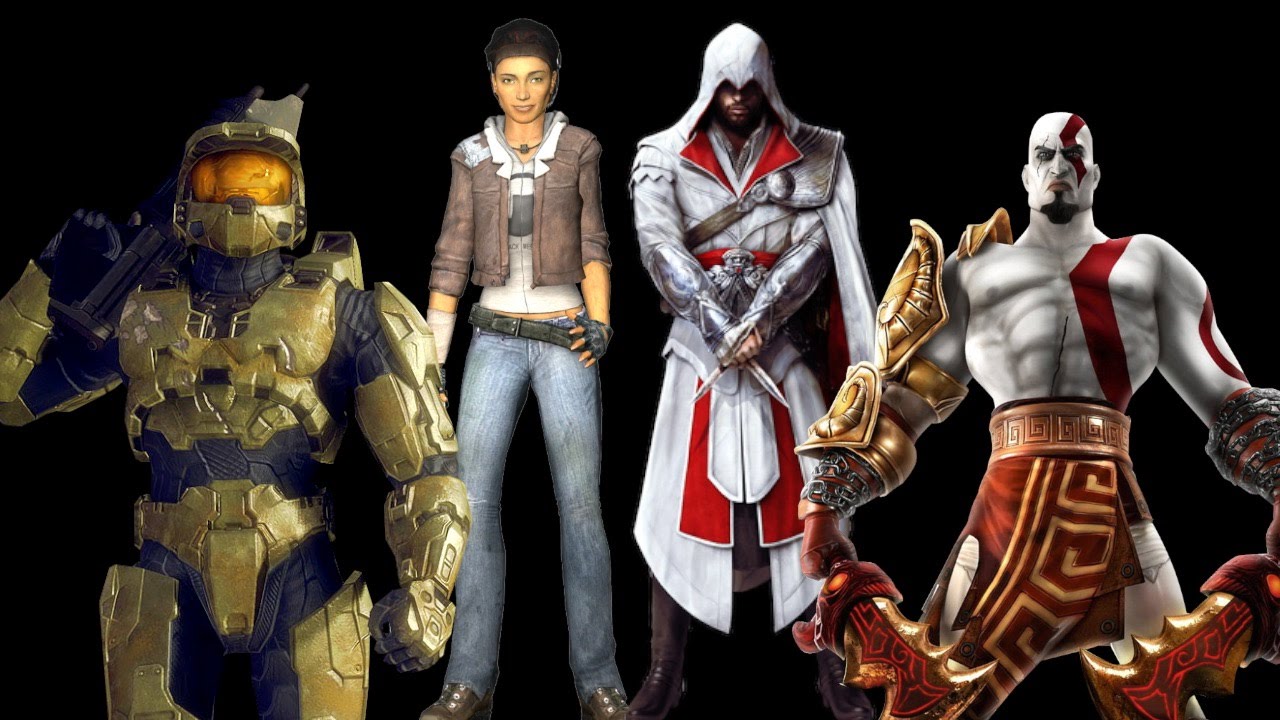
An audience can perceive a character differently depending on their exaggerated characteristics. For example, the red tattoo of Kratos and the muscular built, the overgeared Halo, or the white and red costume of Assassin’s Creed that covers the entire character are some exaggerations that highlight their features and make them a fan favorite.
 Image Link: https://i.ytimg.com/vi/oGq4aRI0d-w/maxresdefault.jpg
Character design relies on three fundamental elements: silhouette, palette, and exaggeration. It is often these three elements that determine whether a character design will be memorable or completely forgotten, despite the variety of details a character designer must consider.
Why Character is Important For The Game?

The key to enjoying any game is having good characters, regardless of whether it is an RPG or a shooter.
A Character Enhances Immersion And Encourages Replayability
The immersive quality of a video game is directly influenced by memorable and charismatic characters. If players like the characters and enjoy interacting with them, they will definitely want to finish the game, while remaining totally engaged.
In addition, if your character is really good, it can make players want to play it again and again. Every game developer strives to make their games replayable. User loyalty is what they want from their product.
For example, Kratos from the God Of War Franchise. The character perfectly combines brutality with experienced swordsmanship and creates perfect gameplay. The character is so iconic that players play the game again and again just to experience the enjoyable experience of playing Kratos.
Virtual Characters Are Relatable To Players
Nowadays games offer amazing customization for the characters, and the users can customize the skin tone, height, build, and everything of the character as per their choice. The gameplay also offers the freedom to the players to choose what the character does, and the free-world gameplay offers unlimited possibilities.
This way, the users can make their character do anything that they want, and this gives birth to “This character is just like me!” The relatability with the character increases the investment of the player in the game.
Influential characters make a lasting impression
Was there ever a time when someone’s words or actions encouraged you to do something?
Probably, yes. Who said video game characters couldn’t be as impactful? A virtual character can inspire others to be good people or fight corruption and evil just like a real person. As a result, they can also be a source of hope for the future.
Are you familiar with Link’s determination in defeating Ganon in The Legend Of Zelda? No matter how often darkness tries to overwhelm players, he inspires them to never give up. Red, the Pokémon trainer, is another example. No matter what size or where he comes from, he shows anyone can succeed.
Clearly, memorable characters are key to making your game a success. It begs the question: how do you create such a character? Let’s find out.
How To Create A Character Design?

The Character Design Step by Step Process
The concept of character design is now clear, and you understand the basic components that make up a good character design, so let’s have a look at the basics of the character design process.
1. Deep-rooted Research
Iconic characters are created by designers who do deep research and know everything that there is to know about their character’s world. If your character is a fantasy character based on a jungle theme, then research various jungle types and their habitats.
Before you pick up the pen & paper, you should become an expert about your character. For example, for the 1994 animated film “The Lion King”, character designers and animators studied real-life African savanna animals to better understand how they looked, their movements, and their demeanor to ensure the iconic characters they designed were true to form.
2. Gather Reference Images
A main part of your research is to collect reference images. If you are working on a superhero character, then search for related characters that share the same superpowers. For example, if your character is an ice mage, then see how other ice mages are showcased. When it comes to ice powers, the main colors that represent the character will be white or blue. Their costume, the usefulness of any and all assets, etc.
If your character is a racecar driver, then collect images of race tracks, race suits, and how different elements and colors are used across the race cars, race suits, and tracks. Using all these reference images, you will be able to conceptualize your character’s design.
3. Knowing Your Audience Is Key
Everyone sees the world from a different perspective. Designing a character that resonates with your target audience is easier when you know their vision and their taste. Research your target audience and find things that they like the most about characters. Build something that the audience wants, and your character will stand out like a charm.
4. Describe The Non-visual Attributes Of The Character
Take the character’s brief into consideration and create a unique background story and personality of your character. Perhaps your character is one that was inspired by Martial Arts as a kid to protect himself and his friends, so create a character that is a buffed Martial Arts user but with a soft and kind-looking personality.
Maybe he fought to save his friends from some villains in the past and has a big scar on the face or on the back because of the fight. Create a complete backstory for the character and design various elements of the character based on the story. Go as deep as you can and use every layer of the story to layer the character.
If your character is from a different era, like the old Western era, or from the futuristic era, then use the elements of these eras to define the aesthetics of your character. While paying attention to the storyline of the character, be aware not to push some stereotypes, or your beloved character will step into controversies.
5. Character Conceptualization
Now that we know what the characteristics and the background of the character are, and what the audience expects of such a character, now is the time to take the pen and paper, and start working on rough sketches of the character.
Choose the type of your game’s character and create different concepts that match their particular traits.
The different types of game characters are:
- Simple Human
- Warrior
- Soldier
- Assassin
- Pirate
- Ninja
- Mage
- Necromancer
- Archer
- Swords Master
- Demon
- God
- Etc.
Draw various concepts of the character till you come up with something that impresses you. Also, pay attention to the physical features of the character such as the poses, appearance, stance, etc.
6. Select The Color Palette
Different colors represent different meanings. For example, black color is often connected with something dark or mysterious, red with bravery, blue with coolness, etc. Choose the main color that represents your character and then choose the whole color palette that resonates with the same, and complements it.
Do not make the color selection complex. Simple colors are the best choice to create iconic characters. For example, the common gray and white color of Tom, and the Brown and white color palette of Jerry. The colors are simple, yet powerful.
7. Production Phase
Show the concepts to your team and the game team, and once the character is finalized, it marks the beginning of the production phase. Draw the character in different poses, and with different attires. Create well-detailed sketches of your character for the final production and draw the character doing key poses and with some dialogue. Draw the character with different angles and props and thus, the character design process is complete.
Ease Up Your Character Designing Process By Outsourcing
Character is the key element to the success of any game. To design and create the perfect characters for your game, make sure that you hire the best character-designing company. If you are planning to hire a character designer for your game, Capermint Technologies is the one-stop destination for all your character designing needs. With our designers’ widespread skill sets, we will design the perfect characters that will become the new definition of your game or animation.

Connect with our team to know more. Also, according to you, which is the most iconic character for any game? Do let us know in the comment section!
Key takeaways
Game character design turns a character's role and personality into production-ready art: a readable silhouette, a limited palette, and turnaround, expression and pose sheets for 2D animation or 3D modeling. For studios, publishers and brands, one character typically takes days to a few weeks; character-only work is quoted after scoping, and casual game MVPs with characters typically cost $10K–$40K.
After the concept: 2D vs 3D character pipelines
Both pipelines start from the same approved concept and model sheets. What changes is the production work that turns those sheets into a character your engine can animate.
| Stage | 2D character | 3D character |
|---|---|---|
| Concept | Brief, backstory, thumbnails, silhouettes, palette and an approved concept | Same as 2D, plus a turnaround sheet the modeler can measure from |
| Production art | Clean line art and color, with body parts split into named layers if the character will be rigged | Sculpt or model, retopology, UV unwrapping and textures |
| Animation setup | Frame-by-frame sprites, or a bone rig in a skeletal tool such as Spine or Unity's 2D Animation package | Skeleton rig with skin weights, then animation clips |
| Engine handoff | Sprite sheets or rig exports plus layered source files | Rigged model (commonly FBX) with textures, reviewed at gameplay camera distance |
| Typical fit | Casual, puzzle, card, board and side-view games | Free-camera, third-person and first-person games |
| Relative cost and time | Usually lower; changes are quicker | Higher; modeling, UVs, texturing and rigging add stages |
Lock proportions before anyone rigs the character: a body change after rigging means rebuilding the rig and skin weights. For 3D, sign off a short rig test in your engine before full animation.
What character design typically costs
| Engagement | What is included | Typical range (USD) |
|---|---|---|
| Character design only (fixed-scope art pack) | Concept options, final design, turnaround, expression and pose sheets and layered source files for characters in a game you are already building | Quoted per character or per art pack after a scoping call |
| Casual game MVP, characters included | Character art plus core gameplay, UI and QA for one game on one or two platforms | $10K–$40K |
| Mid-scope multiplayer game, full character set | Playable characters, NPCs, skins and animations plus multiplayer, backend and live-ops content | $40K–$120K |
| Dedicated character art team (monthly) | Character artists and animators producing new characters, skins and seasonal variants inside your pipeline | Monthly rate quoted after scoping |
Typical ranges, not quotes. Final prices and schedules follow a scoping call and depend on character count, 2D or 3D, level of detail and review rounds. Work runs as a fixed-scope project, a dedicated team billed monthly, or co-development inside your pipeline.
For production, see our 2D character design services and 3D character modeling services, which list per-character pricing, or concept art services for early exploration. To add capacity for ongoing skins, hire 2D artists who work inside your pipeline. Related reading: basic character design principles, the 3D character modeling guide and the 3D character portfolio.
Game Character Design FAQs
What is game character design?
Game character design is the process of creating the look and personality of a character for a video, mobile or web game, including heroes, side characters, monsters and animals. Designers start from the character's role in gameplay and story, then define its silhouette, color palette and exaggerated features before producing production-ready sheets.
What makes a game character iconic?
Three elements working together: a silhouette players can identify when it is filled solid black, a simple palette led by one dominant color, and exaggerated features that signal personality, such as Kratos's red tattoo. A backstory that explains each visual choice keeps the design consistent across poses, skins and sequels.
What are the steps in the game character design process?
Seven steps: research the character's world and role, gather reference images, define the target audience, write the non-visual attributes such as personality and backstory, sketch concepts and test silhouettes, select the color palette, then produce turnaround, expression and pose sheets and hand them to 2D animation or 3D modeling. Skins and variants are then built on the same base.
How much does game character design cost?
Character-only work is quoted per character or per art pack after a scoping call, based on 2D or 3D, style, detail, the number of poses and expressions, and whether rigging is needed. A stylized 2D character costs far less than a realistic 3D one. When characters are part of a full build, typical ranges are $10K–$40K for a casual game MVP and $40K–$120K for a mid-scope multiplayer game; final quotes follow a scoping call.
How long does the game character design process take?
One character usually takes from a few days to a few weeks. One published studio price guide estimates 25–50 artist hours for a casual 2D character and 50–130 hours for a 3D character model, depending on style. Detail, the number of expressions and poses, and review rounds set the pace, so a full character set is scheduled at scoping.
What should a character design brief include?
A useful brief states the character's role in gameplay and story, the genre and target players, three to five style references, and the platforms and engine. Add the number of characters and variants, how the art will be used next (2D animation, 3D modeling or marketing), the budget, the deadline and the number of review rounds.
What should you receive when a character design is finished?
Expect the approved concept, a turnaround or model sheet (front, side, back and three-quarter views), expression and pose sheets, and callouts for props, materials and exact colors. Source files should be layered, for example Photoshop PSD files, with PNG exports. If a 3D modeler takes over, add scale references and notes on how the character moves.
How do you test whether a character design works in the game?
Test it at the size and camera distance players will see it. Fill the character in black to check the silhouette, place it on real game backgrounds, view it in grayscale and through a color-blindness simulator, and animate a simple walk or attack. If players cannot read the role or mood at a glance, simplify the shape or the palette.
How do you add skins and variants without losing the character's identity?
Build every skin, outfit or seasonal variant on the same base body, proportions and silhouette, and change costume, color accents and props rather than the shape. Keep the dominant color or one signature feature in every version, compare variants side by side at gameplay size, and for 3D characters keep the base rig so existing animations still work.
Should I outsource character design or keep it in-house?
Outsource when you need a defined set of characters, a style your team lacks, or extra capacity. Keep it in-house when character art is continuous and central to your game's identity. Many studios combine both: an in-house art director owns the style while an outside team produces concepts, sheets and variants.
Who owns a game character designed by an outside studio?
Not you, automatically. Copyright in commissioned art usually stays with the studio or artist that made it unless a signed written agreement gives it to you, and in both the US and Canada a copyright assignment must be in writing and signed. Ask for a written IP assignment covering the final art and source files, an NDA before you share unreleased material and an agreed AI-tool policy; in Canada, also ask for a waiver of the artists' moral rights, which can be waived but not assigned. This is general information, not legal advice, so have a lawyer review the contract.
How does Capermint work on character design projects?
We design 2D and 3D game characters as a fixed-scope project, through a dedicated team billed monthly, or as co-development inside your pipeline. Capermint was founded in 2014 in Ahmedabad, India, and its team of over 200 specialists (Capermint-reported) includes game designers, 2D and 3D artists and animators. We schedule calls in US and Canadian business hours and take projects from studios worldwide.
Need characters for your game?
Send your genre, style references, character list and engine, and we will scope the work and quote a budget range. We schedule calls in US and Canadian business hours and work with studios worldwide.