
Make discovery easy
Help players understand the type of challenge before they open it, then make the next game easy to find.
Search the native WordPress menu, then use the complete directory for every long-tail capability.
MANY WAYS TO PLAY. ONE PLACE TO RETURN.
A whole arcade. One connected journey.
A mobile game platform that brings casual games, competition, power-ups, and gift-card rewards into one recognisable experience.
SCREENSHOTS & GAME SCREENS
Official App Store screenshots. Select any image to view it at full size.
THE PROJECT
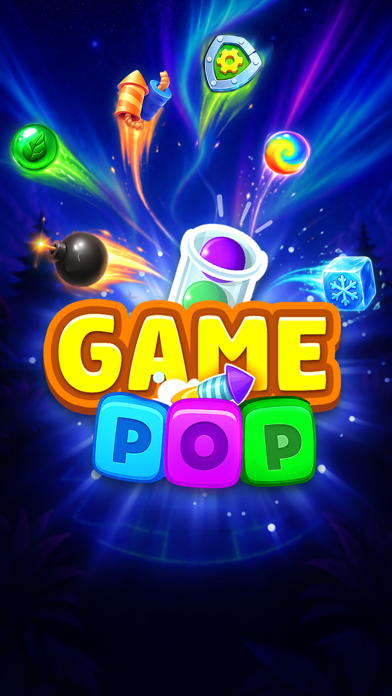
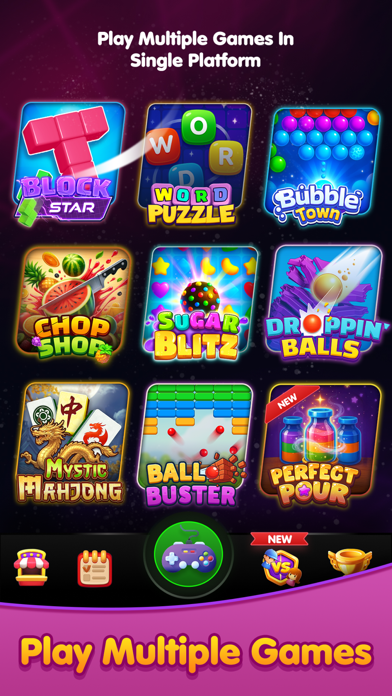
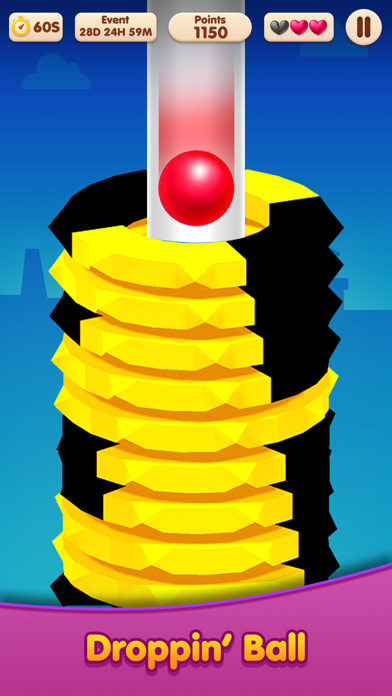
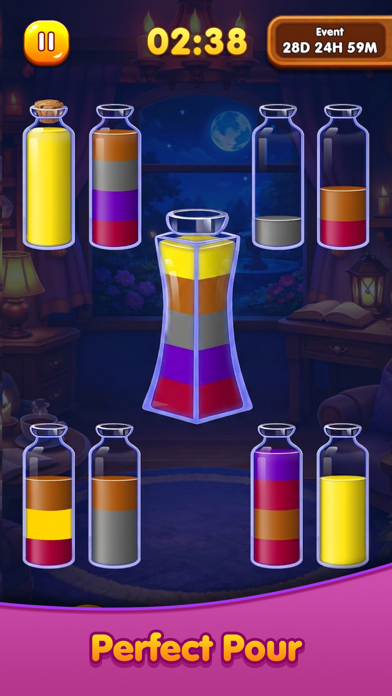
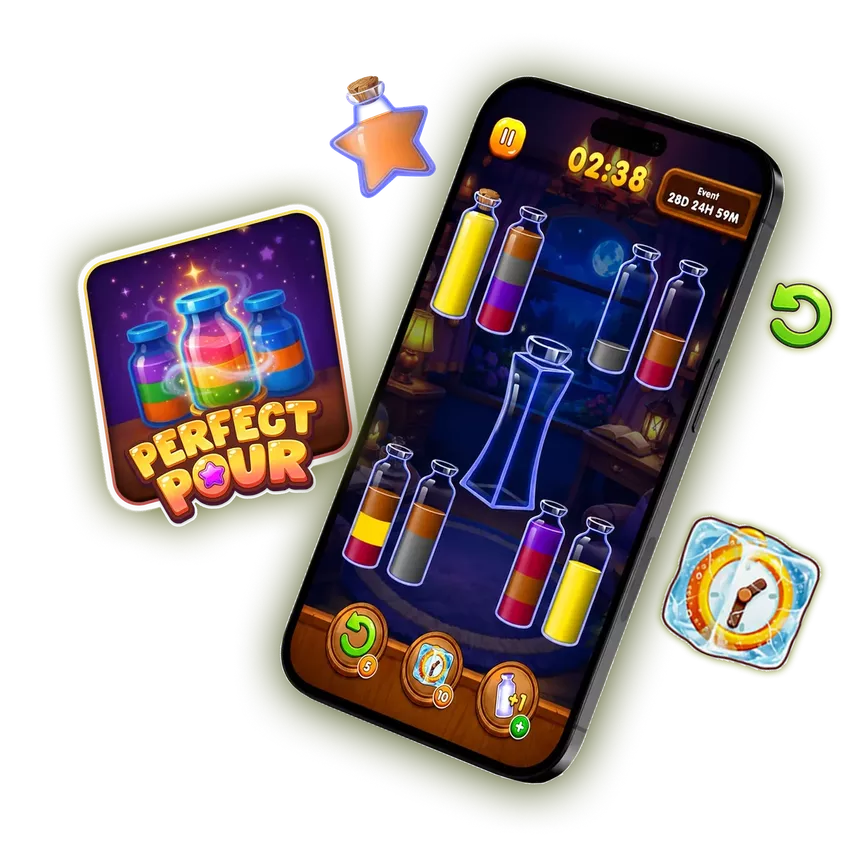
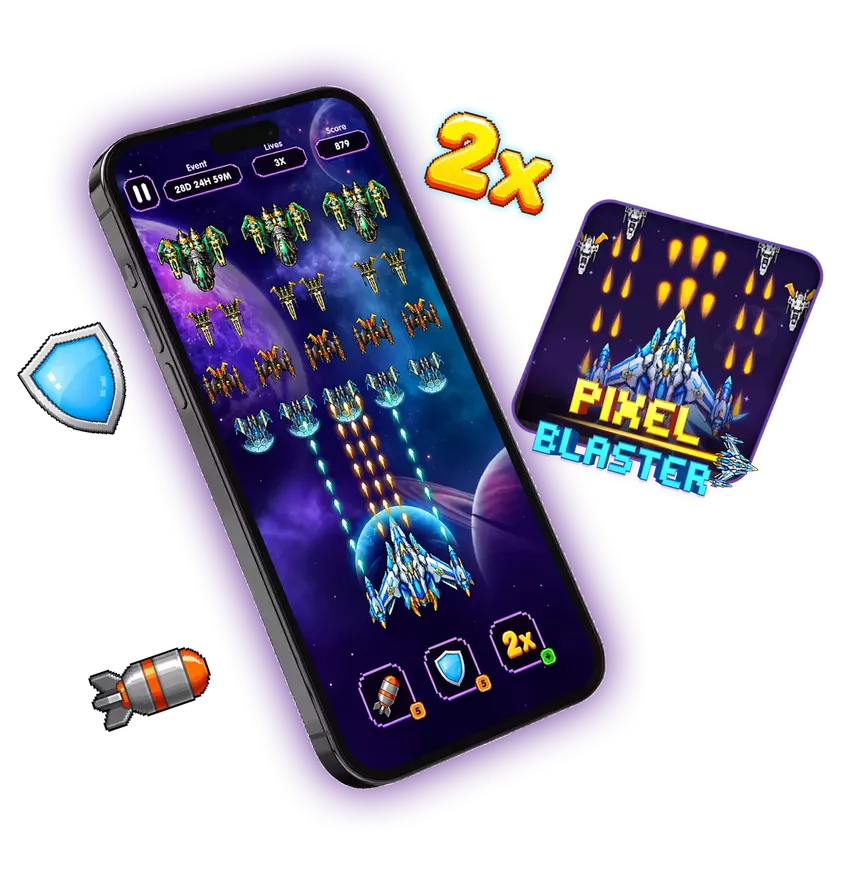
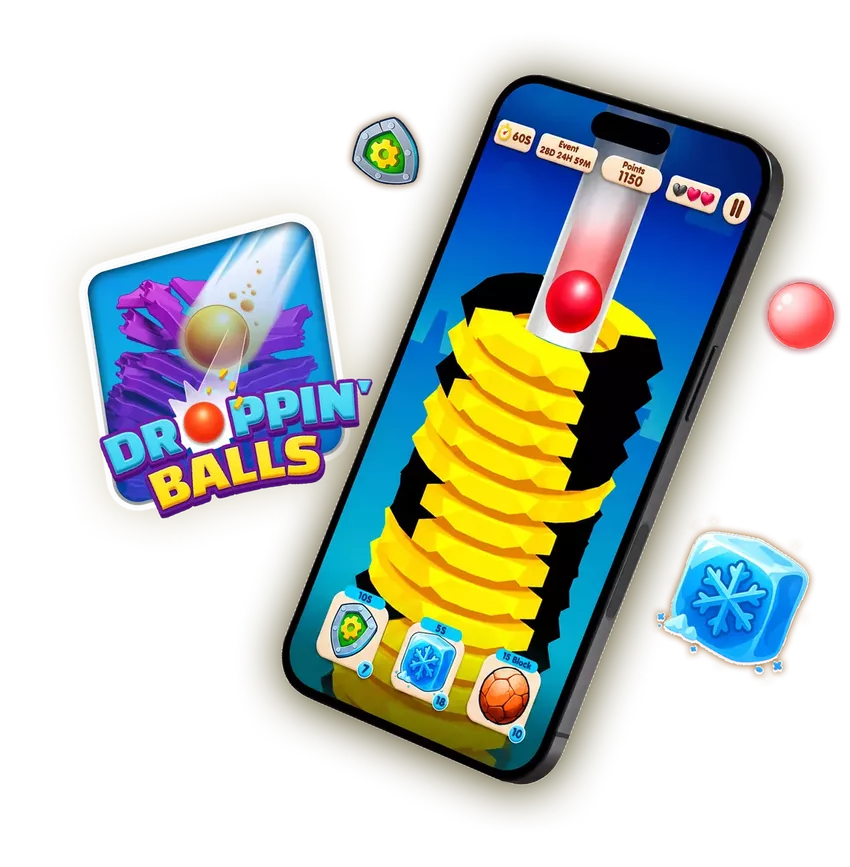
Gamepop brings several casual play styles into a single mobile destination. A player can move between a colour-sorting puzzle, an arcade shooter, and a timing challenge without changing the overall product identity. The website presents Perfect Pour, Pixel Blaster, and Droppin Balls as examples of that variety.
The central product question is how to make an expanding game collection feel coherent. Discovery, instructions, rewards, and the return to the lobby all need a shared structure, even when the action inside each game is different.
This case study examines the product and supplied interface designs as part of Capermint’s project portfolio. The public App Store listing names XA Interactive Inc. as seller and PlaySphere Studios in the copyright notice; those publishing identities are distinct from a delivery partner’s role.
Help players understand the type of challenge before they open it, then make the next game easy to find.
Give players an understandable relationship between a completed session, earned currency, and available rewards.
Create a platform experience that can accommodate new games and modes without rebuilding the entire player journey.
THE PLAYER EXPERIENCE
Different mechanics share a familiar surrounding journey. The platform supplies the continuity; each game supplies a fresh challenge.
Browse the collection and pick a game that fits the moment.
Learn the game’s immediate objective and use its specific controls.
Follow scores, events, power-ups, and the rewards available within the product.
Revisit a favourite or try another game from the same platform.
CHALLENGES & SOLUTIONS
Design analysis connects each product challenge with the response visible in the references. Proposed engineering measures are identified separately.
THE CHALLENGE
Each game needs its own controls and personality. Inconsistent entry screens and reward language can make a collection feel like unrelated apps.
PRODUCT RESPONSE
The shared brand, game catalogue, power-up presentation, and rewards proposition give the different titles a common context.
Why it matters Players can recognise where they are, even as the mechanic changes.
THE CHALLENGE
A new user must learn both the platform and an unfamiliar game. Too many explanations before play can obscure the simple reason they arrived.
PRODUCT RESPONSE
The supplied design board separates first-time flows and age-related screens. Public release notes also record onboarding and login refinements.
Why it matters Onboarding is a journey with distinct decisions, rather than one overloaded welcome screen.
THE CHALLENGE
A player needs to distinguish score, coins, and a redeemable reward. Ambiguous labels can create expectations the product does not meet.
PRODUCT RESPONSE
The website gives coin-to-gift-card redemption its own explanation and places reward conditions alongside the product proposition.
Why it matters The reward journey needs to be as clear as the game loop.
THE CHALLENGE
Single-player scores and multiplayer results create different expectations. A tie or rematch needs an explicit outcome.
PRODUCT RESPONSE
The App Store history describes multiplayer additions, friendly battles, quick matches, rematches, and tie handling for individual games.
Why it matters Competition can grow game by game without implying that every title has identical modes.
THE CHALLENGE
Interrupted sessions, repeated requests, or delayed results can leave rewards and scores out of step.
PROPOSED ENGINEERING RESPONSE
A recommended implementation would validate results, record reward changes once, and let clients recover the last confirmed state.
Why it matters Reliable recovery protects the player’s understanding of what they earned.
THE CHALLENGE
A larger catalogue adds navigation, asset, and testing demands. Small improvements can otherwise become inconsistent across titles.
PRODUCT RESPONSE
Public updates show new games alongside interface, readability, animation, and performance refinements. Shared interaction patterns offer a practical basis for continued expansion.
Why it matters Content growth and interface maintenance need to move together.
ART DIRECTION & UX
Purple environments, bright game artwork, and recognisable reward objects give the platform an arcade identity. The practical design task is to preserve clarity underneath that visual energy.
The catalogue answers what to play. The game screen answers what to do next. Keeping those jobs distinct reduces the need for competing controls.
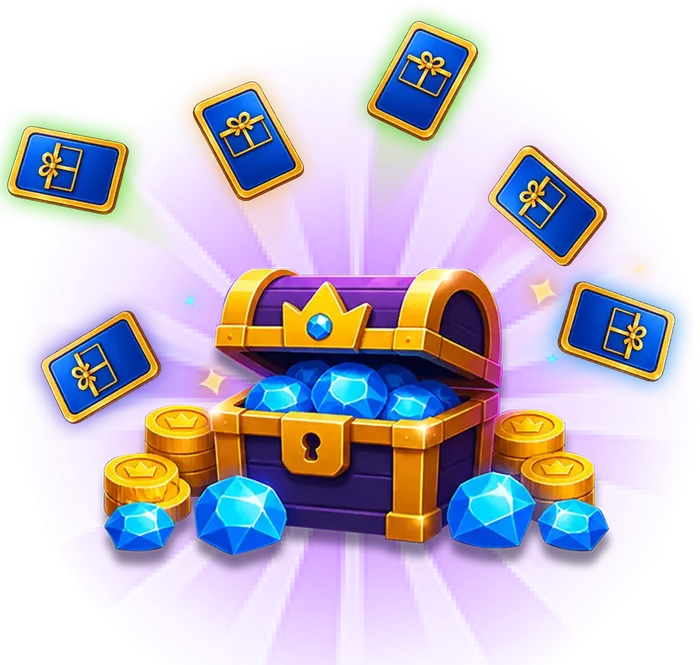
The chest and gift-card story provide a visual destination for progress. The text still needs to explain the conditions and steps.
Score, instructions, and action buttons need priority over decoration. Larger tutorial and notification text is also reflected in public release notes.
The supplied Gamepop file contains Platform design, All Games, assets, and Game design pages. Its platform board separates onboarding flows and includes multiplayer explorations. A design reference shows intended states; it does not by itself establish which version shipped.
PRODUCT FEATURES
Sorting, shooting, and timing mechanics create different reasons to start a session.
Boosts add another decision within individual games and are introduced through a dedicated website section.
The website connects platform coins with gift cards, subject to the product’s terms.
Public release notes describe multiplayer arriving across selected games over time.
Competition creates a shared reason to revisit games. Event rules and result states need to remain easy to find.
The official website links to both Apple’s App Store and Google Play.
DEVELOPMENT APPROACH
A multi-game product benefits from proving one complete player journey before adding more titles. This makes discovery, rewards, and recovery testable as a connected experience.
The approach below is a proposed delivery framework for this product. It is not a record of unverified production milestones or technology choices.
Define entry, account, age selection, game discovery, session completion, and reward states. Keep eligibility decisions separate from gameplay instructions.
Connect a single game to the platform’s launch, result, and return flows. Confirm what the game owns and what the platform owns.
Apply the common integration pattern to games with different controls and scoring rules. Preserve each game’s identity while reusing navigation.
Exercise ties, rematches, delayed results, and repeated reward requests. Give players a clear pending or confirmed state.
Review store presentation, device performance, onboarding completion, and game-level behaviour separately.
QUALITY & RELEASE READINESS
These are recommended checks for the platform, not claims that a particular QA report or performance target has been supplied.
PROGRESSION & THE BUSINESS MODEL
Variety provides a natural return path: players can stay within the platform while changing the type of challenge. Events and game-specific competition add further goals around the core collection.
The public listing includes advertising and in-app purchases, while the website promotes gift-card redemption. These are product mechanisms, not evidence of revenue, reward profitability, or retention uplift.
A useful commercial review would examine repeat sessions by game, movement between games, and redemption completion separately. That would reveal whether the collection genuinely strengthens the player journey.
OUTCOMES & NEXT STEPS
The strongest available evidence is the live product presence and published feature updates. The case study does not convert promotional counters into verified business results.
The website and linked stores present a multi-game product under the Gamepop brand.
Public version history records new games, multiplayer additions, and onboarding refinements.
Catalogue discovery, completed sessions, and successful redemption would be useful measures of platform usability.
Install totals, revenue, retention, delivery duration, and reward economics have not been verified for this case study. They are intentionally not presented as project results.
LESSONS FROM THE PRODUCT
Shared entry and result patterns help players explore unfamiliar mechanics with less relearning.
Progress has more meaning when the player understands what was earned and what can happen next.
Each additional game should strengthen the collection without adding a different account or navigation experience.
PROJECT QUESTIONS
Gamepop is a mobile multi-game platform featuring casual games, power-ups, competition, and a gift-card reward proposition.
The original website artwork shows Perfect Pour, Pixel Blaster, and Droppin Balls. The wider catalogue can change with releases.
That should not be assumed. Public release notes introduce multiplayer for selected games over time.
The website describes converting Gamepop coins into gift cards. Availability and redemption are governed by the product’s current terms.
The supplied file separates platform design, game design, the game collection, and assets, with onboarding and multiplayer explorations.
No internal stack, production schedule, or verified business metrics were supplied. Proposed engineering and QA work is identified as such.
YOUR NEXT GAME STARTS WITH A CLEAR IDEA.