Support different store types
Give varied retailers a shared structure without treating every business as identical.
Search the native WordPress menu, then use the complete directory for every long-tail capability.
LOCAL STORES. ONE CONNECTED MARKETPLACE.
Many sellers. A simpler way to run the marketplace.
From supermarkets and pharmacies to grocery outlets and restaurants, Keffys brings different local businesses into one marketplace. Capermint delivered the underlying platform as a complete build for multi-store retail in Kenya.
THE PROJECT
A multi-vendor marketplace has to do more than display products. It must give different sellers a workable home, keep store information organized and provide the business with a consistent way to oversee operations.
Keffys wanted to unite a broad mix of local retailers in Kenya, including general stores, supermarkets, pharmacies, grocery outlets, hardware stores and restaurants. Capermint was brought in as the full-build partner to develop the platform from the ground up.
The documented engagement centers on a web platform built with ASP.NET and JavaScript. Storefronts, seller management and the core business logic were delivered as one system, replacing fragmented coordination with a shared operating foundation. The public Keffys apps provide an additional view of the wider marketplace experience.
Give varied retailers a shared structure without treating every business as identical.
Create a consistent way for Keffys to manage sellers and stores across the business.
Connect the backend and interactive front end so the platform can accommodate more sellers over time.
PRODUCT VISUALS
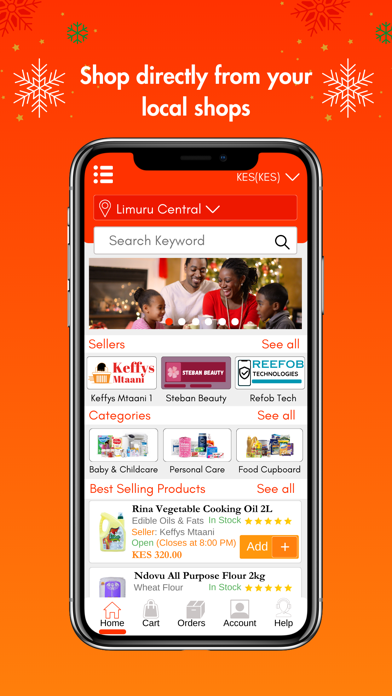
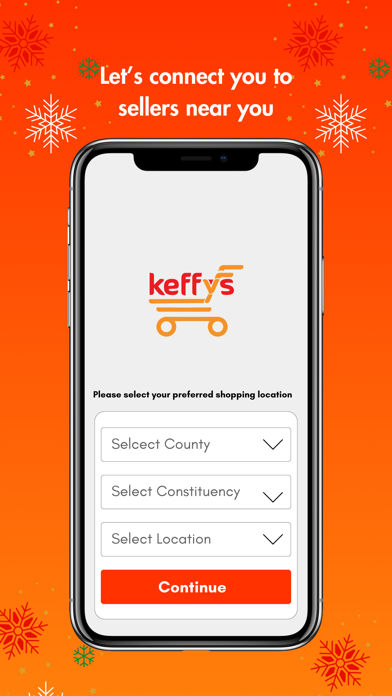
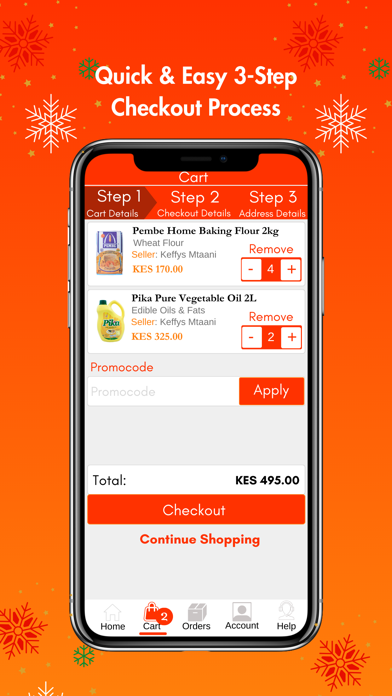
Official Keffys App Store screenshots. The seasonal artwork is part of the publisher’s current store presentation and is shown as supplied; it is not a promotion created for this case study.

THE EXPERIENCE
The marketplace serves shoppers, individual sellers and the business overseeing the wider network.
The public app presents location-based shopping with local stores and product categories.
Shoppers explore products while store and seller information provides context.
The published app screens show a cart and a staged checkout journey.
Behind the storefront, centralized multi-store management gives Keffys a shared way to oversee sellers and operations.
CHALLENGES & SOLUTIONS
The build scope and delivery responses come from the supplied Keffys case-study document. Public app screens illustrate the wider product experience.
THE CHALLENGE
Stores across retail categories have different listings and operational needs. Managing them independently creates inconsistency.
THE RESPONSE
Build a multi-store architecture with storefronts, seller management and business logic in one cohesive system.
Why it mattersThe platform can support varied businesses within a shared structure.
THE CHALLENGE
A marketplace dealing with real sellers and transactions cannot rely on disconnected, fragile workflows.
THE RESPONSE
Use ASP.NET for the core business logic and data layer, connected to a JavaScript-driven front end.
Why it mattersThe documented build gives the business a maintainable base for everyday operation.
THE CHALLENGE
Overseeing each store through separate processes makes the wider business harder to manage.
THE RESPONSE
Centralize multi-store management so Keffys can oversee sellers and operations consistently.
Why it mattersThe operating model becomes more structured as the seller network grows.
THE CHALLENGE
Adding sellers and categories can multiply complexity when the platform is built as isolated storefronts.
THE RESPONSE
Design the system around multiple store types sharing a flexible architecture.
Why it mattersExpansion can build on the common foundation rather than starting again for every category.
PRODUCT FEATURES
Different sellers operate inside the same marketplace experience.
The platform brings seller organization into a consistent operating structure.
The shared foundation supports general retail and specialist store types.
Keffys can manage multiple stores through one connected system.
JavaScript powers the responsive storefront and seller-facing experience described in the build.
The ASP.NET backend and data layer support the platform’s operating foundation.
IMPLEMENTATION
Capermint owned the documented platform engagement end to end, covering the architecture, backend and interactive front end.
Develop the core business logic and data layer as a structured foundation for the marketplace.
Connect the storefront and seller-facing flows through an interactive web experience.
Allow different categories of seller to operate within the same platform without collapsing their requirements into a rigid model.
Bring the store-facing experience and central management together so the client can operate the marketplace as one business.
DESIGN & USABILITY
The public app screens show how store identity, location and product discovery sit together in the customer experience.
A location selector helps ground discovery in a local retail area.
Store listings and seller names help shoppers understand the businesses behind the products.
The published cart screen organizes the shopping journey into cart, checkout and address stages.
OUTCOMES & IMPACT
The supplied case study reports qualitative improvements in operational structure and a delivered foundation for future marketplace growth.
Storefronts, seller management and core business logic were delivered together.
Central management brought structure to a previously fragmented multi-store workflow.
The architecture was designed to support expansion across stores and retail categories.
Source: Keffys_Case_Study.pdf. The documented stack applies to the web platform engagement; no mobile framework, revenue uplift, transaction volume or uptime guarantee is asserted.
PROJECT QUESTIONS
Keffys is a marketplace connecting different local sellers and retail categories in Kenya, with shopping and business discovery available through its public product experience.
The supplied document describes a complete marketplace platform: architecture, storefronts, seller management and underlying business logic.
ASP.NET supports the backend and data layer, while JavaScript powers the interactive front end. The document identifies the delivered platform as web.
A shared multi-store architecture supports different retail categories within one system, with centralized oversight for the marketplace business.
Visit the official website or use the verified Keffys App Store and Google Play links on this page.
LET’S BUILD YOUR NEXT EXPERIENCE.