
Give each animal a role
Use character identity to help players understand different ways to approach the game.
Search the native WordPress menu, then use the complete directory for every long-tail capability.
BUILD YOUR SQUAD. FIND YOUR STYLE.
Football strategy with a wild personality.
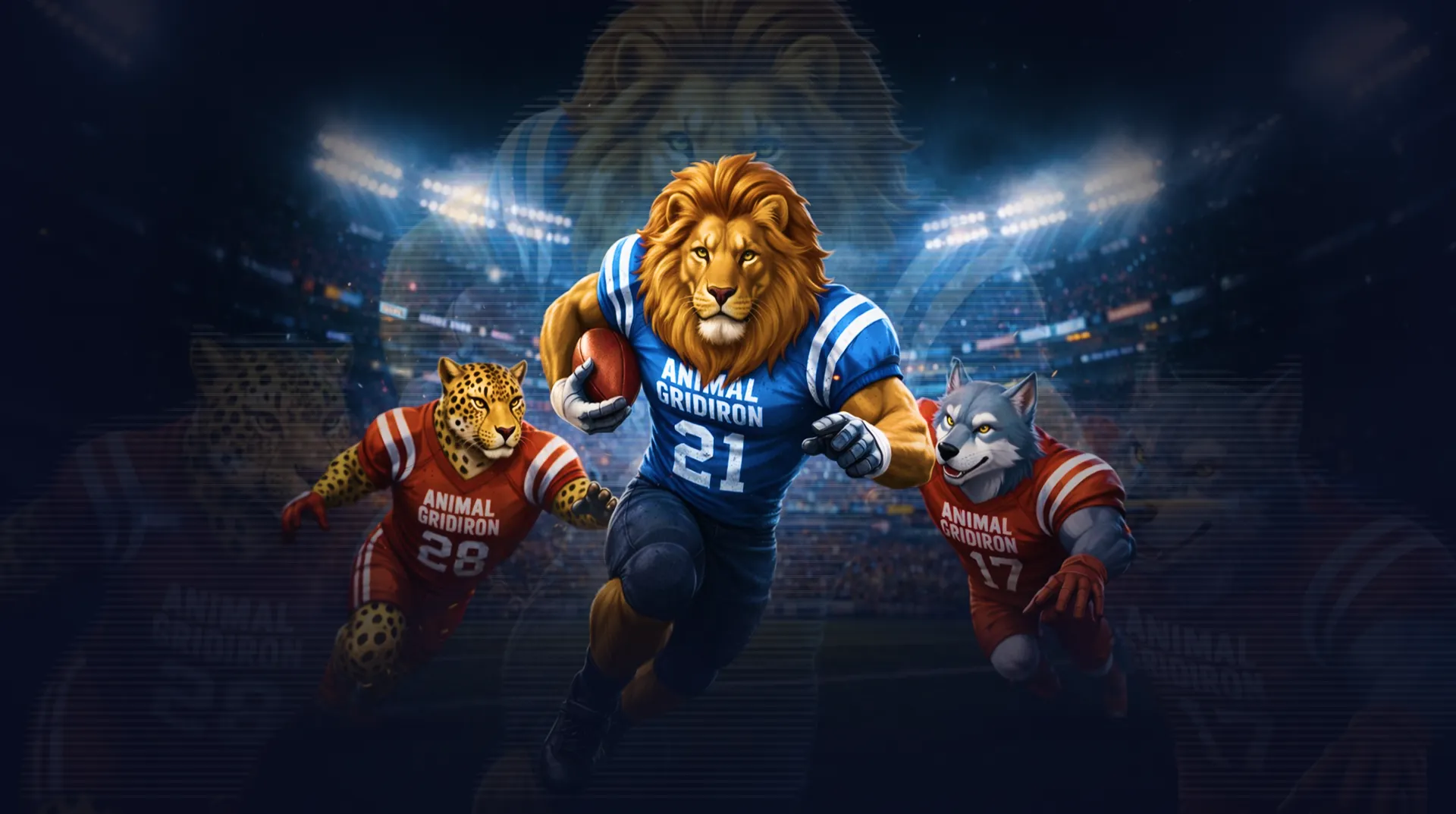
An animal-football experience that combines squad identity, contrasting play styles, real-time action, and arenas that change the setting of the contest.
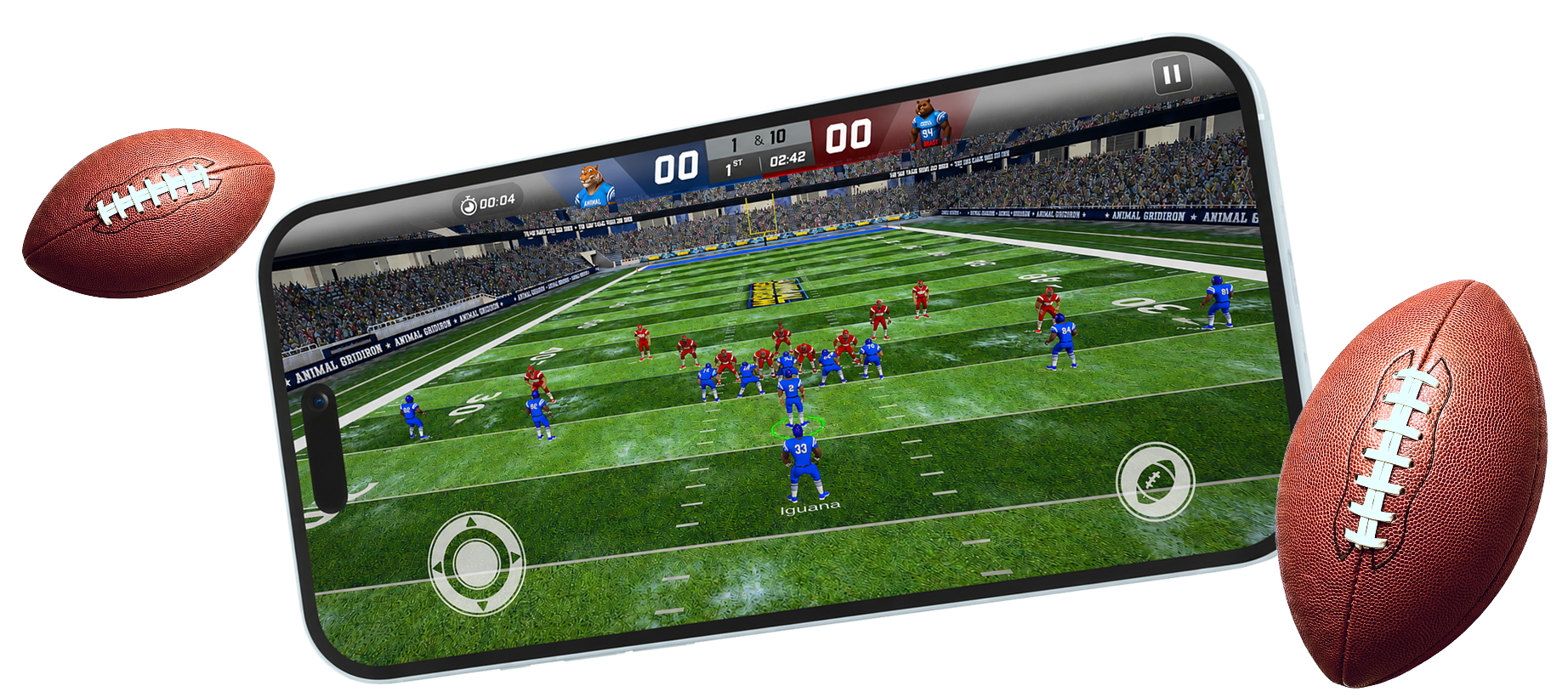
SCREENSHOTS & GAME SCREENS
Original gameplay screenshot from the official website. Select the image to view the full-size version.
THE PROJECT
Animal Gridiron gives American football a cast of animal competitors and a strong squad-building identity. The official website frames the choice around speed, power, and precision, then connects those styles with team assembly and real-time football action.
The product needs two kinds of clarity. Before the match, players need to understand why an animal belongs in their squad. During play, they need to identify the active character, the ball, the current action, and their next useful choice.
The supplied Figma file adds detail to that picture through playbook, offensive and defensive play, receiver, tackle, switch, and catch-target design elements. Those references support a design story; they do not prove every explored feature is live.
Use character identity to help players understand different ways to approach the game.
Make squad and play choices meaningful when the match begins.
Support quick decisions while several characters and effects are active at once.
THE PLAYER EXPERIENCE
The pre-match decisions set up the contest, while the live action asks the player to respond. The strongest experience connects those two parts clearly.
Assemble a squad around the style the player wants to use.
Understand the play and the roles involved before the action starts.
Control the team in the real-time football experience described by the product.
Reconsider the squad, play choices, and approach for the next contest.
CHALLENGES & SOLUTIONS
Design analysis connects each product challenge with the response visible in the references. Proposed engineering measures are identified separately.
THE CHALLENGE
A character roster can look exciting without helping the player understand a useful team choice.
PRODUCT RESPONSE
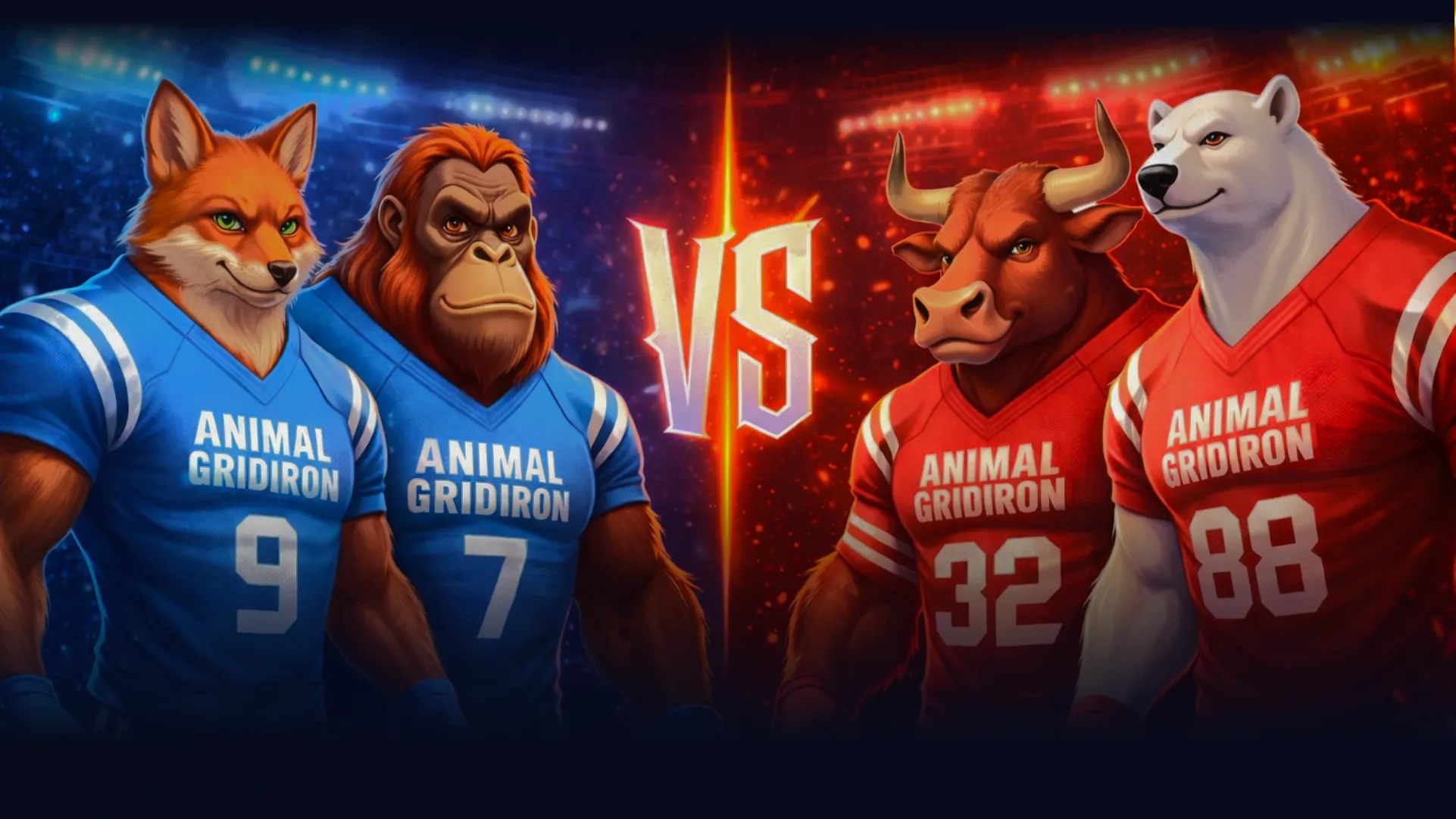
The website presents speed, power, and precision as the main style choices, connecting the animals with a simple strategic vocabulary.
Why it matters Players get a reason to compare characters beyond appearance.
THE CHALLENGE
A team sport contains many actions and roles. Showing every control at once can overwhelm the field.
PRODUCT RESPONSE
The Figma reference separates named actions such as snap, receiver, tackle, switch, kick, and intercept, alongside offensive and defensive plays.
Why it matters Breaking the sport into clear states provides a basis for contextual controls.
THE CHALLENGE
Planning can feel detached if the player cannot see how a selected play relates to the active characters.
PRODUCT RESPONSE
The supplied design includes a playbook, offensive and defensive play elements, catch targets, and indicators below characters.
Why it matters The interface can connect a planned action to the character or location that carries it out.
THE CHALLENGE
Several animated animals can compete for attention. Effects and large characters can hide the immediate decision.
PRODUCT RESPONSE
The supplied control and target elements establish a design vocabulary for selection and attention. Their visibility would need checking across every arena.
Why it matters Players should recognise what they control and where the action is moving.
THE CHALLENGE
Tackles, catches, switches, and scoring can be interpreted differently if timing and authority are unclear.
PROPOSED ENGINEERING RESPONSE
A recommended implementation would define the authoritative match state and test action timing under real-world network conditions.
Why it matters The same play should lead to the same confirmed outcome for participants.
THE CHALLENGE
A visually different field can introduce contrast problems or make a familiar signal harder to recognise.
PRODUCT RESPONSE
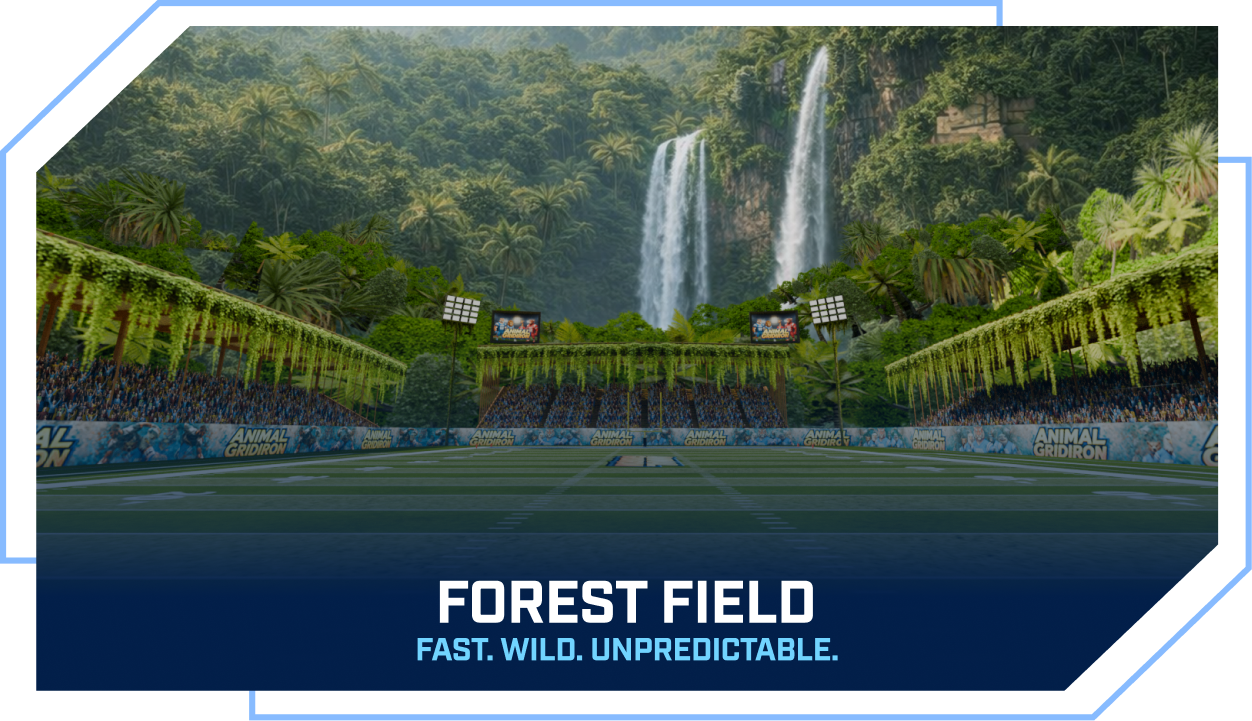
The public site presents multiple arenas, while the shared football and team identity provides continuity between them.
Why it matters Arena variety should add atmosphere while preserving readable game signals.
ART DIRECTION & UX
Animal characters create a strong visual hook for the sport. The interface has to turn that appeal into useful choices before and during a match.
Different body shapes and character treatments can help players identify team members quickly.
The named action states in the design reference suggest different interface needs for preparation, possession, defence, and resolution.
Selection rings and target markers should retain their meaning across character sizes, movement, and arena backgrounds.
The supplied American Football – Animal Gridiron file separates UI, Draft, and Website pages. Its visible UI layers include playbook, snap, receiver, scramble, tackle, switch, kick, intercept, blocking, catch-target, and offensive/defensive play elements.
PRODUCT FEATURES
The product uses animals as the identity of its football competitors.
Speed, power, and precision provide a simple way to frame different approaches.
The official presentation puts building a team at the centre of the experience.
The website describes taking control of a team in fast-paced matches.
Different fields extend the game’s setting and visual character.
The supplied UI reference explores individual football actions and playbook states; implementation status requires separate confirmation.
DEVELOPMENT APPROACH
A sports game needs its actions, animation, rules, and match state to agree. A small complete play is a stronger starting point than a large roster with unresolved interactions.
The approach below is a proposed delivery framework for this product. It is not a record of unverified production milestones or technology choices.
Specify possession, play phases, scoring, active-character selection, and what each action means.
Build preparation, snap, movement, a ball interaction, and the result with a minimal squad.
Introduce contrasting characters while checking their animation, collision, and on-field readability.
Test tackles, catches, switches, and scoring against the confirmed state, including delayed or repeated actions.
Check new content against the established gameplay and interface baseline before release.
QUALITY & RELEASE READINESS
Recommended testing should cover an entire football sequence, including transitions. Isolated button checks would miss the interactions that make a match feel coherent.
PROGRESSION & THE BUSINESS MODEL
Squad building gives the player a continuing relationship with the roster. The most useful progression would make choices clearer and broaden viable styles, rather than simply adding more items to a menu.
The public presentation establishes team assembly and contrasting styles. It does not, on its own, verify a particular upgrade economy, card-acquisition system, purchase catalogue, or monetisation performance.
Commercial and retention claims are therefore left out. Future evaluation could look at squad diversity, repeat matches, role selection, and whether players can explain why they changed their team.
OUTCOMES & NEXT STEPS
The product’s visible identity is strong: animal teams, football action, and arena variety. The design file provides additional evidence of the interaction work around that concept.
The original artwork and live site consistently connect animal characters with football.
The supplied file includes playbook and action-specific interface elements.
Match completion, action errors, reconnect recovery, and squad selection would help evaluate the experience.
The official website links to an iOS App Store page. Android availability, launch results, player totals, revenue, and technical benchmarks have not been established from the inspected references.
LESSONS FROM THE PRODUCT
The roster becomes more useful when appearance and role reinforce each other.
Moving from planning to action to result is as important as any individual button.
The player should recognise possession, selection, and targets even when the arena or squad changes.
PROJECT QUESTIONS
It is an animal-themed football product whose official website highlights squad building, different play styles, and real-time action.
The public presentation frames animal styles around speed, power, and precision. Exact stats and balance rules are not supplied here.
The reference contains UI, Draft, and Website pages, with playbook, offensive and defensive play, targeting, and individual action elements.
That cannot be assumed. Design explorations and named layers are evidence of intended interaction work, not automatic proof of implementation.
The official website provides an iOS App Store link. This case study does not claim verified Android availability.
No verified economy specification or purchase catalogue was supplied, so the study does not invent one.
YOUR NEXT GAME STARTS WITH A CLEAR IDEA.