Capermint
Skip to main content

Capermint

Skip to case study
All projectsCAPERMINT / GAME DEVELOPMENT CASE STUDY01 / PUZZLE

SMALL MOVES. SATISFYING SOLUTIONS.

Wood Nuts
& Bolts.

A simple puzzle.
A little more to discover.

Turning the familiar act of unscrewing a bolt into a mobile puzzle about logic, discovery, and the joy of one more level.

Casual puzzle Android & iOSZen Gamer Studios
THE GAMEWOOD. LOGIC. DISCOVERY.
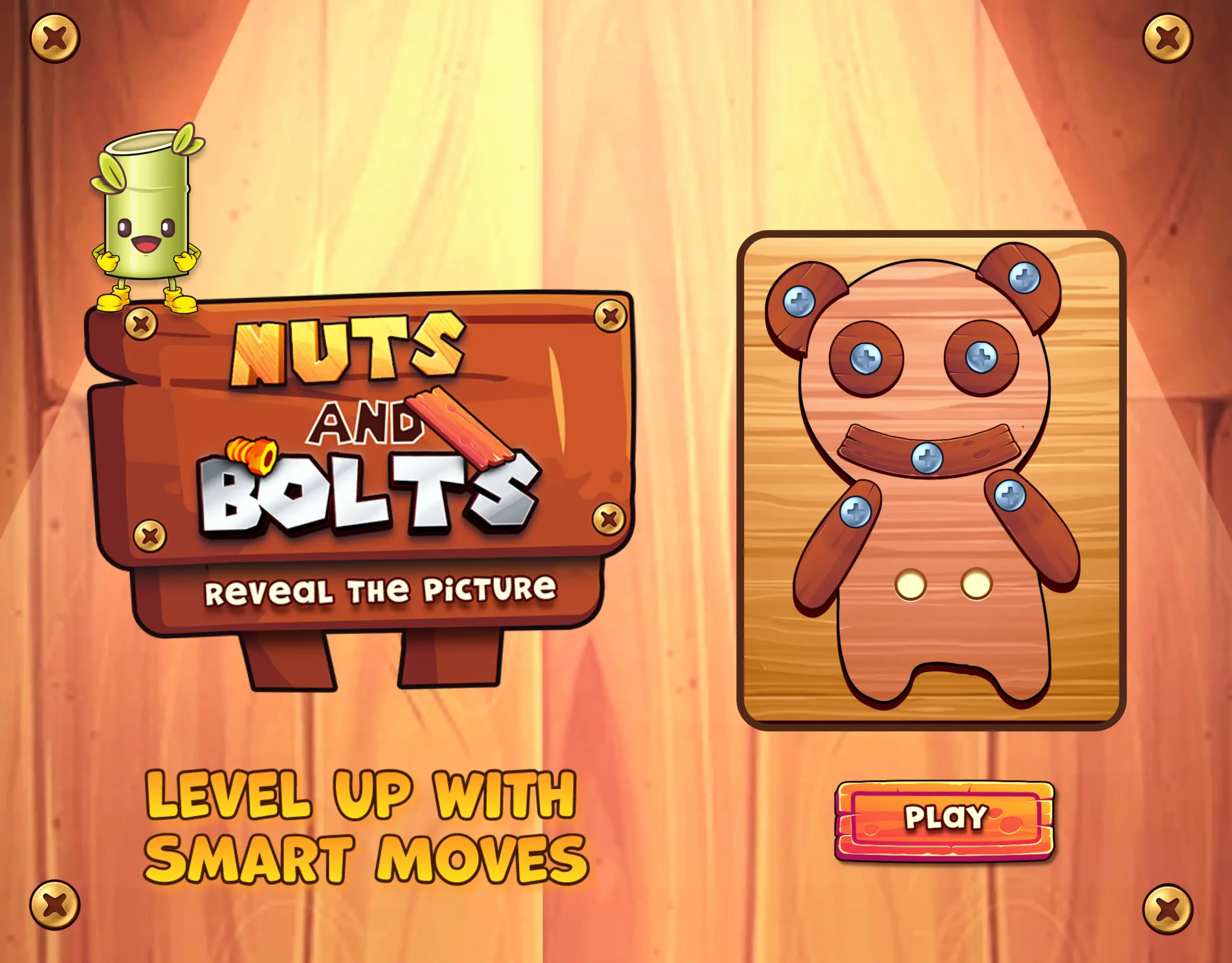
Original Nuts and Bolts: Reveal Picture artwork featuring the wooden bear puzzle
Nuts and Bolts: Reveal PictureOriginal game artwork ↗
100K+installs in the first 40 days*
One clear idea.Unscrew. Solve. Reveal.
Made for mobile.Simple touch controls. Layered puzzles.

*Launch milestone reported by Capermint. Read the original growth story

Easy to pick up.
Interesting to figure out.

Wood Nuts & Bolts turns a familiar physical action into a puzzle you can carry in your pocket.

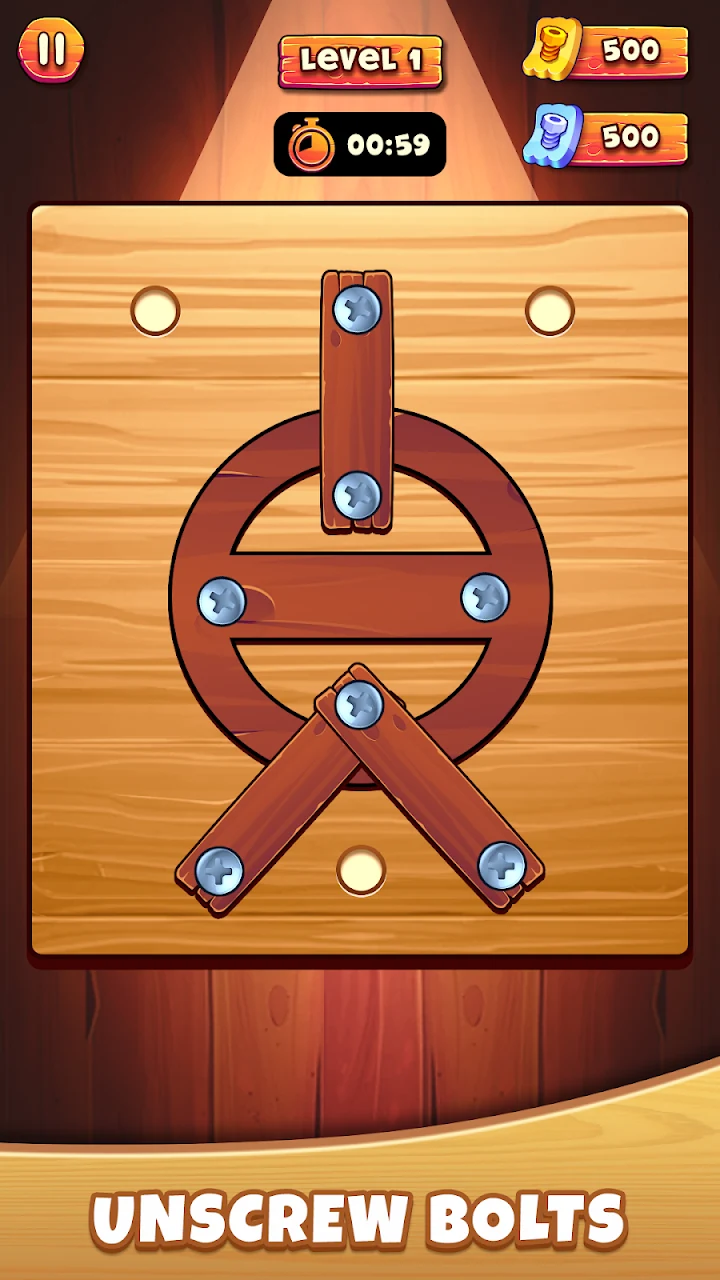
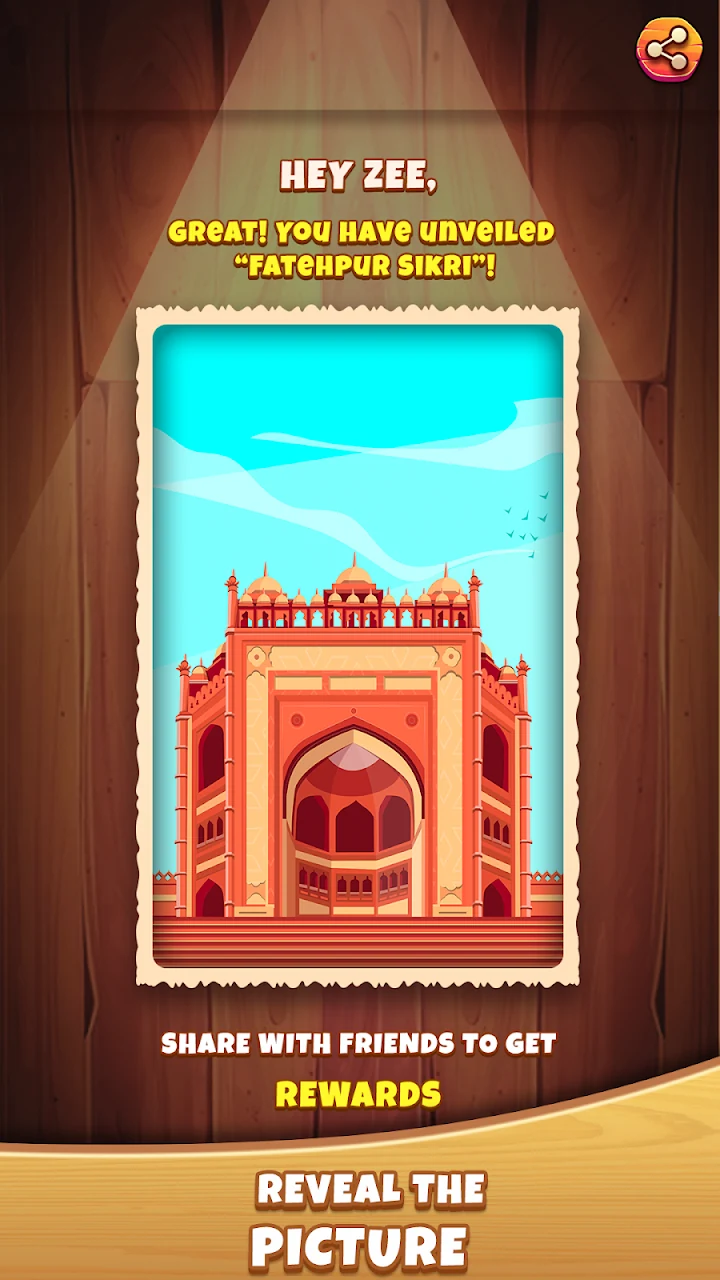
Developed by Capermint and published by Zen Gamer Studios as Nuts and Bolts: Reveal Picture, the game asks players to move screws into available holes and release wooden pieces. Each board is a small problem to work through. Picture reveals and collectible postcards give that progress a destination.

The central design goal was simple: make the interaction approachable while giving players enough depth to keep thinking. This case study follows the product decisions, development work, and launch activity behind that experience.

The product goal

A puzzle people can understand quickly, with enough variety to make later levels worth exploring.

The player experience

Direct touch controls, tactile wooden visuals, and a clear connection between a move and its result.

The launch goal

Introduce the game to casual puzzle players through a consistent trailer, store presentation, and campaign strategy.

CAPERMINT’S ROLE

Game design / Development / Art & interaction polish / Testing & optimisation / Store preparation / Launch marketing

One screw at a time.
The picture comes together.

The interaction stays simple. The thinking lives in the order of your moves and the pieces you release.

  1. 01

    Look

    Read the board. Find the screws, overlapping pieces, and available holes.

  2. 02

    Move

    Choose a screw and move it to an open position to release a piece.

  3. 03

    Solve

    Work through the sequence until the wooden pieces are cleared.

  4. 04

    Reveal

    Unlock a picture reward and continue the collection journey.

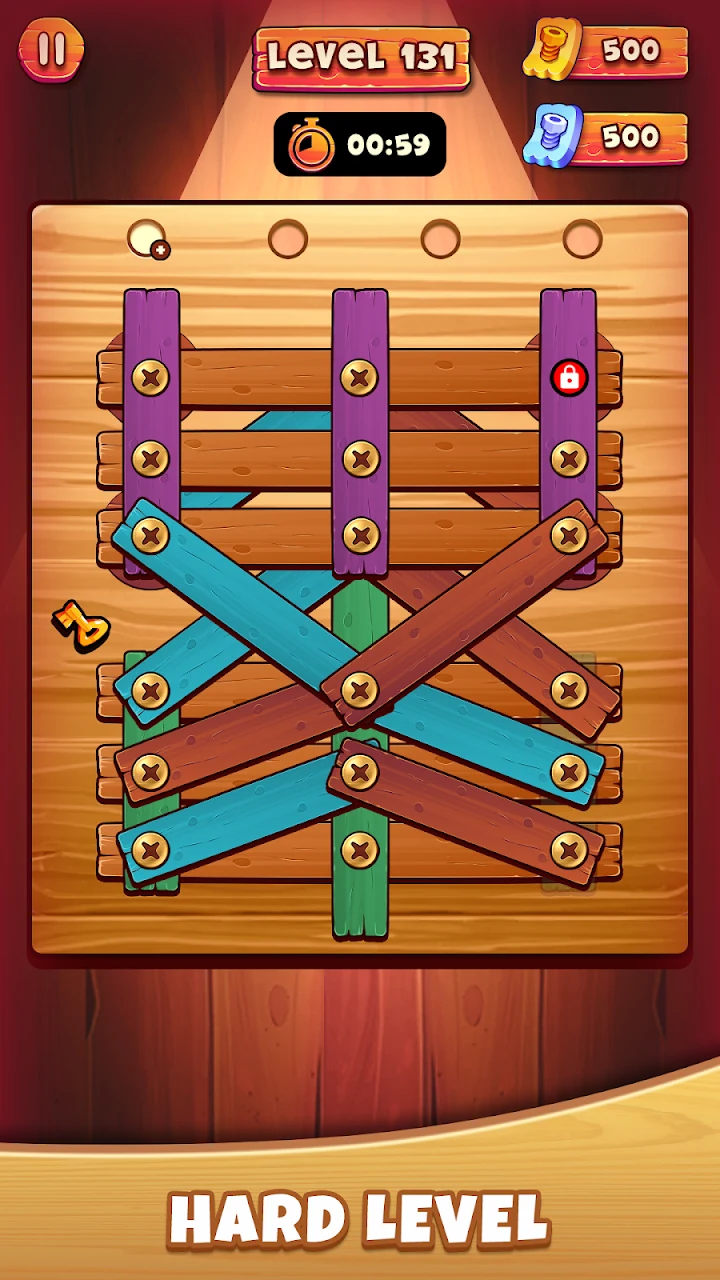
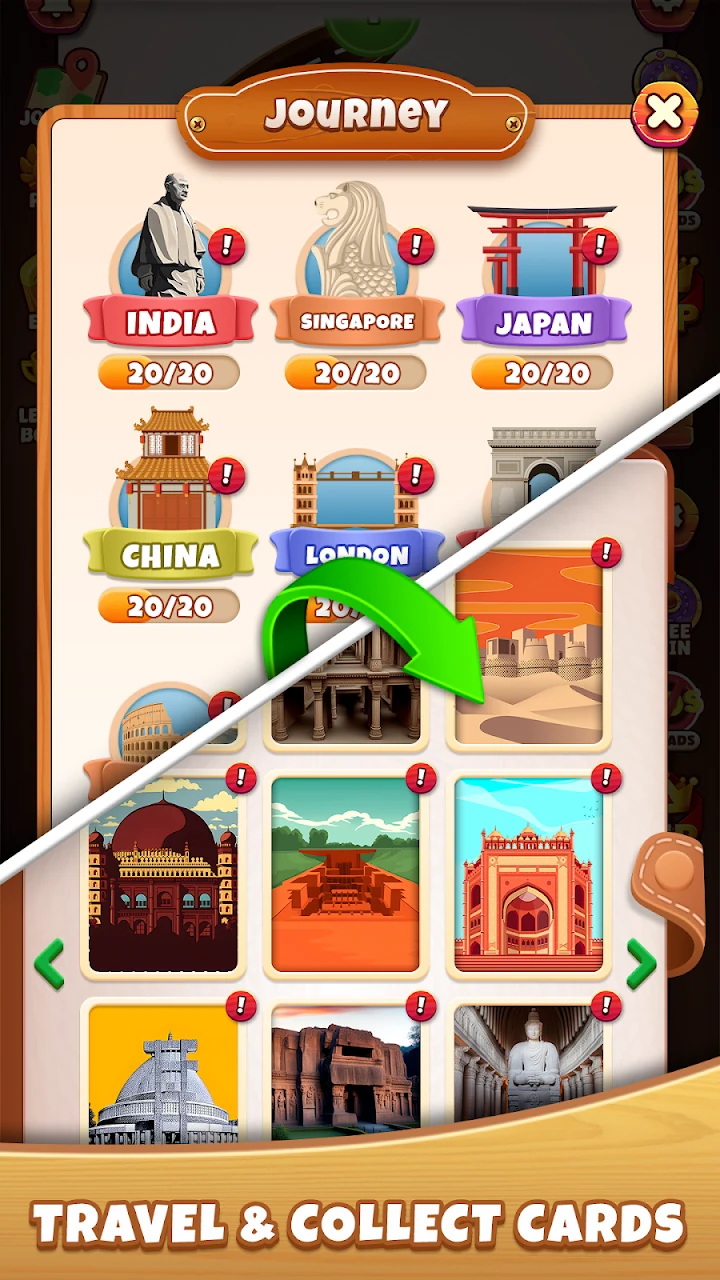
Official Google Play screenshots. Features shown reflect the store version, which may differ from the original launch build.

Watch the original gameplay trailer01:41

Original promotional footage from Capermint. The screenshots above explain the core gameplay in text.

Simple to play.
Considered at every step.

The key design and launch questions behind the game, with the product choices that address each one.

01

Make the first move feel obvious.

THE CHALLENGE

A casual puzzle has very little time to explain itself. If players have to learn a complicated control system, the game loses the appeal of a quick session.

THE SOLUTION

The core interaction is direct: tap a screw, move it into an available hole, and release the wooden pieces. The board itself shows what the player is working with.

WHY IT MATTERSThe player learns one action, then spends their attention on the puzzle.

02

Add difficulty without adding confusion.

THE CHALLENGE

A mechanic that is easy to learn can become repetitive. Simply adding more pieces can also make a board feel busy rather than interesting.

THE SOLUTION

We developed increasingly intricate puzzles and used player testing to refine the difficulty. Layered boards ask players to think about the order of their moves while keeping the same basic controls.

WHY IT MATTERSProgress comes from better decisions, with a familiar way to play.

03

Make every small action satisfying.

THE CHALLENGE

Most of the experience happens in a small space on a phone. The wood, screws, movement, and sound have to make repeated interactions feel worthwhile.

THE SOLUTION

Warm wooden surfaces give the board a recognisable identity. We refined animations, sound, and small interaction details around the core mechanic.

WHY IT MATTERSA clear visual response helps each move feel connected to the result.

04

Keep the experience smooth on mobile.

THE CHALLENGE

Detailed textures and animated pieces have to work within the practical limits of mobile devices. Hesitation after a tap can interrupt the flow of a puzzle.

THE SOLUTION

Development focused on graphics and animation optimisation, app size, load times, and bug reduction. Repeated testing helped the team refine the experience across devices.

WHY IT MATTERSPerformance was part of the game’s design and production work.

05

Give progress something to reveal.

THE CHALLENGE

Completing a level is a short moment of satisfaction. A longer journey needs something players can recognise and collect beyond the next numbered board.

THE SOLUTION

The released game links puzzle completion with picture reveals and country postcard collections. The reward extends the puzzle’s discovery theme into a visible collection.

WHY IT MATTERSThe board provides the immediate goal; the collection provides the next one.

06

Help the right players discover the game.

THE CHALLENGE

An accessible game still needs a clear introduction in a crowded mobile market. Potential players need to understand its appeal before they install it.

THE SOLUTION

The launch combined a gameplay trailer, paid campaigns on Facebook, Instagram and Google, social content, and app store optimisation.

WHY IT MATTERSThe same puzzle idea connects the game, its creative assets, and its store presence.

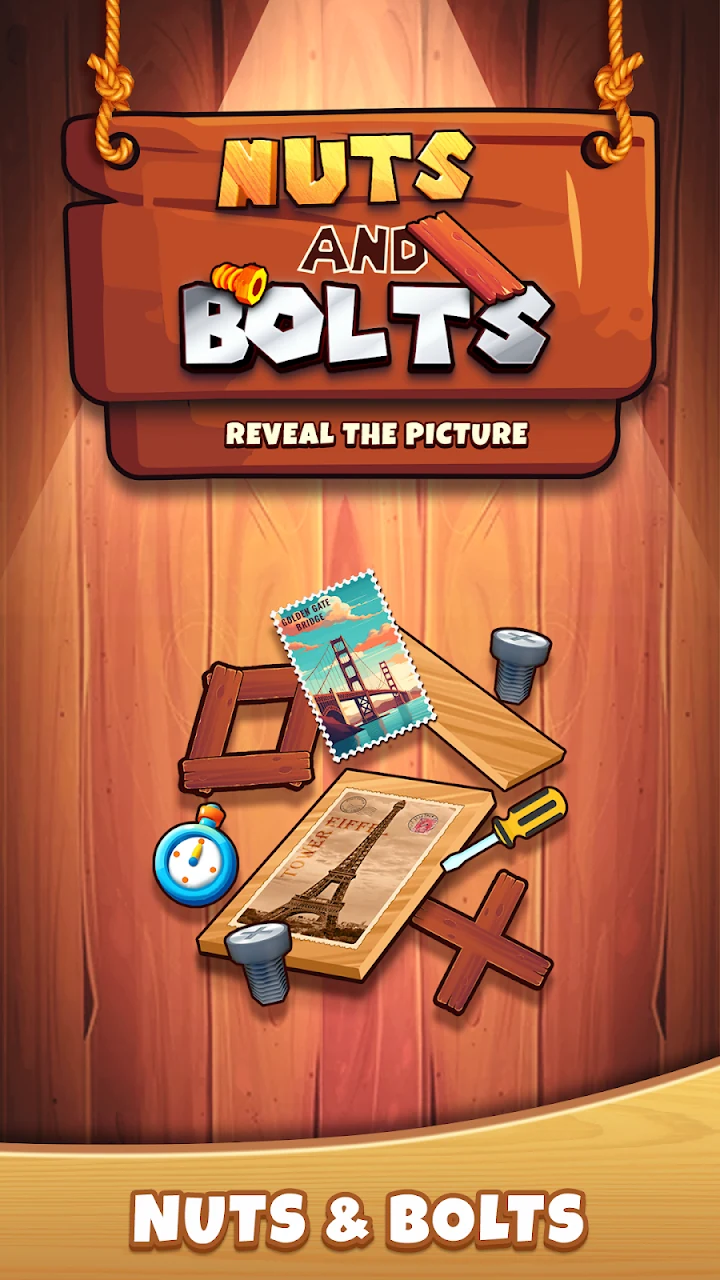
Nuts and Bolts title screen with wooden tools and picture cards
The game’s wooden visual identity.
Puzzle board with visible screws, empty holes, and wooden pieces
The same materials, carried into play.

A wooden world.
A clear way to play.

The visual identity comes from the puzzle itself: warm wood, solid metal screws, and pieces that look ready to move.

Make the board readable

The artwork separates screw heads, empty holes, and wooden shapes. Colour and contrast help players find the pieces they need to think about.

Keep attention on the interaction

The board takes centre stage. Controls and progress indicators sit around it so the puzzle remains the main focus on a phone screen.

Connect movement with feedback

Animation and sound give the action its tactile character. ASMR-inspired audio and polished interactions support the feel of working through the wooden pieces.

From a familiar action
to a finished mobile game.

Design, implementation, player feedback, polish, and store preparation came together through five connected stages.

01

CONCEPT & DESIGN

Define the playable idea

Start with the relationship between a familiar object and a satisfying puzzle. The design centred on simple interactions, readable wooden pieces, and room for the challenge to grow.

02

GAMEPLAY & PROGRESSION

Build the puzzle experience

Develop the core interaction and extend it into increasingly intricate layouts. The design task was to preserve the ease of the first move while giving later boards more depth.

03

PLAYTESTING & REFINEMENT

Test, listen, and adjust

We tested with different user groups, gathered feedback, and revised difficulty and usability. Playtesting informed how the game felt to the people actually playing it.

04

ART, AUDIO & OPTIMISATION

Polish the feel and performance

Refine animations, sounds, and small interactions alongside graphics performance and loading. The goal was a coherent experience in which the interface and feedback support the puzzle.

05

STORE READINESS & LAUNCH

Prepare the release and introduce it

Prepare store assets and address platform requirements. Screenshots, a short trailer, store copy, and launch campaigns introduced the same game experience through different channels.

Quality was part of the build.

We tested and optimised the game throughout development. Three priorities connected that work to the player experience.

  • Responsive play

    Fine-tune graphics and animations so repeated actions feel smooth.

  • Understandable difficulty

    Use player feedback to refine the challenge and overall usability.

  • Release readiness

    Work on loading, app size, bugs, and store requirements before launch.

Show the puzzle.
Make the appeal immediate.

A gameplay idea is easier to understand when people can see it in motion. The launch connected that demonstration with paid, social, and store discovery.

GAMEPLAYCREATIVEDISCOVERYINSTALL

A short gameplay trailer

The trailer showed the puzzle mechanic and its satisfying visuals. It gave prospective players a concrete view of the experience before asking them to install.

Targeted paid campaigns

Campaigns across Facebook, Instagram, and Google Ads introduced the game to casual players. Performance data informed adjustments to the campaigns.

Social content around the game

Short videos and interactive posts extended the introduction beyond paid placements and invited people to engage with the puzzle idea.

A clearer store presence

Store titles, descriptions, keywords, screenshots, and trailer assets supported discovery and helped explain what players would get after installing.

Launch activity is described in Capermint’s original growth case study .

A level to solve.
A journey to continue.

The released game connects the moment-to-moment puzzle with rewards, collections, and optional purchases.

Progress players can see

Picture reveals and destination cards make completed puzzles part of a collection. The store also presents hints and a leaderboard, adding help and comparison around the core challenge.

A free-to-download model

Google Play identifies advertising and in-app purchases. Apple’s listing includes passes, tickets, and ad-removal options. Players can check the current offers directly in their platform’s store.

A useful design balance

For this kind of puzzle, the challenge, reward, and next step need to remain easy to understand. Commercial features sit within that wider experience and deserve the same attention to clarity as the board itself.

Official screenshot of country destinations and collectible landmark cards

THE LONGER LOOP

  1. Solve a board
  2. Reveal a picture
  3. Grow a collection
  4. Explore the next challenge
Explore the released game

CAPERMINT-REPORTED LAUNCH MILESTONE

100K+

installs in 40 days.

Read the published result

A clear early
adoption milestone.

Capermint’s published case study reports that Wood Nuts & Bolts reached 100K+ installs within 40 days. It attributes the launch momentum to the game experience, targeted campaigns, social content, and app store optimisation.

A game available on both major mobile stores

The linked Android and iOS listings give players a direct route to the product.

Continued product development

The App Store release history records improvements and additional features after the first release.

The 40-day figure is a historical result reported by Capermint. Store download bands are cumulative and measure something different. Retention, acquisition cost, and revenue figures are not quantified in the published case study.

The first release
was a starting point.

After the initial release, updates brought new features and further refinements. The App Store version history records these milestones.

  1. OCTOBER 2024

    First iOS release

    Version 1.0 appears on 15 October 2024, followed by performance improvements and bug fixes.

  2. DECEMBER 2024

    Seasonal presentation

    The release history records a Christmas theme alongside fixes and improvements.

  3. FEBRUARY–MARCH 2025

    More ways to progress

    Updates added purchases and analytics, followed by a streak system.

  4. MAY–SEPTEMBER 2025

    Events and refinement

    Later release notes mention new events, smoother play, and further enhancements.

Source: App Store version history

Small mechanics.
Thoughtful decisions.

Three practical lessons for turning a focused puzzle idea into a complete player experience.

01

Keep the action simple.

Depth can come from the arrangement of a puzzle and the sequence of decisions. The controls do not have to become more complicated every time the challenge grows.

02

Make progress tangible.

A revealed picture or a growing collection gives a completed level a visible place in the larger experience. Rewards work best when they fit the game’s theme.

03

Plan how people will understand it.

The gameplay, screenshots, trailer, and store description all explain the same product. A clear introduction is part of preparing a game for the market.

11 / PROJECT QUESTIONS

A few more
useful details.

The game, the development work, and what the reported outcome means.

01What is Wood Nuts & Bolts?

Wood Nuts & Bolts is Capermint’s mobile puzzle project, available under the store title Nuts and Bolts: Reveal Picture. Players move screws, release wooden pieces, and progress through puzzles with picture and postcard rewards.

02Who developed and published the game?

Capermint Technologies developed Wood Nuts & Bolts. The linked Google Play and Apple App Store listings identify Zen Gamer Studios as the publisher. The development studio and the store publisher have distinct roles.

03What were the main design challenges?

The main design questions were how to make the controls easy to learn, keep later puzzles interesting, give small interactions a satisfying feel, and support a smooth mobile experience. The launch also needed to communicate the mechanic clearly to potential players.

04How does the puzzle become more challenging?

More intricate layouts and overlapping pieces make the order of moves more important. The player continues using the same basic interaction while working out a more demanding sequence. Capermint’s published account also describes adjusting difficulty through user feedback.

05Is the game available on Android and iOS?

Yes. The project links to Google Play and Apple’s App Store under Nuts and Bolts: Reveal Picture. Use the store links on this page for current device compatibility, regional availability, and release information.

06What does the 100K+ installs result refer to?

Capermint’s published growth case study reports 100K+ installs within a 40-day launch window. It is a historical, company-reported milestone. The Google Play download band is a separate cumulative store measure and does not independently verify that 40-day period.

07How is the game monetised?

The store listings identify advertising and in-app purchases. The App Store lists options such as passes, tickets, and ad-removal purchases. The exact offers can vary by platform, region, and version.

08Did the game continue to evolve after launch?

Yes. The App Store version history records bug fixes, performance improvements, additional analytics, new purchases, a streak system, and later events. These are later updates and should be distinguished from the original launch feature set.

09Can Capermint develop a different puzzle game for my business?

Yes. Capermint offers custom mobile and casual game development. A useful starting brief includes your core mechanic, audience, target platforms, art direction, progression ideas, and commercial goals. Those details help define the prototype, production scope, and launch plan.

YOUR NEXT GAME

Have a simple idea
with room to grow?

Bring the mechanic, the audience, and the experience you want to create. We’ll help shape the next step.

Let’s discuss your game Explore more projects
Facebook
Twitter
Linkedin
Pinterest