
Make movement intuitive
Let the player understand jumping, sliding, and avoiding danger before adding more systems.
Search the native WordPress menu, then use the complete directory for every long-tail capability.
QUICK REACTIONS. A REASON TO RUN AGAIN.
Speed is the start. Strategy keeps it interesting.
An endless-running experience built around obstacle reading, character identity, power-up decisions, and multiple ways to compete.
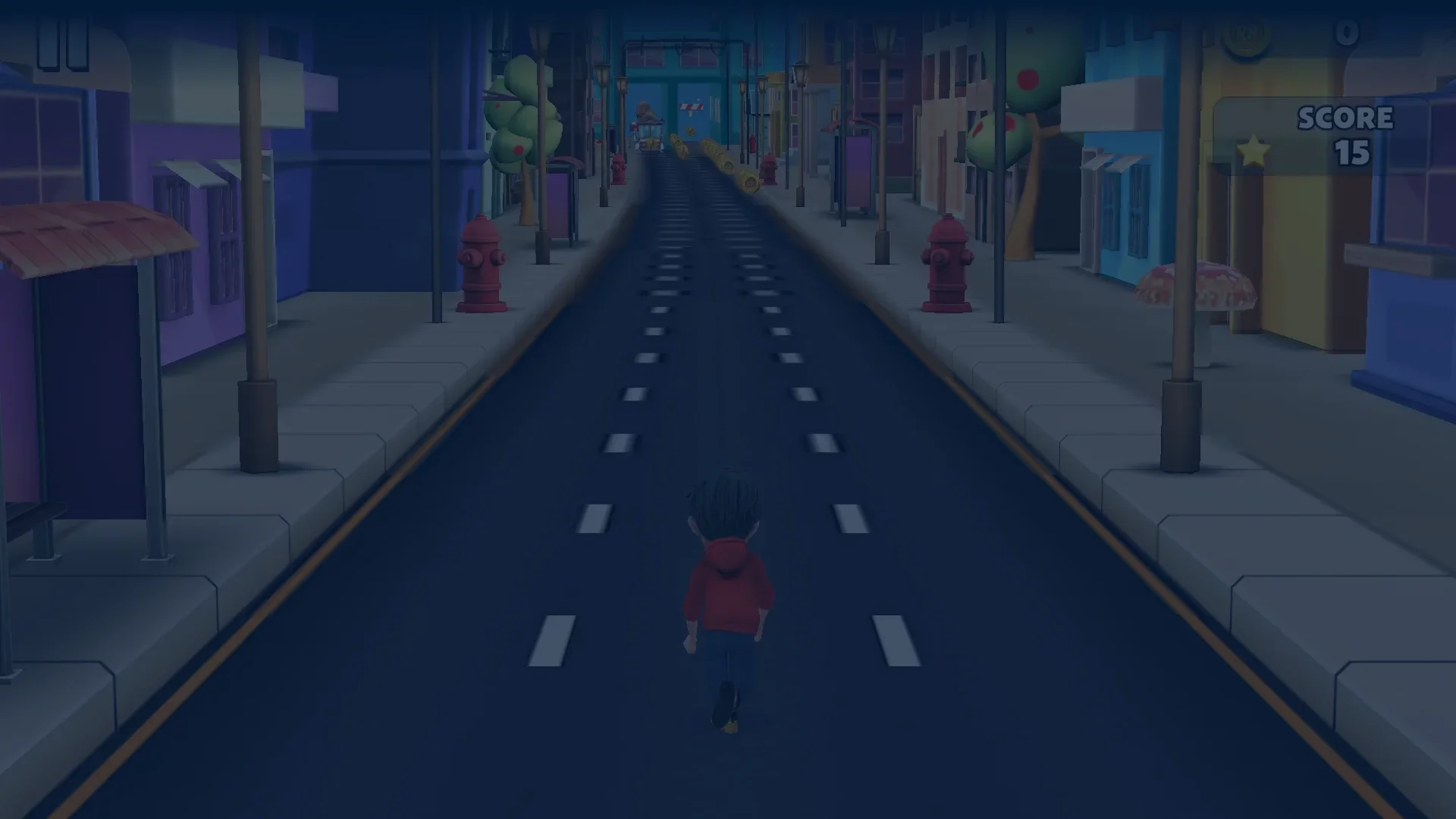
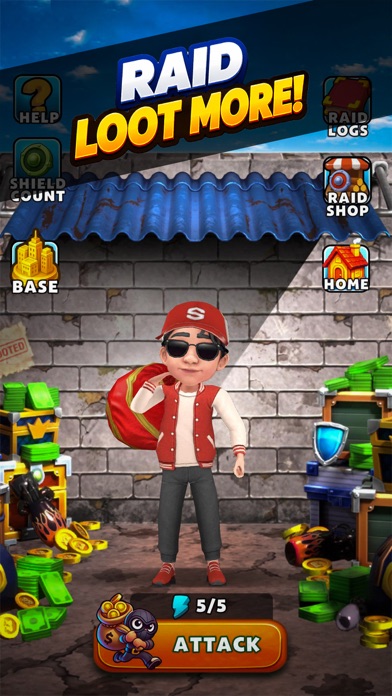
SCREENSHOTS & GAME SCREENS
Official App Store screenshots. Select any image to view it at full size.
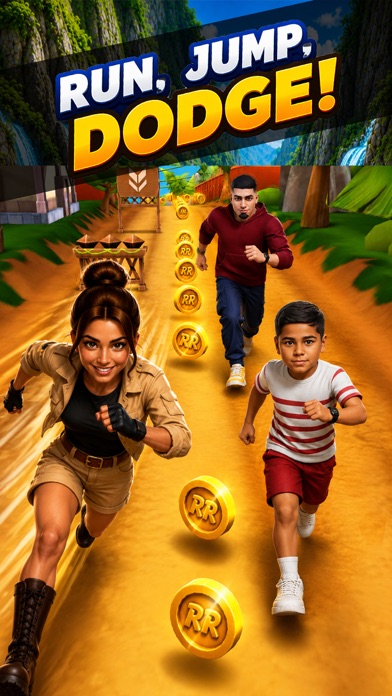
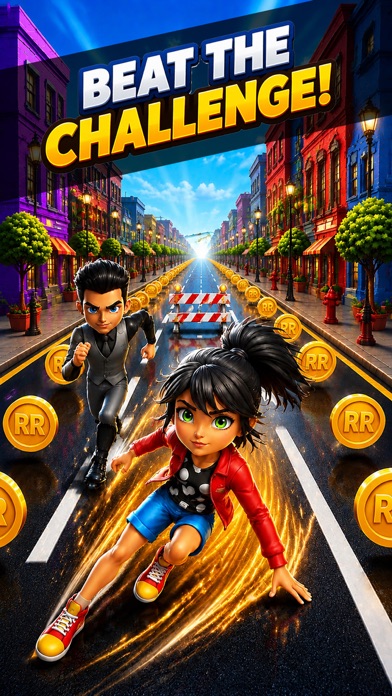
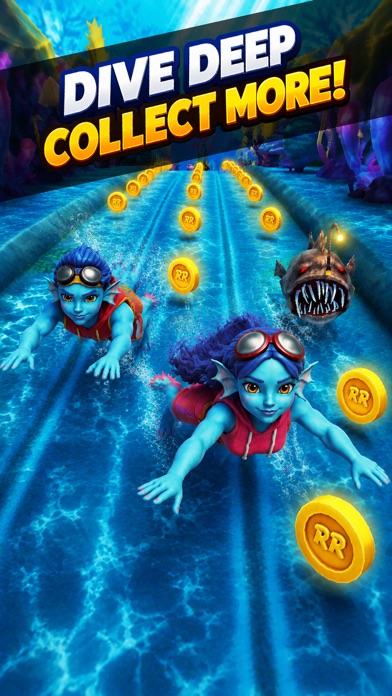
THE PROJECT
Runner Runner turns an approachable running mechanic into a broader competitive experience. The immediate task is easy to understand: keep moving, react to obstacles, and collect helpful items along the route. The longer journey adds characters, worlds, scores, and different modes.
Its public website presents Endless Run, VS Mode, and Raid Mode. Those formats ask the same core controls to support different pressures: distance, direct competition, and obstacle-heavy survival.
For a Capermint portfolio reader, the useful story is the relationship between moment-to-moment clarity and the surrounding progression. This study examines that relationship through the live presentation and supplied UI designs, without inventing a production schedule or performance results.
Let the player understand jumping, sliding, and avoiding danger before adding more systems.
Use personal improvement, different modes, and unlockable characters to create more than one reason to return.
Give characters, streets, and pickups a consistent identity that supports quick visual recognition.
THE PLAYER EXPERIENCE
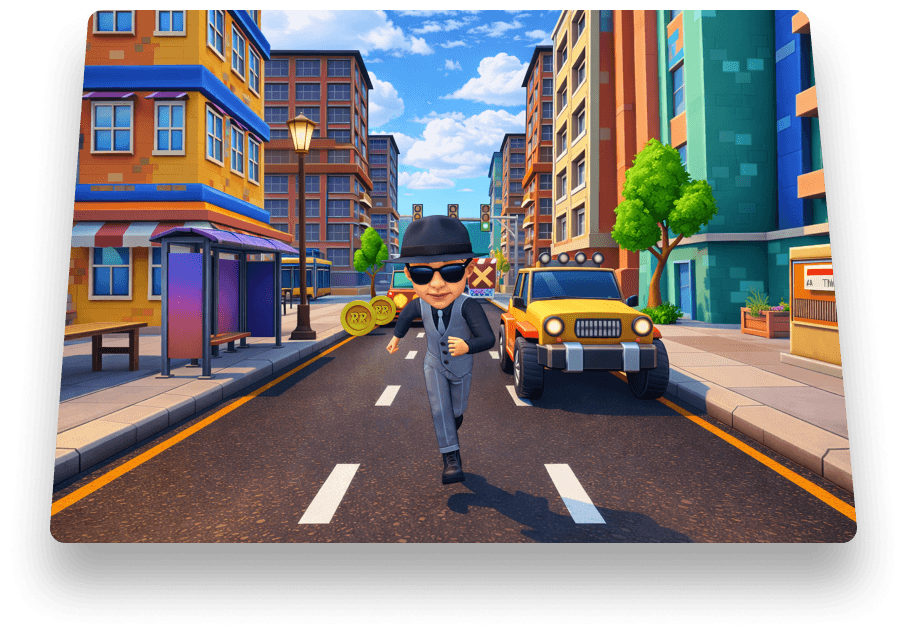
The running loop depends on readable decisions made under pressure. The interface and environment need to help players anticipate what is coming.
Select the available character and play format.
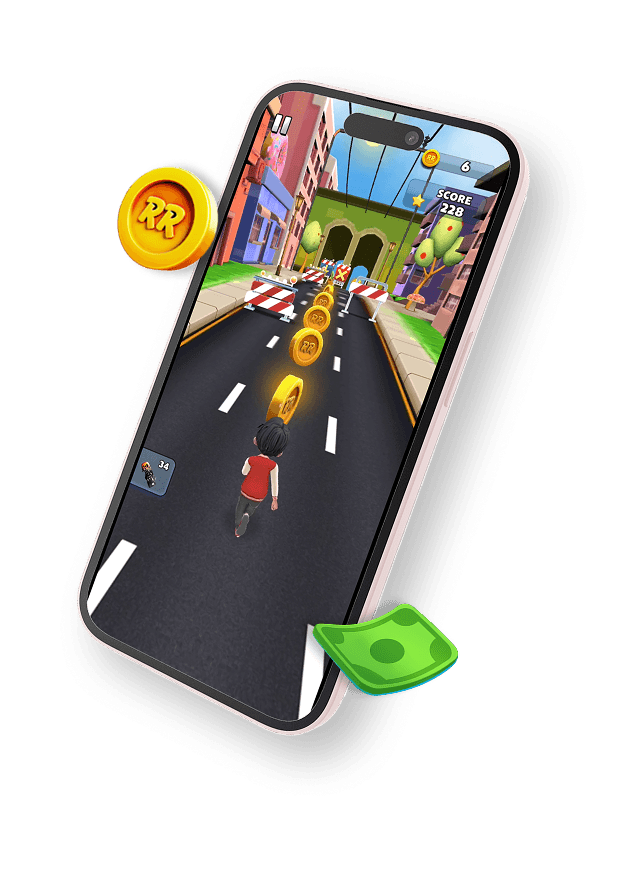
Run, jump, slide, and avoid obstacles as the route develops.
Collect pickups and take advantage of their effects during the run.
Use the score and result to set the next personal or competitive goal.

CHALLENGES & SOLUTIONS
Design analysis connects each product challenge with the response visible in the references. Proposed engineering measures are identified separately.
THE CHALLENGE
A fast-moving environment can become difficult to interpret. If an obstacle blends into the scene, failure feels arbitrary.
PRODUCT RESPONSE
The published gameplay presentation uses a clear forward route and recognisable obstacle forms. A focused view gives the player an area to scan.
Why it matters A readable threat gives reaction time a meaningful role.
THE CHALLENGE
Changing the goal can make a game feel fresh, but changing basic controls in every mode can create unnecessary friction.
PRODUCT RESPONSE
The website distinguishes Endless Run, VS, and Raid by the challenge each presents while keeping running central to all three.
Why it matters Mode variety can extend familiar skills.
THE CHALLENGE
A player has limited time to interpret an item while moving. Similar silhouettes or unclear effects make pickups harder to use.
PRODUCT RESPONSE
Shield, magnet, keys, and blaster have recognisable objects and separate explanations in the product presentation.
Why it matters The player can form a quick expectation before collecting an item.
THE CHALLENGE
A large roster can feel interchangeable if each addition is only a name or colour change.
PRODUCT RESPONSE
The character presentation pairs individual names with distinct models, clothing, poses, and personality cues.
Why it matters A character can become a reason to identify with the game.
THE CHALLENGE
Real-time races introduce synchronisation and result consistency questions that a solo high-score run does not have.
PROPOSED ENGINEERING RESPONSE
A recommended approach would establish one authoritative result, define disconnect behaviour, and make start and finish conditions consistent.
Why it matters Players need to trust the race result as much as their controls.
THE CHALLENGE
Worlds, modes, and events add appeal, but can make menus crowded or separate the game from its core action.
PRODUCT RESPONSE
The website groups these systems into distinct destinations, with the running experience remaining the main introduction.
Why it matters Players can find extra depth without losing the central promise.
ART DIRECTION & UX
The art direction combines stylised runners, city environments, and bright collectible objects. The most important visual distinction is between the world to enjoy and the signals needed to survive.
The route is the primary source of decisions. Persistent interface elements should leave the upcoming action readable.
A shield, magnet, or key has a useful visual meaning before its rules are explained. Consistent effects strengthen that association.
Character presentation can express identity without requiring every character to introduce a new control scheme.
The supplied Runner Runner_New file separates the current page from an Old Design page. Visible layers include daily-task animation, achievement notification, and Neon Rush artwork. These help explain the progression design, without treating every concept as a released feature.
PRODUCT FEATURES
A distance-focused format built around surviving the route and improving performance.
The official website presents direct, real-time racing against other runners.
A mode framed around surviving intense obstacle attacks.
A named roster gives players different personalities to discover.
Shield, keys, blaster, and magnet provide distinct moment-to-moment opportunities.
Different environments and limited-time challenges extend the running experience.
DEVELOPMENT APPROACH
For a runner, responsive controls and readable obstacle timing are the foundation. Content variety is most useful after that foundation is dependable.
The approach below is a proposed delivery framework for this product. It is not a record of unverified production milestones or technology choices.
Test jump, slide, and avoidance in a minimal route. Tune the relationship between an input, animation, and collision response.
Define safe combinations, spacing, and difficulty progression. Check that the player can see and respond to each pattern.
Integrate models, animations, effects, and item feedback while preserving the readable play area.
Specify race start, finish, disconnect, rematch, and result states before testing real-world network conditions.
Organise worlds and events so that content changes can be checked against the same movement and performance baseline.
QUALITY & RELEASE READINESS
Recommended validation should connect what the player sees with how the game resolves the action. No measured frame-rate or latency results are claimed here.
PROGRESSION & THE BUSINESS MODEL
The immediate reward is improvement: a longer run, a better score, or a stronger performance in a competitive mode. Characters, worlds, and events provide additional reasons to revisit the same controls.
The website promotes special events and rewards. Their current eligibility, rules, and availability belong to the live product; a case study should not imply guaranteed earnings or an always-active promotion.
The supplied references do not establish the commercial contribution of each progression system. A useful follow-up would compare repeat play by mode, character unlock behaviour, and event participation against ordinary sessions.
OUTCOMES & NEXT STEPS
The available references demonstrate a defined product, a recognisable cast, and multiple advertised play formats. Business impact requires separate measurement.
The official website links to Android and iOS listings for Runner Runner.
The presentation combines multiple modes, a character roster, power-ups, worlds, and events.
Run completion, repeat attempts, mode selection, and race completion would show where the experience is strongest.
Promotional counters and website testimonials are not used as independently verified outcomes. No install, revenue, retention, or performance uplift is asserted.
LESSONS FROM THE PRODUCT
A player should recognise the mistake that ended a run and see a way to improve.
Different goals can make the same controls feel fresh without introducing needless relearning.
The roster helps the game remain recognisable outside the running screen, too.
PROJECT QUESTIONS
It is an endless-running mobile game whose website also presents competitive and obstacle-focused modes.
The official site presents Endless Run, VS Mode, and Raid Mode. Live availability should be checked in the current app.
The public gameplay description centres on running, jumping, sliding, avoiding obstacles, and collecting power-ups.
The supplied Figma file includes current and old design areas, alongside visible daily-task, achievement, and event artwork.
The official website provides links to Google Play and Apple’s App Store.
Only confirmed information belongs in those fields. The references do not establish the internal stack, delivery timeline, or attributable growth results.
YOUR NEXT GAME STARTS WITH A CLEAR IDEA.