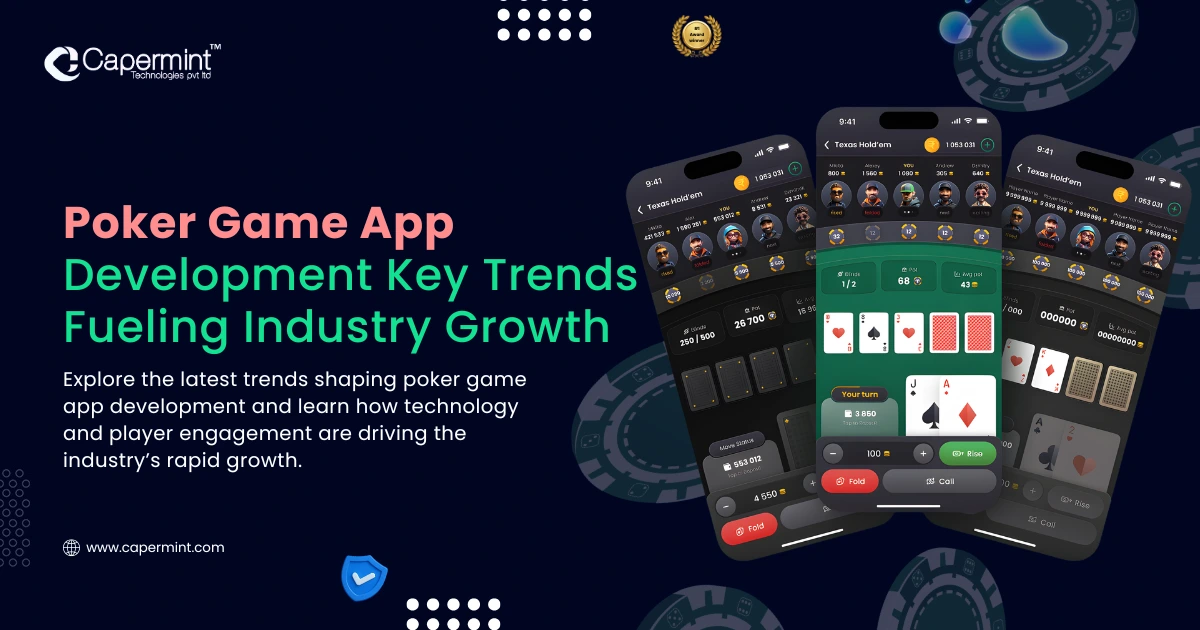
Poker has been a popular pastime for centuries, but the evolution of technology has pushed this classic card game into the digital age. The shift from physical poker rooms to online platforms has created a new wave of interest in mobile poker apps, allowing players to enjoy the game from anywhere at any time. With rapid advancements in mobile game development, poker app games are set to become more immersive, interactive, and accessible than ever before. As we approach 2026, the world of poker game development is poised for another leap forward, driven by a combination of cutting-edge technologies and evolving user expectations.
Poker Gaming Market Overview
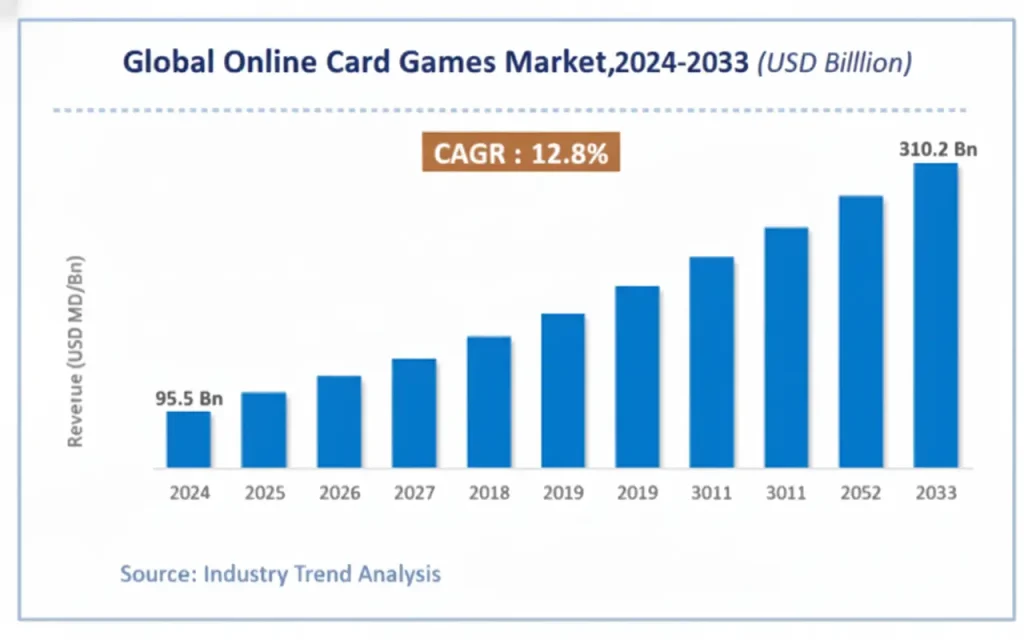
The global online poker market has expanded significantly over the last few years, with millions of active players worldwide. According to various industry reports, the online gaming market is expected to continue its upward trajectory, reaching new heights in 2026. The increasing use of smartphones and other mobile devices has driven the growth of online card games, and poker is no exception. In addition to mobile apps, the rise of live-streamed poker events and online poker tournaments has generated substantial attention. Social media platforms, streaming services, and influencers have further bolstered the visibility of poker games, making them an essential part of the digital entertainment ecosystem.
Top Poker Game Development Trends
Let’s dive into some of the most influential trends shaping poker game app development in 2026:
AI-Powered Gameplay & Personalisation
Artificial Intelligence is revolutionising the online gaming industry by creating more dynamic and personalised gameplay experiences. In poker apps, AI-powered features can be used to tailor the game based on a player’s skill level and preferences. For instance, poker apps can employ machine learning algorithms to assess a player’s performance and offer personalised suggestions to help them improve.
AI can also be used to detect patterns in player behavior, allowing developers to create adaptive AI opponents that offer a challenging experience. Additionally, AI can enhance the game’s narrative by creating more lifelike, intelligent NPCs (non-playable characters).
Blockchain & Web3 Integration
Blockchain technology and Web3 are transforming the landscape of online poker. By leveraging the transparency and security offered by blockchain, poker game developers can ensure that every card dealt and every bet placed is verifiable and tamper-proof.
Web3, which focuses on decentralised internet infrastructure, opens up new possibilities for poker apps by introducing decentralised finance (DeFi) and cryptocurrency integrations.
Players can use digital currencies for betting and winnings, while also participating in decentralized tournaments and poker rooms that are not controlled by centralized authorities.
Cross-Platform & Cloud Gaming
With the rise of mobile gaming, players expect to be able to access their favorite poker games across different devices and platforms seamlessly. Cross-platform compatibility allows players to start a game on their phone and continue it on a tablet or PC without losing progress.
AR & VR Poker Experiences
The integration of Augmented Reality (AR) and Virtual Reality (VR) technologies will redefine how players experience poker games. While AR adds virtual elements to the real-world environment, VR immerses players in a completely virtual setting. Both offer exciting new ways to play poker beyond the traditional 2D screens.
Enhanced Security & Fair Play
As the online gaming industry continues to expand, ensuring the security and fairness of poker games is paramount. Developers will need to adopt advanced security measures such as multi-factor authentication, encryption, and fraud detection algorithms to protect players’ data and financial transactions.
Social Gaming & Community Features
Poker has always been a social game, and in 2026, the trend toward social gaming will continue to grow. Poker game apps will integrate more social features, allowing players to interact with friends, join clubs, and participate in team-based challenges.
Monetization Innovations
As competition in the mobile gaming industry intensifies, developers will need to adopt innovative monetization strategies to sustain their poker apps. In-app purchases (IAPs) will continue to be a significant revenue stream, with players buying chips, skins, or exclusive content.
Don’t Build for Today. Build for What Comes Next.
The future of poker is in AI opponents, Blockchain security, and VR immersion. Partner with our specialists to develop a scalable, compliance-ready poker platform that dominates the market in the years to come.
Challenges and Solutions in Poker Game App Development
While the prospects for poker game apps are promising, developers face several challenges in building successful platforms:
While the poker game app industry is booming, developers face several challenges in building successful, sustainable, and competitive platforms. These challenges range from technological hurdles to regulatory concerns. Let’s explore some of the key issues that game app developers must overcome in 2026 and beyond.
1. Regulatory Compliance
- Challenge: The legal landscape surrounding online poker is complex and varies widely by region. Some countries have strict regulations or outright bans on online gambling, while others may have looser restrictions. In the U.S., for example, online poker is regulated at the state level, meaning developers must tailor their apps to comply with state-specific laws.
- Solution: Developers must stay informed about the regulatory environment in all the regions where they plan to operate. This may require working with legal advisors to ensure their poker app adheres to local laws and requirements. Additionally, they should implement geo-restrictions and age verification systems to prevent unauthorized users from accessing the platform.
2. Security and Data Protection
- Challenge: Online poker apps handle sensitive user data, including personal information and financial transactions. Cybersecurity threats, such as hacking, identity theft, and fraud, are major concerns. Ensuring that player data is protected and that financial transactions are secure is crucial for maintaining user trust.
- Solution: Implement robust security measures such as end-to-end encryption, two-factor authentication, and regular security audits. Poker apps should also comply with global data protection regulations, such as GDPR in Europe, to safeguard player information.
3. Fairness and Transparency
- Challenge: One of the most important factors for the success of any poker game app is ensuring fairness. Players need to trust that the games they are participating in are not rigged and that outcomes are random. Any perception of unfairness, whether due to poor game design or manipulation, can quickly lead to a loss of users.
- Solution: Developers can address this by integrating blockchain technology for transparency and using random number generators (RNGs) that are independently audited. Additionally, providing players with a verifiable audit trail of each hand dealt will further ensure the integrity of the game.
4. Player Retention
- Challenge: The poker game app market is highly competitive, with a large number of apps available for players to choose from. Keeping players engaged and coming back to the app is a challenge that many developers face.
- Solution: To retain players, developers must focus on creating a compelling user experience with personalized gameplay, attractive rewards, and social features. Gamification elements such as tournaments, achievements, and leaderboards can also enhance engagement. Regular updates with new content and features will keep the game fresh and exciting.
5. Creating Realistic AI Opponents
- Challenge: As poker game apps evolve, players expect increasingly sophisticated AI opponents that mimic human behavior. Designing an AI that can challenge experienced players while still being fair and accessible to beginners is a difficult task.
- Solution: Developers can use machine learning and adaptive AI to tailor the difficulty of opponents based on the player’s skill level. This ensures that both novice and advanced players have a satisfying experience. Additionally, incorporating strategic behavior patterns and bluffing techniques will make AI opponents more lifelike.
6. Balancing Multiplayer Features
- Challenge: Poker is inherently a social game, and the online experience should reflect that. However, balancing multiplayer features—such as live tables, chat functions, and tournaments—can be complex. Ensuring smooth gameplay with minimal lag, even with multiple players, is crucial.
- Solution: Implementing cloud-based solutions and optimizing server infrastructure will help ensure a seamless multiplayer experience. Additionally, features like private rooms, friends lists, and in-game chat allow players to engage with each other and create a sense of community within the app.
7. Integration of Emerging Technologies
- Challenge: As mentioned in the trends section, the integration of technologies like AR/VR, blockchain, and AI into poker games presents unique challenges. These technologies require substantial investment in both research and development, as well as the infrastructure needed to support them.
- Solution: Developers should begin with a clear vision for how these technologies will enhance the user experience and progressively integrate them into the app. It’s important to test new features in beta versions to gather user feedback and adjust the product before a full release.
8. Maintaining Game Balance for Different User Levels
- Challenge: Poker apps often attract players with varying levels of experience, from beginners to seasoned professionals. Ensuring a balanced experience that caters to both groups can be difficult.
- Solution: Developers can implement features like matchmaking algorithms that pair players of similar skill levels. Additionally, tutorials and training modes can help new players get up to speed while ensuring that more experienced players don’t get frustrated with easy competition.
How to Build a Successful Poker Game App
 As the online poker industry continues to grow, creating a successful poker game app in 2026 demands a strategic approach that combines the latest technology with exceptional user experiences. With advancements in AI, blockchain, VR/AR, and mobile technologies, poker game apps need to evolve to stay competitive. To build an app that stands out, developers must focus on understanding their target audience, incorporating cutting-edge technologies, providing seamless gameplay, and ensuring the app’s security.
Here’s a streamlined approach to building a top-tier poker game app in 2026:
1. Target Audience & Regional Adaptation
Understanding your target audience is the first step to creating a successful poker app. Whether you’re catering to casual players, poker enthusiasts, or social gamers, tailoring the app to their preferences is crucial. Additionally, regional adaptation is important to meet varying legal regulations, languages, currencies, and payment methods. Localizing the app to appeal to different regions will make it accessible and attractive to a global player base.
2. Incorporate Advanced Technologies
Incorporating cutting-edge technologies is essential to remain competitive. AI-powered features can personalize the gameplay experience, creating adaptive opponents and dynamic challenges. Blockchain enhances the app’s transparency and security, offering tamper-proof transactions and a decentralized system. Cross-platform compatibility ensures that players can enjoy the game across various devices, from smartphones to VR headsets, while AR/VR can provide a fully immersive poker experience.
3. User-Friendly Design
A user-friendly design is essential for ensuring players can navigate the app easily and enjoy their experience. Focus on creating an intuitive interface with easy-to-understand mechanics and clear instructions for new players. Stunning graphics and smooth animations can significantly improve the user experience, while fast load times and lag-free gameplay are critical for maintaining player retention and satisfaction.
4. Social Features & Engagement
Poker is inherently a social game, and integrating social features into your app can boost engagement. Adding in-app chat functionality, private tables, and multiplayer modes allows players to interact and enjoy a competitive environment. Tournaments, leaderboards, and social sharing features enable players to connect with friends, showcase achievements, and stay engaged with the app long-term. Creating communities, like poker clubs, can also build a loyal user base.
5. Secure Payment & Monetization
A seamless and secure payment system is vital for any poker app. Offer a variety of payment methods, including traditional credit cards, e-wallets, and cryptocurrencies, to cater to a wide range of users. Quick and hassle-free deposits and withdrawals ensure a smooth user experience. In terms of monetization, consider offering in-app purchases for virtual goods, chips, and customization options, along with VIP subscriptions and non-intrusive ads that enhance the gameplay experience without frustrating players.
6. Continuous Optimization & Marketing
Once your app is live, continuous testing, updates, and optimization are necessary to maintain a high-quality user experience. Regularly gather feedback from users to identify areas for improvement and address any technical issues promptly. Marketing your app is also crucial for success. Launch campaigns, influencer partnerships, and referral programs will help you attract and retain players, expanding your app’s reach in a competitive market.
The Future of Poker Game App Development
Beyond 2026, we can expect to see even more revolutionary advancements in poker game app development. The continued growth of AI, AR/VR, and blockchain technologies will likely shape the future of poker. Additionally, the integration of 5G networks will enable more immersive and faster gaming experiences, further pushing the boundaries of what’s possible in mobile poker.
The poker game app industry is booming, and 2026 will mark a year of tremendous innovation. By staying ahead of the technological curve and focusing on the evolving needs of players, developers can build successful poker apps that not only meet current demands but also prepare for the future of gaming. Whether it’s through AI-powered gameplay, blockchain transparency, or immersive AR/VR experiences, the future of poker game app development is bright, dynamic, and full of exciting possibilities.
Poker game development trends center on AI bot and collusion detection, mobile-first cross-platform tables, fast-fold and private-club formats, shared player pools, and social or sweepstakes poker where US state law allows. Capermint builds poker apps for operators, studios and brands: a custom MVP from $25K in 60–90 days, or white-label poker in 30–45 days.
Poker trends at a glance
| Trend | Why it matters | What to build | When to add it |
|---|---|---|---|
| AI bot and collusion detection | Bots, real-time assistance tools and colluding players are a major threat to trust in real-money and prize poker. | Hand-history and session logging, timing and win-rate alerts, device and IP checks, a review queue in the back office | At launch for real-money or prize play |
| Mobile-first, cross-platform tables | Players expect to start on a phone and continue on web or desktop with one account. | Portrait one-handed table layouts, one account and wallet across iOS, Android, web and desktop | At launch |
| Fast-fold and short formats | Short mobile sessions favor formats that deal the next hand at once or finish in minutes. | Fast-fold pools, jackpot-style Sit & Go, turbo tournaments | Once traffic can fill the pools |
| Private clubs and leagues | Hosts and communities bring and keep their own players. | Club creation and invites, host dashboards, schedules, leaderboards (see social multiplayer game development) | Early for social poker; real-money clubs need a licensed operator |
| Shared liquidity and networks | Bigger player pools fill tables and support larger tournament guarantees. | Multi-brand platform, per-jurisdiction geolocation, separate player-fund accounting and reporting | When the regulator or network allows pooling |
| Sweepstakes and social poker in the US | Reaches players in states without licensed online poker; a growing list of states restricts sweepstakes models. | Dual-currency ledger, AMOE flow, state geofencing, redemption controls (see sweepstakes casino software development) | After US counsel reviews each target state |
| Responsible gaming and compliance by design | Regulated markets expect player-protection tools and audit trails. | Deposit and time limits, self-exclusion, KYC and age checks, geolocation, audit logs | At launch in regulated markets |
| AR/VR tables and crypto features | Interest exists, but player demand and regulatory acceptance vary widely by market. | A prototype or optional module kept separate from the core room | Later phase, after core retention and liquidity targets are met |
What a modern poker app costs to build
| Build path | What you get | Typical cost (USD) | Timeline |
|---|---|---|---|
| Poker MVP | One variant (usually Texas Hold'em), cash tables, play-money chips or a real-money-ready wallet, one platform or web, basic admin panel | From $25K | 60–90 days |
| White-label poker | A ready poker engine under your brand: lobby, cash games and tournaments, cashier and KYC hooks, back office | Quoted after scoping | 30–45 days to launch |
| Full multi-platform poker room | Several variants, Sit & Go and multi-table tournaments, fast-fold tables, private clubs, bot and collusion monitoring, iOS, Android, web and desktop | Quoted after scoping | 4–6 months |
| Enterprise poker platform or network | Multi-brand network with a shared player pool, multi-jurisdiction controls, or poker on one wallet with casino and sportsbook | $200K+ | Phased; set at scoping |
Poker builds range from $25K (MVP) to $200K+ (enterprise platform), in USD; licensing and lab certification are the operator's costs, and final quotes follow a scoping call. Compare launch paths in white-label vs turnkey vs custom iGaming models, or see the scope of our poker game development services.
Real-money poker is regulated jurisdiction by jurisdiction, and this is general information, not legal advice. In the US, real-money online poker is legal only in a handful of states, such as Nevada, New Jersey, Pennsylvania, Michigan, Delaware and West Virginia (see real-money games in the USA); sweepstakes poker operates under sweepstakes law with dual currency and AMOE, and a growing list of states restricts it, while social (play-money) poker offers no cash prizes (see sweepstakes compliance architecture for US operators). In Canada, Ontario runs a regulated open iGaming market through AGCO and iGaming Ontario, and Alberta opened a similar regulated market in July 2026 through the AGLC and the Alberta iGaming Corporation; other provinces operate online gambling through provincial lottery corporations. In India, the Promotion and Regulation of Online Gaming Act 2025 prohibits online money games, so for India we build free-to-play, social and e-sports formats.
Operators are responsible for licensing; we build to the technical requirements of the target jurisdiction. Capermint builds RNG and game math ready for independent testing by accredited labs such as GLI, iTech Labs or BMM; certification is obtained by the operator or game owner (see what an RNG certificate covers).
Poker liquidity is the number of active players available to fill cash tables and tournaments. Online poker networks share it: several brands, called skins, seat their players in one pool, and some US states pool players across state lines under the Multi-State Internet Gaming Agreement (MSIGA). A standalone room keeps full control but must attract every player itself.
For a new room, the launch model decides where players come from and how much you control.
| Launch model | Where players come from | What you control | What the platform needs |
|---|---|---|---|
| Skin on a network | The network's shared player pool from launch | Brand, marketing, bonuses and player relationships; the network sets game rules, rake and table software | Integration with the network's accounts, wallet and reporting, under a license in a market the network serves |
| Standalone room | Only the players you acquire | Games, formats, rake, player data and roadmap | Your own poker engine, lobby, cashier and anti-collusion tools, plus a liquidity budget |
| Your own multi-brand network | Your brands, or partner brands you host, in one pool | All of the above, plus the terms you set for partner brands | Multi-brand platform, per-brand wallets and reporting, per-jurisdiction geolocation and separate player-fund accounting |
New rooms usually combine a network or multi-state pool where allowed with a short lobby of busy stakes, freerolls, affiliate deals and guarantees sized to real registrations.
Tournament guarantees show why liquidity comes before features. A guaranteed prize pool is paid even when buy-ins fall short, and the operator funds the gap, called an overlay. Small rooms keep guarantees modest, run fewer and larger events and raise them as registrations grow; a shared pool can fill the same guarantee with less overlay risk.
US shared poker pools under MSIGA
| State | Joined the Multi-State Internet Gaming Agreement |
|---|---|
| Nevada | 2014, when Nevada and Delaware entered the agreement |
| Delaware | 2014, with Nevada |
| New Jersey | 2017 |
| Michigan | 2022 |
| West Virginia | November 2023 |
| Pennsylvania | Governor signed on April 23, 2025; multi-state games began on April 28, 2025 |
Sources: the West Virginia Lottery release on joining MSIGA (Nevada, Delaware, New Jersey, Michigan and West Virginia) and the Pennsylvania Gaming Control Board release (Pennsylvania).
Membership lets a state's operators pool players, but each operator still needs approval in every state it pools. Rush Street Interactive launched BetRivers Poker in Delaware, Michigan and West Virginia on June 10, 2025, pooled with Pennsylvania (company release). The Michigan Gaming Control Board reported that DraftKings launched multi-state poker across Michigan, Pennsylvania and New Jersey on July 8, 2026 (MGCB release).
India: real-money poker is prohibited under the Promotion and Regulation of Online Gaming Act 2025 (PROGA), so Capermint builds free-to-play poker for India. Operators are responsible for licensing and network agreements; we build to the technical requirements of the target jurisdiction. General information, not legal advice.
Poker game development trends: operator FAQs
Which poker features should an MVP include, and which can wait?
Launch with one core variant, mobile-first tables that also run on web, server-side shuffle and full hand histories, basic bot and collusion monitoring, and the KYC, geolocation and responsible-gaming tools your market requires. Add fast-fold tables, jackpot-style Sit & Go games and shared player pools once traffic supports them, and treat AR/VR tables or crypto features as later tests of demand where your regulator allows them.
What budget and timeline should I plan for a poker app?
Plan from $25K and 60–90 days for a poker MVP, up to $200K+ for an enterprise poker platform, in USD. White-label poker launches in 30–45 days, and a full multi-platform poker room takes 4–6 months. Licensing and lab certification are the operator's costs and are budgeted separately, and final quotes follow a scoping call.
Why are sweepstakes and social poker apps growing in the US?
Because real-money online poker is legal in only a handful of states, many brands reach players elsewhere with social (play-money) poker or, where state law allows it, sweepstakes poker. Sweepstakes models use dual currency and a free alternative method of entry (AMOE), and a growing list of states restricts them, so have US counsel review the model state by state before launch.
Do I need AI bot and collusion detection at launch?
Yes for any real-money or prize-based poker room, and it is good practice for social poker leaderboards too. Start with rules and alerts on decision timing, win rates, chip dumping and shared devices or IP addresses, with human review of flagged accounts. Log full hand histories and session data from day one, so machine-learning models have data to train on as volume grows.
Should a new poker app offer fast-fold and other short formats?
Offer at least one quick format if most of your players are on mobile. Fast-fold tables move a player to a new hand as soon as they fold, and jackpot-style Sit & Go games finish in minutes with a randomly drawn prize pool, so confirm your regulator approves that format. Both need more active players than standard tables, so plan them in the architecture and switch them on once traffic supports them.
Why are private poker club apps trending?
Club apps let a host, league or community run its own tables, schedules and leaderboards inside one app, so the host brings and keeps the players. That can lower player acquisition costs for social poker brands and play-money leagues. Do not let clubs settle chips for real money, inside or outside the app, unless the operator holds the required license; operators are responsible for licensing.
Which poker variants should a new app launch with?
Start with No-Limit Texas Hold'em, which most players already know, and add Pot-Limit Omaha as a common second variant for regular players. Short Deck, Open-Face Chinese and mixed games suit rooms aimed at enthusiasts. Build the hand evaluator and table engine so a new variant is configuration and testing rather than a rebuild, with its game math ready for lab testing where your market requires it.
Which responsible-gaming tools should a poker app include?
In regulated markets, plan for deposit, loss and session-time limits, cool-off and self-exclusion (including any state or provincial self-exclusion program), age and identity checks, and play histories with audit logs. Each regulator sets its own list, so the operator confirms the exact requirements during licensing. Build these tools into the account and wallet layer from the start, because adding them after launch means reworking the cashier and back office.
What tech stack do new poker apps use?
A common stack is Unity or HTML5 clients, a Node.js or Go real-time server over WebSockets, PostgreSQL and Redis, and cloud hosting on AWS, Google Cloud or Azure. Shuffle, deal and hand evaluation run on the server, so no player device decides a result. Capermint builds RNG and game math ready for independent testing by accredited labs such as GLI, iTech Labs or BMM; certification is obtained by the operator or game owner.
Planning a poker app?
Tell us your variants, formats, target markets and launch model. We schedule calls in US and Canadian business hours and reply with a scoped plan.
Frequently asked questions
What are the key trends in poker game app development for 2026?
Key trends include AI-powered gameplay and personalization, blockchain and Web3 integration, AR/VR experiences, enhanced security, social gaming features, and innovative monetization strategies.
How is AI used in poker game development?
AI is used to personalize the gameplay experience, adapt to a player’s skill level, provide personalized suggestions, and detect patterns in player behavior to create intelligent opponents.
Will AR and VR change the way we play poker?
Yes, AR and VR will revolutionize poker by offering immersive experiences where players can engage in fully virtual poker rooms or interact with virtual cards and chips in the real world.
What is blockchain's role in poker game apps?
Blockchain technology ensures transparency and security in poker apps by creating verifiable, tamper-proof records of every card dealt and bet placed. It also enables cryptocurrency transactions and decentralized tournaments.
How do poker apps ensure fair play?
Poker apps use independently audited random number generators (RNGs), blockchain technology for transparent game records, and fraud detection algorithms to ensure fairness and prevent manipulation.
What are the main monetization strategies for poker game apps?
Common monetization strategies include in-app purchases for chips and cosmetic items, VIP subscriptions, tournament entry fees, non-intrusive advertising, and virtual goods sales.
How important is cross-platform compatibility for poker apps?
Cross-platform compatibility is crucial as it allows players to seamlessly switch between devices (phone, tablet, PC) without losing progress, enhancing user experience and retention.
What security measures should poker game apps have?
Essential security features include end-to-end encryption, two-factor authentication, secure payment gateways, regular security audits, and compliance with data protection regulations like GDPR.
How do poker apps cater to different skill levels?
Apps use matchmaking algorithms to pair players of similar abilities, offer tutorials and training modes for beginners, and implement adaptive AI that adjusts difficulty based on player performance.
What are the biggest challenges in developing a poker game app?
Major challenges include regulatory compliance across different regions, ensuring security and data protection, maintaining player engagement, balancing monetization with user experience, and integrating emerging technologies.