
01—05Capermint game production system
From brief to build. Every decision visible.
Capermint connects product strategy, game design, art, engineering, QA, launch and LiveOps through five clear production phases—so every milestone produces evidence, not ambiguity.
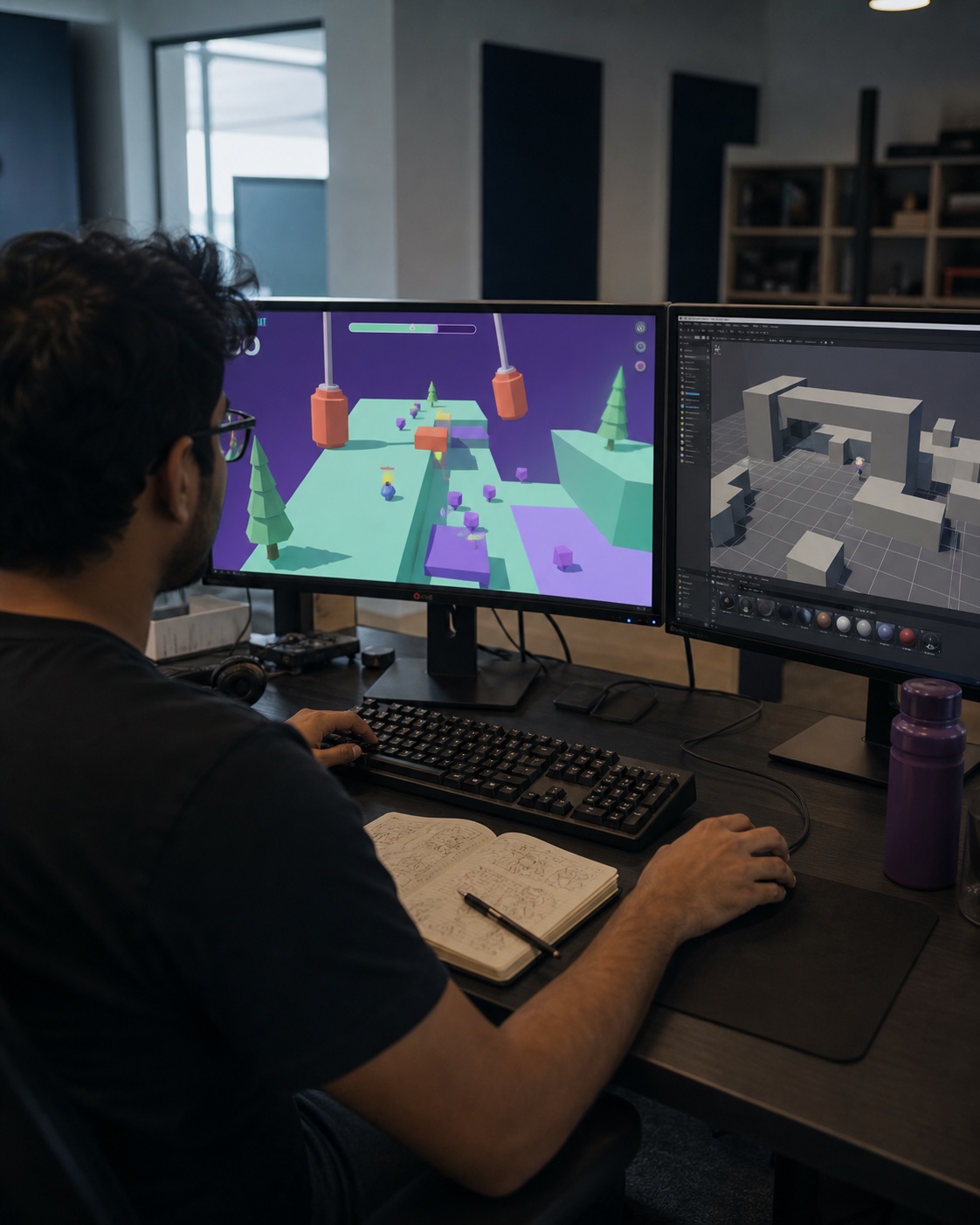
↳ THE DIRECT ANSWER
What does Capermint's game development process look like?
Capermint uses five connected production phases: Discover, Prove, Produce, Launch and Grow. Together they take a game from research and product definition through a playable prototype, multidisciplinary production, continuous quality assurance, launch and post-release improvement.
Each phase has a visible output and a decision gate. The exact depth, tools and cadence adapt to the game, platform, team and engagement—but the principle stays fixed: make progress reviewable.
Decisions before volume
Resolve the expensive questions before scaling production.
Playable proof early
Test the product in motion while change is still economical.
Quality inside the sprint
Testing and integration run with production, not after it.
Launch starts a loop
Player signals become input for the next useful release.
02 THE PRODUCTION PATH
Five phases. One connected build.
The work becomes richer at every gate, but never disappears behind a handoff. Product, creative, technology and quality remain connected.
DISCOVER
Find the game worth building.
- Audience, product and competitor discovery
- GDD, user flows and core-loop definition
- Art direction, architecture and technical risks
- Roadmap, estimate and recommended team shape
PROVE
Make the riskiest idea playable.
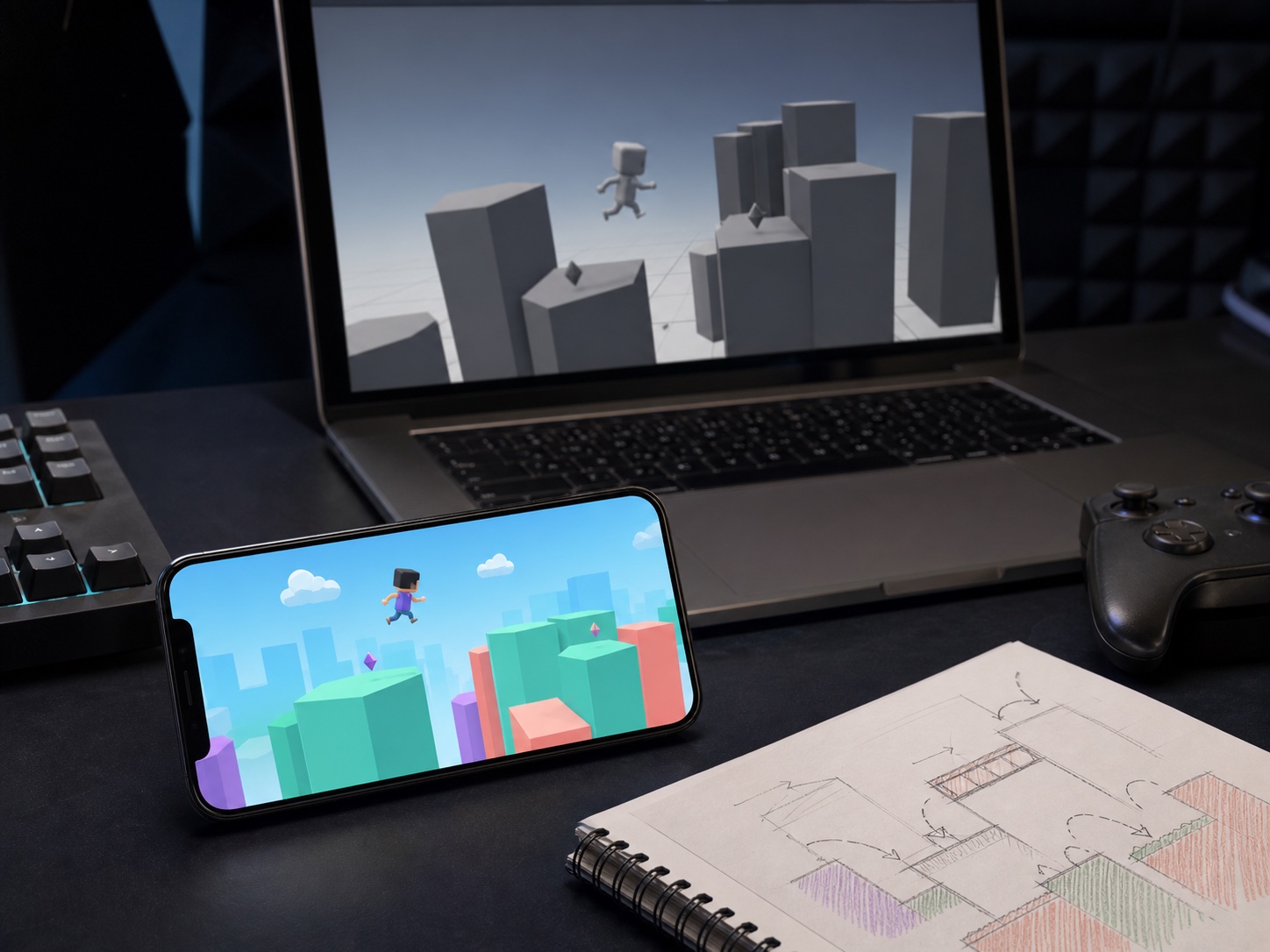
- Clickable UX or gameplay prototype
- Core mechanic, controls and technical spikes
- Representative art, feedback and first playable
- Playtests, learnings and scope refinement
PRODUCE
Build and validate in connected sprints.
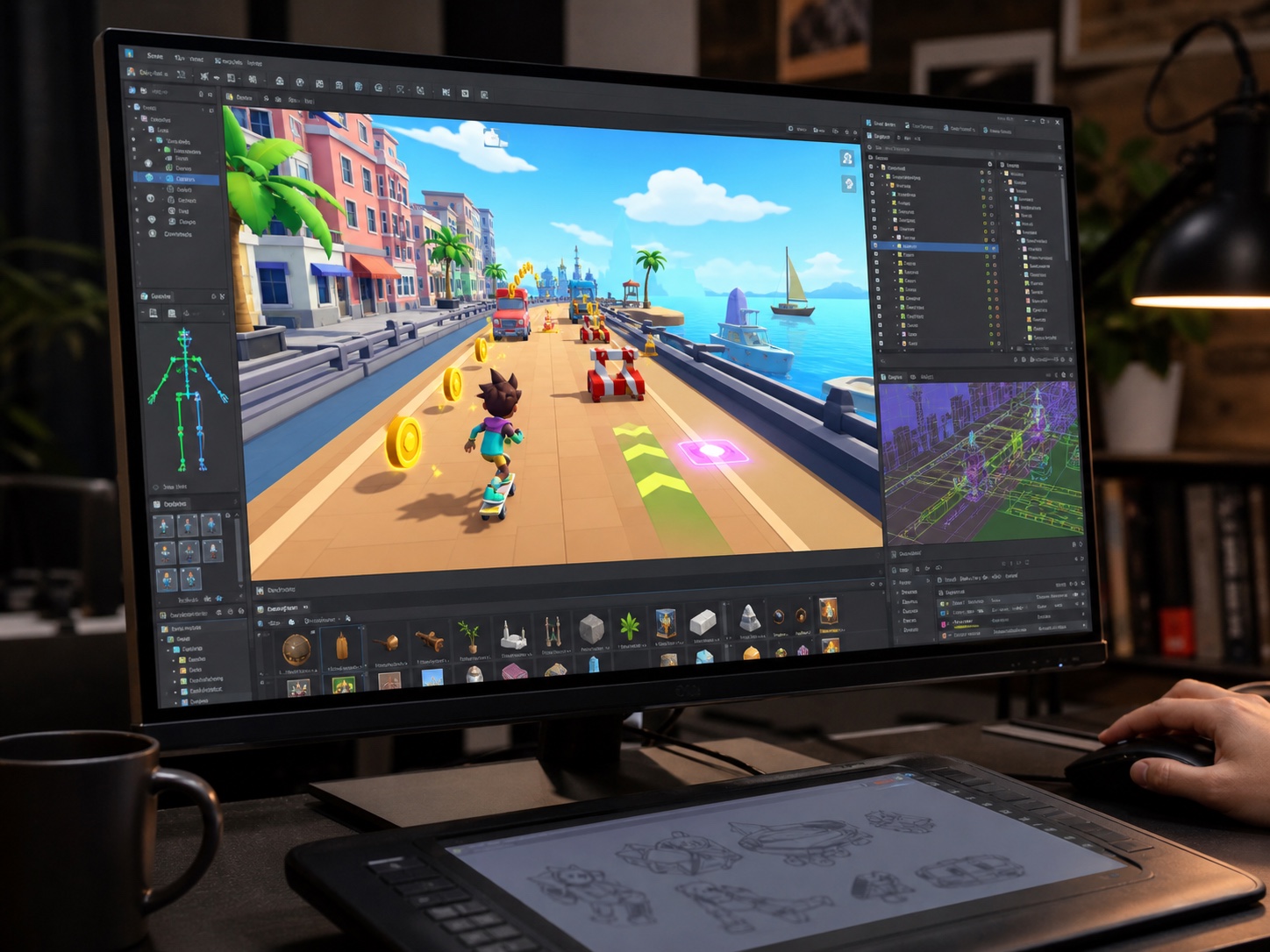
- Gameplay, platform and backend engineering
- Characters, environments, UI and animation
- Continuous QA, optimization and integration
- Milestone demos, documentation and handoff
LAUNCH
Move from release candidate to real players.
- PLATFORM BUILDS REVIEWED
- TELEMETRY CONNECTED
- STORE READINESS PREPARED
- OWNERSHIP HANDOFF DOCUMENTED
- Performance and compatibility hardening
- Release-candidate and security checks
- Telemetry, store and platform preparation
- Deployment, monitoring and handoff package
GROW
Turn player signals into the next release.
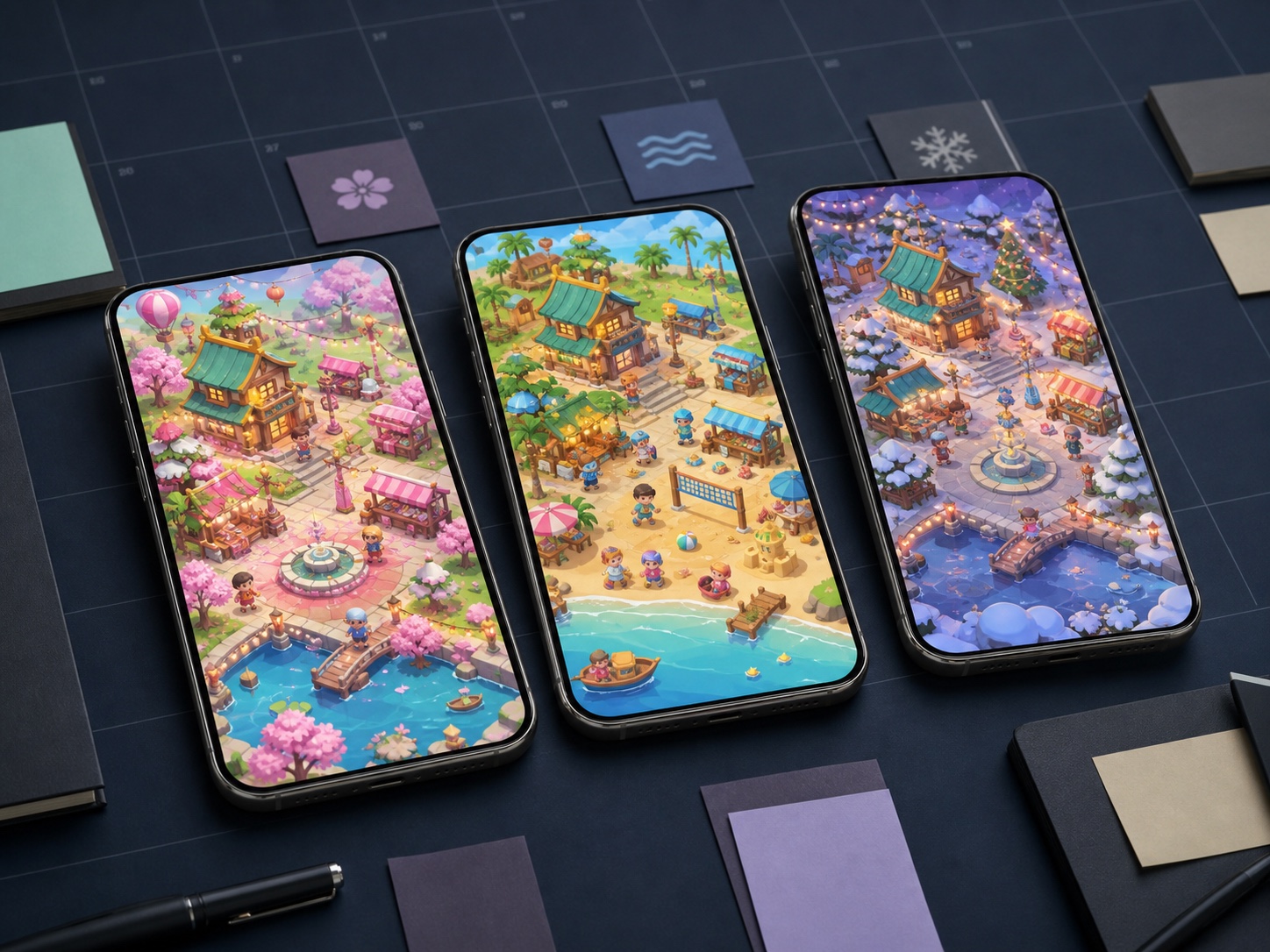
- Analytics, feedback and health monitoring
- Balancing, retention and economy improvements
- Content, events and LiveOps planning
- Optimization, maintenance and roadmap reviews
03 DELIVERY CADENCE
Every week gives you something real.
The production rhythm is agreed for each engagement. A typical cadence makes the build, decisions, priorities and quality visible often enough to change direction with confidence.
A playable build
The latest integrated experience, ready to inspect—not a status slide.
A decision-ready demo
What changed, what we learned and which choices need your voice.
A visible backlog
Priorities, owners, acceptance criteria and dependencies in one shared view.
Quality evidence
Defects, test coverage, performance findings and release risk made explicit.
A clear next move
The next sprint starts from agreed decisions, not from hidden assumptions.
04 INSIDE THE WORK
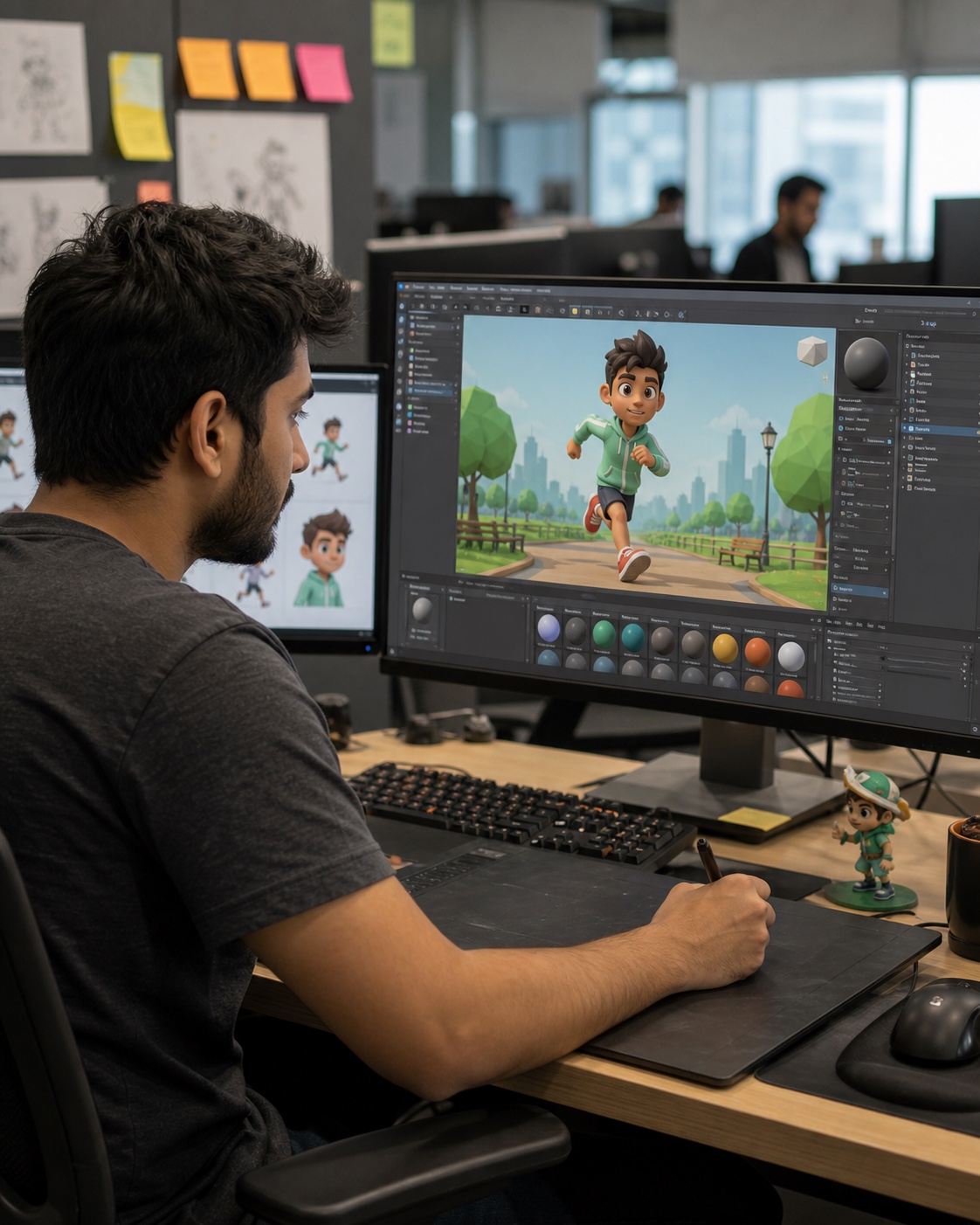
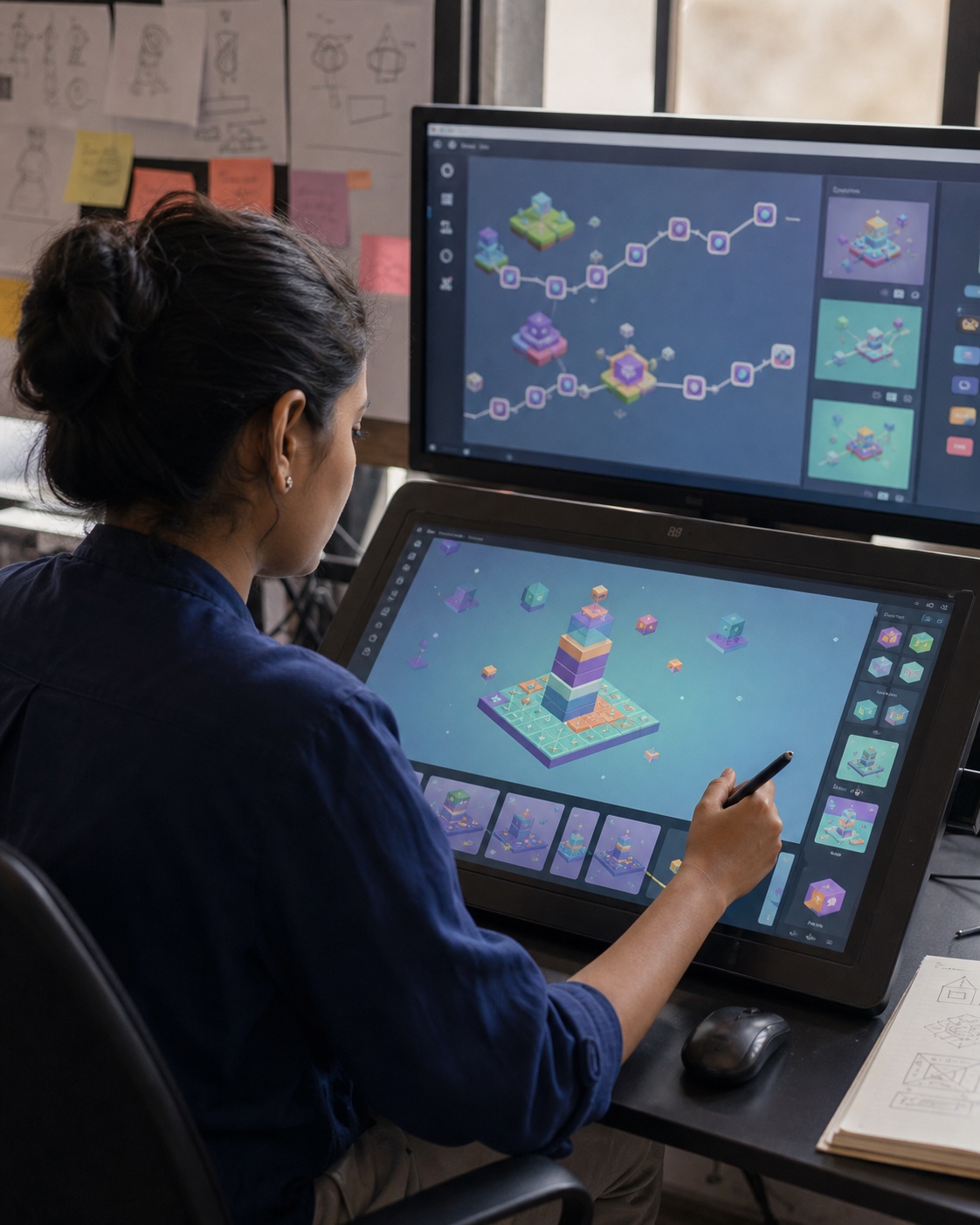
The process happens here. At the workbench.
The production team moves between character, environment, interface and playable build—because craft improves fastest when every discipline can see the same work in motion.
05 QUALITY SYSTEM
QA is not a final room. It is part of the route.
Coverage is planned around the product's real risks and target platforms. Findings stay connected to builds, acceptance criteria and release decisions.
Behaviour
Mechanics, flows, rules, progression and edge cases behave as designed.
Reach
Target devices, operating systems, resolutions, inputs and storefront builds are covered.
Feel
Frame rate, memory, load time, network conditions and responsiveness stay within agreed targets.
Confidence
Regression, release-candidate checks and production monitoring protect every approved milestone.
06 ENGAGEMENT SHAPE
The same discipline. Three ways to connect.
The process scales to the ownership you need. Boundaries, dependencies, communication and acceptance criteria are made clear before delivery begins.
Explore Capermint servicesFull-cycle production
One multidisciplinary team carries the game from discovery through launch and LiveOps.
Best when you need complete product ownership.Co-development
A Capermint pod owns a defined system, content stream or production track inside your wider roadmap.
Best when internal and external teams need to ship as one.Dedicated specialists
Selected game designers, artists, engineers or QA professionals extend your existing production capacity.
Best when the direction is set and capacity is the constraint.07 PROCESS QUESTIONS
Clear before the first sprint.
Practical answers about Capermint's game development workflow, collaboration, prototyping, quality and post-launch support.
01What is Capermint's game development process?
Capermint uses five connected production phases: Discover, Prove, Produce, Launch and Grow. The path covers research, game design, prototyping, art and engineering production, continuous QA, release and LiveOps, with reviewable outputs and client decisions throughout.
02Can Capermint start with only a game idea?
Yes. Discovery is designed to turn an early idea into a clear product brief, feature map, risk view and practical roadmap before full production begins.
03Does Capermint create a prototype before full development?
When a concept carries product, design or technical risk, Capermint can create a focused UX prototype, gameplay prototype or vertical slice to test the core loop and refine scope before wider production.
04How are clients involved during production?
Clients review playable builds, demos, priorities, quality evidence and open decisions through an agreed project cadence. The exact tools and meeting rhythm are selected with the engagement.
05When does game testing begin?
Testing begins as soon as reviewable builds exist. Coverage grows from feature checks and playtests into regression, compatibility, performance and release-candidate validation as the game approaches launch.
06Does the process continue after a game launches?
It can. Capermint supports production monitoring, fixes, optimization, analytics-informed updates, content and LiveOps so real player behaviour can guide the next release.
07Can Capermint work with an existing game team?
Yes. Alongside full-cycle development, Capermint can work through co-development or dedicated specialists, with ownership boundaries, dependencies and acceptance criteria defined before delivery begins.
READY / GATE 01 Start with the playable idea
Bring the ambition. We'll make the route visible.
Share the concept, audience, platform and current constraints. The first useful step is a clear view of the product, the risk and what should become playable first.
Start your game briefNew game projects · worldwide
Tell us what you’re building.
Share the idea, audience and ambition. We’ll reply with a practical view of scope, team shape, technology and the smartest first milestone.
01 / Scope
A useful first response
Clear assumptions, open questions and the right place to begin.
02 / Team
The right production shape
Full-cycle, co-development or dedicated specialists—built around ownership.
03 / Next move
A practical first milestone
Prototype, technical discovery or production planning—not a generic sales pitch.
- NDA available
- Reply within 12 hours
- Global delivery
Project brief / secure enquiry
Start with the playable idea.
Secure enquiry · NDA-first · No obligation