Commissioning a branded Roblox experience starts with a clear player activity, a first-playable milestone and an operating plan. For US and Canadian brand, IP and agency teams, this guide explains what to brief, how to compare development proposals and what to approve before a full build.
When you are ready to discuss delivery, Capermint’s Roblox game development services explain the production workstreams and inquiry route. Here, the focus is preparing a useful buying decision.
What are you commissioning on Roblox?
A Roblox experience is a game or interactive world published on Roblox. A branded experience connects a player activity to your characters, products or story. The brief might describe a character quest, an obstacle course, a social destination or a collection of mini-games.
Define what the player does, why they would repeat it and how your IP belongs in that activity. Developing this experience uses Roblox Studio and the platform’s tools. Building a separate creator platform would require a different brief, architecture and budget.
An inspectable example: Babbelverse
Babbelverse brings the Babbelbende character world into a colorful Roblox adventure. Capermint’s published project brief describes semi-open exploration, Portal Games, multiplayer challenges, comic collectibles and an upgradeable Treehouse.
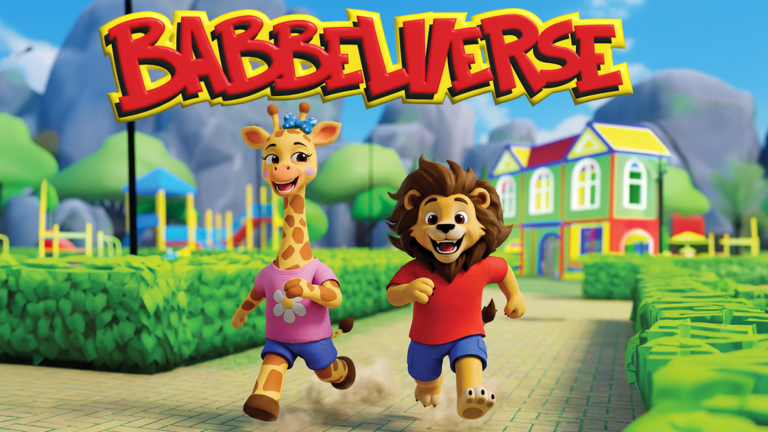
Capermint’s reported contribution: In the team’s public launch account, Milind Solanki describes concept validation, game design, development, UI/UX, multiplayer systems, testing and launch support.
You can inspect the Babbelverse project case and official Roblox listing. The case describes the supplied brief; the contribution is Capermint’s account. These materials do not establish player, revenue or retention results.
For your own project, ask a supplier to identify its actual contribution to a relevant example. A recognizable product, promotional image or platform listing alone does not establish who delivered each workstream.
Choose an owned experience or a creator integration
An owned experience gives your project a dedicated destination, with its own content, publishing access and ongoing responsibilities. An integration places agreed activities or assets inside another creator’s experience and depends on that creator’s permission, audience fit and commercial agreement.
Settle the route before asking for a quote. Roblox’s experience guidance separates planning, creation, promotion and monitoring. Development is one part of the program; publishing a world does not establish an audience for it.
Define what the first playable must prove
A first playable is a small, testable version of the core activity. Agree its limits before production: temporary versus final art, required inputs, multiplayer or saving where included, and the stakeholder who approves the next stage.
- Player objective: can a new player understand what to do?
- Core action: does one representative activity work on the agreed test devices?
- Progress: are feedback, rewards and saving demonstrated where specified?
- Review decision: what is accepted, what remains open and what changes before production?
Agree devices, inputs and test coverage
Choose the devices and controls your audience needs. Touch, keyboard/mouse and gamepad play require suitable interfaces and testing. Roblox’s cross-platform guidance explains these input and screen-size considerations.
The proposal should identify the test matrix, critical player flows and performance checks. Platform availability does not mean a particular experience has already been tested on every device.
Give suppliers the same brief
- Brand or IP, intended audience and project owner.
- Core player activity, reference experiences and the business or content purpose.
- Available artwork, characters, audio and permissions to use them.
- Required devices, budget range, campaign deadline and approval stakeholders.
- Who will publish, promote, moderate and update the experience.
If you have an existing game, include its URL, the specific production gap and the access you can authorize. Comparable briefs make differences in supplier assumptions easier to identify.
Resolve production risks before the full build
Useful risk questions concern the project itself: an unclear first objective, an asset list that keeps growing, controls unsuited to the audience, unreliable saved progress or unclear approval authority. Identify the important checks in the brief and record them at review milestones.
Agree how changes affect cost and dates. Include the intended audience, chat or user-generated content, and any advertising or commerce features so policy review and moderation responsibilities can be scoped. Avoid accepting a general “compliant” or “works everywhere” assurance as a substitute for defined review and testing.
What technical scope should a proposal explain?
The production scope should connect Roblox Studio and Luau development to the approved player activity. Ask how client/server behavior, multiplayer interactions, saved progress and any purchase flows will be tested. Roblox provides platform services, while the experience’s implementation still needs design and validation.
For persistent progress, Roblox’s data-store documentation describes cross-session storage and the care needed when testing live data. Use a supplier’s technical explanation to understand responsibilities and risks; do not assume a list of tools proves a reliable implementation.
What drives branded Roblox development cost?
A useful estimate follows the experience scope. Request a defined first-playable quote and a separate production scope, with assumptions and exclusions. Numbers for building an entire creator platform do not estimate a commissioned Roblox experience.
| Cost driver | What to agree | What to inspect |
|---|---|---|
| Player activity | Activities, progression, multiplayer and saving. | First-playable deliverable and acceptance criteria. |
| Art and content | Places, characters, animation, UI and reusable approved assets. | Asset inventory, style sample and revision scope. |
| Testing | Selected devices, inputs, player scenarios and performance checks. | QA coverage, findings and release acceptance. |
| Handover | Publishing access, commissioned source, licenses and documentation. | Deliverables, transfer conditions and maintenance needs. |
| Launch and operation | Promotion, creator arrangements, moderation and recurring updates. | Separate fees, responsible owners and support boundaries. |
Estimate development separately from paid promotion, creator or integration fees, and recurring LiveOps. Confirm which costs are included and which require another supplier or agreement. Capermint’s Roblox cost and proposal guidance outlines the same comparison points.
Plan milestones and approval dependencies
Dates depend on scope, asset readiness, system complexity, testing and stakeholder approvals. Put any campaign deadline in the initial brief and ask the supplier to identify dependencies that could affect it.
- Brief and proposal: approve the player loop, responsibilities and estimate assumptions.
- First playable: review the core activity and decide the next production scope.
- Production and QA: inspect agreed content and systems against the requirements.
- Release and handover: confirm publishing readiness, access, documentation and operating owners.
Agree who signs off each milestone and how unresolved issues or requested changes are recorded. A fixed turnaround without those dependencies is not a dependable project schedule.
Set the objective and measurement before launch
Choose an objective that fits the experience: completing a character activity, exploring a product story, joining an agreed community activity or returning for new content. Define the relevant events, reporting access and a dated baseline.
Roblox’s funnel-event guidance supports measurement of player journeys such as onboarding and progression. Activity completion and return behavior help assess an experience; they do not automatically prove sales, learning outcomes or brand lift.
Agree publishing-account or community ownership, collaborator permissions, commissioned files and third-party licenses before work begins. Name who handles promotion, moderation, updates and incident response. These continuing responsibilities belong in the budget and handover plan.
Turn the planning work into a scoped project brief
Bring the audience, player activity, available IP assets, target devices, budget range and deadline together in one brief. Ask for an inspectable first playable, clear acceptance points and defined launch and handover responsibilities.
Share your Roblox project brief with Capermint to discuss the appropriate production scope and next milestone.
Key takeaways
Roblox for brands means putting your IP in front of players through an owned experience, an activity inside an existing creator's game, avatar items or paid placements sold by Roblox. For US, Canadian and global brand, IP and agency teams, Capermint's compact branded builds typically cost $10K–$40K and take about 60–90 days; final quotes follow a scoping call.
Four routes for brands on Roblox
| Route | When it fits | Who controls it | What to budget |
|---|---|---|---|
| Owned experience | You need a lasting destination with your own content and reasons for players to return | Your publishing account or group; you control content, updates and analytics access | Development, then promotion and LiveOps |
| Integration in a creator's game | A campaign needs an existing audience quickly | The creator controls the experience and its audience; terms follow a commercial agreement | Creator or integration fee plus asset production |
| Avatar (UGC) items | Players should wear or show your brand on their avatars | Published to the Marketplace from an eligible creator account under Roblox's rules and fees | 3D item production and Marketplace fees |
| Paid placements sold by Roblox | An experience already exists and needs traffic | Bought through Roblox's advertising tools under its Advertising Standards | Media spend, separate from development |
Most programs pair one build with promotion. For learning-focused programs, see Roblox educational game development.
Roblox for brands at a glance
| Engagement models | Fixed-scope project that starts with a first playable; dedicated team billed monthly; co-development or staff augmentation with your studio (hire game developers) |
|---|---|
| Tech stack | Roblox Studio and Luau; client–server logic validated on the server; DataStores for saved progress; custom 3D art, animation and UI; Creator Dashboard analytics with custom funnel events (3D art services) |
| Platforms | Roblox on iOS, Android, Windows, macOS, Xbox, PlayStation and Meta Quest; the device and input test matrix is agreed per project |
| Policy readiness | QA on the agreed devices and inputs; review against Roblox Community Standards and Advertising Standards, including its limits on advertising content for users under 13; Maturity & Compliance Questionnaire answers prepared for the publishing account before release |
| Markets | US and Canada first (we schedule calls in US and Canadian business hours); brands and studios worldwide, including the UK and Europe, Latin America, Africa, the Middle East, India and Asia-Pacific |
Branded Roblox experience cost and timeline
Typical development ranges in USD by scope. Promotion, creator integration fees and LiveOps are quoted separately. For delivery scope and a quote, see Capermint's Roblox game development services.
| Tier | Typical scope | Typical range (USD) | Typical timeline |
|---|---|---|---|
| Compact branded experience | One core activity (obby, quest, simulator or mini-game), one themed space, branded characters or props, basic UI and saved progress; starts with a first playable; tested on mobile and desktop | $10K–$40K | About 60–90 days |
| Branded multiplayer experience | Several connected activities, multiplayer rules, progression and rewards, custom 3D world and characters, analytics events; mobile, desktop and console testing | $40K–$120K | About 12–20 weeks |
| Persistent world or live program | Larger or expanding world, economy and progression systems, seasonal events, avatar items and a LiveOps team after launch | $120K+ | 4–6 months or more, then ongoing |
Ranges are typical, not quotes. Every tier starts with a first playable, and final pricing follows a scoping call. For a published example of what a brand world can include, see the Babbelverse Roblox project.
Platform policy and younger players
Roblox sets the platform rules: branded experiences follow Roblox's Terms of Use, Community Standards and Advertising Standards, and the Advertising Standards limit the advertising content users under 13 can be shown, so brand elements may need age-based handling through Roblox's PolicyService checks. Confirm the current standards before launch, because Roblox revises them. The publishing account completes the Maturity & Compliance Questionnaire that sets the content maturity label, and Roblox restricts play of experiences without complete maturity information. Builds monetize through Roblox's own tools, such as passes, developer products and avatar items, with no cash prizes. For India, projects use free-to-play and social formats, because the Promotion and Regulation of Online Gaming Act 2025 prohibits online money games. If younger players are in the audience, your legal team should confirm COPPA in the US and any other children's privacy rules. The brand, as publishing account owner, is responsible for platform eligibility; we build to Roblox's technical and policy requirements. This is not legal advice.
Roblox for brands FAQs
What does Roblox for brands involve?
It usually means one of four routes: an owned branded experience, an integration inside an existing creator's game, avatar items players can wear, or paid placements sold by Roblox. Most programs combine a build with some promotion. The route decides who builds, who controls the audience and what the budget covers.
How much does a branded Roblox experience cost?
A compact branded experience typically costs $10K to $40K, a branded multiplayer experience $40K to $120K, and a persistent world or live program $120K or more. These are typical development ranges in USD, not quotes. Promotion, creator fees and post-launch operation are budgeted separately, and the final quote follows a scoping call.
How long does it take to launch a branded Roblox experience?
Typically about 60 to 90 days for a compact experience, about 12 to 20 weeks for a branded multiplayer experience and 4 to 6 months or more for a persistent world, counted from an approved brief. Each band covers a first-playable review, production, QA and release; post-launch updates are planned separately.
Should a brand build its own experience or partner with an existing Roblox game?
Build your own when you need a lasting destination, control of content and analytics access, and a reason for players to return. Partner with an existing game when a campaign needs reach quickly and the creator's audience and terms are acceptable. Some brands test with an integration before commissioning an owned experience.
Which Roblox game formats suit a brand?
Formats that match how players already use Roblox tend to fit: obstacle courses, tycoons, simulators, role-play hubs, quests and mini-game collections. Choose the format by the player activity your brand can credibly own, not by the product you want to show. A short first playable is a low-cost way to test whether that activity is fun.
Can brands sell virtual items in a Roblox experience?
Yes. Experiences can sell passes and developer products for Robux, and brands can publish avatar items to the Marketplace from an eligible creator account, subject to Roblox's fees, marketplace and advertising rules. Decide early whether commerce is a goal, because it changes design, policy review and testing scope.
What safety rules apply when younger players visit a branded experience?
Roblox's Community Standards apply to every experience, and its Advertising Standards cover branded and advertising content, including limits on what users under 13 can be shown. The maturity questionnaire in the Creator Dashboard sets the content maturity label. Do not collect personal information outside Roblox's systems, and have your legal team confirm COPPA in the US and other children's privacy obligations before launch.
What results can a brand realistically expect from Roblox?
Expect measurable play behavior rather than guaranteed reach: visits, session length, completion and return visits, tracked in Roblox's Creator Dashboard and custom funnel events. Publishing an experience does not create an audience on its own, so traffic depends on promotion, updates and fit with players. Sales or brand-lift claims need separate research run alongside the campaign.
Can we reuse our existing brand characters and 3D assets on Roblox?
Usually yes, after adaptation. Characters, logos and story carry over, but 3D models normally need optimization, re-texturing and animation work to meet Roblox performance limits and art style, and code from other engines does not transfer. Confirm that your license covers use on Roblox before production starts.
Does a US or Canadian brand need a local studio to build on Roblox?
No. Roblox experiences are built in Roblox Studio and published to players worldwide, so overlap hours, contract terms and IP ownership matter more than the studio's location. Capermint delivers from its studio in Ahmedabad, India, schedules calls in US and Canadian business hours and works with brands worldwide.
Plan your branded Roblox experience
Share your audience, player activity, IP assets, target devices and deadline to discuss a first-playable scope and estimate. We schedule calls in US and Canadian business hours.
Frequently asked questions
What should a brand prepare before commissioning a Roblox experience?
Prepare the audience, brand or IP, core player activity, available assets and usage rights, target devices, budget range and deadline. Name the project owner and approval stakeholders, and identify who will publish, promote, moderate and update the experience.
How can we compare branded Roblox development quotes?
Give suppliers the same brief and compare deliverables, assumptions, exclusions, review points, device testing and handover. Separate the first playable from full production, and development fees from promotion, creator or integration fees and recurring operation.
What should a first playable demonstrate?
It should demonstrate the core player activity on the agreed test devices, with feedback, rewards, multiplayer or saving where included. Agree temporary versus final assets, acceptance criteria and the person approving the next production stage before work begins.
What affects the development timeline?
The schedule depends on scope, approved asset availability, system complexity, device testing, stakeholder reviews and publishing preparation. State the campaign deadline in the initial brief, then agree milestones, dependencies and a change process in the proposal.
Which responsibilities should be agreed for launch and handover?
Agree the publishing account or community, collaborator permissions, commissioned source and assets, third-party licenses and operating documentation. Name the owners of promotion, moderation, analytics, updates and incident response, with any recurring fees and support boundaries stated separately.